

This is a hard statement to make about an institution that I have loved and served nearly all of my life. But the black church appears to have lost its way, and we have become more entrepreneurial and business-centered and less Christ-centered, mission-driven, evangelistic, and social justice-oriented.
I grew up in the AME Zion church, where we were taught the principles of Christ in the New Testament, but with a sense of being my brother’s keeper. My AME Zion pastors and bishops were not perfect men, but they were committed men of God. They clearly understood that salvation was from the Lord and righteousness was bestowed upon them. Bishop Stephen Gill Spotswood would regularly visit and share the responsibilities of black Christians to shift the culture of not just our community but the world. Pastor William Hillard and his wife, who served as my first pastor, were elected Bishop and moved to serve God on the continent of Africa as full-time missionaries and church planters. The church (St. Paul AME Zion) had a tremendous commitment to education through its financial and academic support of its HBCUs, Livingston and Paine Colleges.
My family shifted to the CME church in my teen years, where I met Dr. Isaiah Sciptio, MD, DMin. Dr. Scipio, who was 6’8 and played college basketball at UCLA and attended medical school at UCLA. While completing medical school at UCLA, he sensed a call from God to full-time Christian ministry, shifted his focus after graduating, and received his doctorate in ministry. Dr. Scipio was perhaps one of the most eclectic brothers, who was like a chameleon that could fit in both a boardroom and a hood. He served on several corporate and non-profit boards of directors, including that of Monstono Corporation, a global corporation, as a voice of corporate responsibility. Needless to say, one of my Sunday School teachers was “Reperation Ray,” Detroit’s Ray Jenkins, a Detroit real estate broker who was committed to the reparations movement.
I mention all of the above to lay out my background and inspiration for ministry, as well as my reference points and expectations for the Black church. After 30 years of serving within the Black evangelical church, it has been a unique experience participating in a community of believers who sought acceptance from White Christians to affirm their existence and reaffirm their value and work.
Rediscovering Our North Star: A Call to the Black Church
Something about the current state of the Black church feels… off. Almost cultic. It seems we have lost our North Star — the guiding light of Christ that once anchored our identity and mission.
Take, for example, the elevation of the senior pastor to a celebrity status and the designation as the sole prophetic voice of God. In Acts 17:11, we see the Berean ministry leaders collectively diligently study the scriptures. Or the rise of the prosperity gospel, which promises wealth and blessings without demanding the cross or sacrifice. We have forgotten that Christianity is foundational to sacrificial living. Even more troubling is the lack of collaboration among Black churches to collectively advance both the Gospel of Christ and the upliftment of Black people — especially our youth.
How is it that in major cities across America, there can be over 3,000 Black-led churches, and yet the conditions in our communities remain so dire? How is it that Black children continue to suffer in broken systems, and the church — the very institution historically known for liberation and justice — seems paralyzed? Either our light is dimming, or we’ve been seduced by a system that has worked against us as a people.
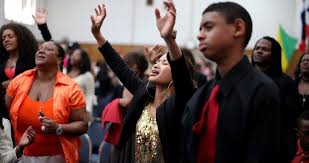
And here’s what’s even more perplexing: every Sunday, thousands of sincere, loving men and women gather for spirited worship, dynamic preaching, and passionate praise — yet nothing seems to change. Our neighborhoods remain in crisis. Our children are still being left behind. Our prophetic voice has been muffled.
Years ago, I remember when a white worship ministry from Alabama introduced a simplistic three-line model for worship music. Slowly, the Black church began to conform. Traditional “Songs of Zion” and rich Gospel anthems were quietly pushed aside. In their place came two new categories: Worship and Praise music, Christian music — as if Black Gospel was somehow neither worship, nor praise, nor even Christian. That reclassification was more than a musical shift; it was a cultural dislocation. It was another sign that we were drifting from our roots — from our North Star.
I can’t tell you how many battles I’ve fought just to preserve Gospel music in Black church spaces. Not because I’m nostalgic, but because I believe our tradition holds a powerful theology that speaks to suffering, struggle, hope, and redemption — all wrapped in the lived experience of Black people in America.
This blog is a call — a plea — for the Black church to rediscover its mission and its first love. As the Spirit says in Revelation 2:4 5:
“Yet I hold this against you: You have forsaken the love you had at first. Consider how far you have fallen! Repent and do the things you did at first. If you do not repent, I will come to you and remove your lampstand from its place.”
We are not just another religious group. The Black church has a unique calling — to embody the life, love, and liberation of Christ in a broken world. We are meant to be a living witness to the transformative power of the Gospel — not just within our sanctuaries, but in every school, street corner, and system where our people cry out for justice and hope and beyond.
It’s time to return. To repent. To reclaim the mantle of mission. If we truly believe in the power of the Holy Spirit, then we must reflect it — not only in praise breaks, but in broken neighborhoods. Not only in sermons, but in systems change. Not only in church growth, but in community transformation.

We have wandered. But it’s not too late to find our way back.
Pastor Dennis Talbert, a Social Justice Pastor from Detroit, Michigan – What Say You…..
 I'm Just Saying