
(A Year-Ply Narrative Project on the Resilience of Black and Brown Single Mothers)
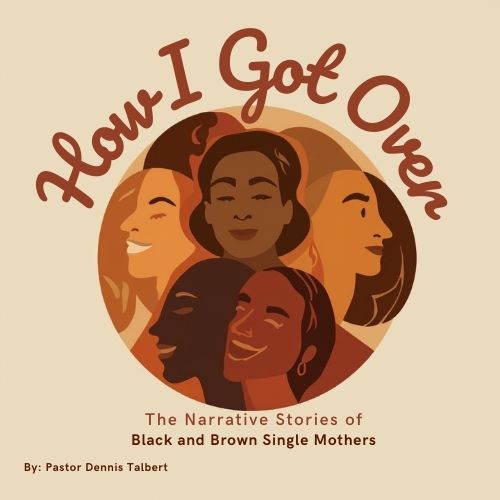
Introduction and Personal Calling
In the coming year, I am stepping into a deeply intentional calling: to tell the stories of Black and Brown single mothers. This project, titled How I Got Over, has lived quietly yet persistently in my spirit for several years, shaped by moments of ministry and memory that refused to release me. One such moment came when a mother joyfully shared her son’s two-page newspaper feature, her pride unmistakable, yet her own sacrifices left unspoken—though I, as his youth pastor, had a front-row seat to the fierce discipline, protective love, and steady presence that shaped his becoming. She said, “I guess I didn’t do anything.” Another moment arrived at the funeral of a young man raised in our community. As he lay before us, I watched his mother’s face wrestle with grief, faith, and unanswerable questions—questions born long before that day, forged in years of loving a son through profound challenges. Responsibilities and time delayed this work, but the calling never faded. The stories remained—carried in silence, sustained by grace, and waiting to be told.
This project is not driven by statistics alone, though the numbers are sobering. Nearly half of Black households in America—between 47 and 49 percent—are led by single mothers. Within Hispanic and Brown communities, the figure exceeds 25 percent. These numbers represent more than demographics or sociological trends; they represent lived lives, untold sacrifices, invisible labor, spiritual endurance, and generational impact. How I Got Over seeks to move beyond percentages and into the personal, the sacred, and the real.
Black and Brown single mothers occupy a unique and often misunderstood position in American society. They are frequently spoken about, yet rarely listened to. They are analyzed, criticized, romanticized, and politicized—but seldom given the space to tell their own stories in their own voices. This project exists to change that.
At its core, How I Got Over is a narrative project centered on resilience. It will document stories of survival and struggle, but also of joy, dignity, humor, faith, disappointment, creativity, leadership, and triumph. The title itself—How I Got Over—draws from the Black sacred and cultural tradition, echoing the old spiritual that speaks of crossing dangerous terrain through divine help, inner strength, and communal support.
This work will intentionally resist one-dimensional portrayals. Black and Brown single mothers are not a monolith. Their journeys include women who are young and older, urban and rural, immigrant and native-born, college-educated and self-taught, deeply religious and spiritually searching. Some chose motherhood under difficult circumstances; others had motherhood thrust upon them through abandonment, divorce, death, incarceration, or systemic failure. What unites them is not victimhood, but perseverance.
The vision of How I Got Over is threefold:
- To honor lived experience – allowing women to narrate their own journeys without interruption, judgment, or institutional framing.
- To disrupt harmful narratives – challenging stereotypes that frame single motherhood solely as a deficit, pathology, or moral failure.
- To preserve testimony – creating an archive of stories that will educate, encourage, and inspire future generations.
This project is not about fixing single mothers, studying them from a distance, or rescuing them. It is about listening—deeply, respectfully, and consistently.
Stories will explore themes such as:
- Faith, doubt, and spirituality
- Becoming a single mother
- Economic survival and creativity
- Parenting sons and daughters alone
- Moments of victory and quiet strength
- Love, loss, and partnership
- Mental, emotional, and physical exhaustion
Participants will have agency over how much they share and how their stories are represented.
While How I Got Over is not narrowly theological, it is deeply spiritual. Many Black and Brown single mothers draw strength from faith traditions, ancestral memory, and communal wisdom. Others wrestle with God, institutions, and silence. Both postures will be honored.
The project will explore questions such as:
- What does faith look like when survival is daily?
- How do women mothers with little support yet great responsibility?
- What wisdom have single mothers developed that society overlooks?
- How have systems—church, government, education, healthcare—failed or supported them?
- Serve as a teaching and discussion resource
- Preserve stories that might otherwise be lost
These sistas are not statistics. They are architects of families, keepers of culture, and carriers of hope. This project exists so that the world might finally hear them say, in their own words, how they overcame.
This is an open invitation to join How I Got Over in several meaningful ways. First, if you are a single mother, I want to listen to and help tell your story—regardless of where you are in life or your social, religious, economic, or geographic context. Your experience matters, and your voice deserves to be heard without judgment, editing, or expectation.
Second, I am seeking to form a council of elders—women and men of wisdom, discernment, and lived experience—who can help steward this project and ensure these stories are narrated in ways that honor the dignity, complexity, and legacy of Black and Brown single mothers. This council will help guard the spirit of the work, ensuring it remains truthful, respectful, and rooted in care.
Third, there are opportunities to serve as part of the creative and storytelling team. I welcome volunteers who are willing to contribute as writers, interviewers, videographers, graphic artists, social media consultants, or digital storytellers. Each gift, whether visible or behind the scenes, helps bring the larger narrative to life.

This is a volunteer-based project, rooted in service rather than profit. I hope to create a living archive that will remain freely available to the public—a source of encouragement, reflection, wisdom, and testimony for sistas past, present, and future who are navigating or will one day navigate single motherhood.
I offer this invitation with humility. I am learning as I go, and I freely admit that I am green in many ways. Still, I believe God has placed this work on my spirit, and obedience often begins before clarity. Together, I believe we can help break the silence that has too long existed in the Black church and in the wider world around the lives of single mothers.
So I ask, simply and sincerely: Will you join me? In the end, this is nothing more—and nothing less—than an invitation to witness, to honor, and to help tell the truth. I’m Just Saying….
 I'm Just Saying