Should the Church Be Taxed? A Conversation worth having

by: Dennis Talbert

Let me be clear from the start: I am not advocating for churches or religious organizations to be taxed. But I am saying this — we need to have a serious conversation about the tax-exempt status of religious institutions, their role in philanthropy, their involvement in community economic development, and their responsibility as stewards of the communities they serve.

This is a weighty topic, with layers upon layers of complexity. It may be impossible to fully unpack it all in a single blog, but I will attempt to raise some key points that I’ve been sitting with for decades.

A Concern That Started in the ’70s

I began questioning the implications of church proliferation during the 1970s when I worked as a city employee in Detroit, responsible for community and economic development. It wasn’t the growth of churches that troubled me—it was the way zoning laws and city codes affected them. At that time, businesses were restricted from operating within a certain distance of religious institutions. I began to notice how the influx of small storefront churches impacted the economic vitality of Detroit’s commercial corridors.

Fast forward over 40 years, and I recently drove down Puritan Avenue — from 12th Street for nearly four miles — and to my dismay. What used to be a bustling commercial district has become a corridor dotted with closed church buildings, abandoned lots, and shuttered storefronts. What happened?

While there are theological layers to this, which I’ll set aside for now, it was hard not to conclude that the unchecked proliferation and eventual closure of tax-exempt churches had decimated a once-viable commercial zone.

These local observations reminded me of conversations in various African countries with young ministers seeking to become lead pastors.  We discussed launching churches in new regions and often looked to the Apostle Paul as the biblical model for church planting.

Paul’s efforts were transformative. His churches not only spread the Gospel but also created vibrant, empowered communities. So I began to wonder: Is this the model of church planting we’re following today? And more importantly, is this the model Christ intended?

There’s a growing trend in the U.S. called the church planter movement, where individuals, groups and denominations — often sincerely- believe God calls them to start churches. However, many churches, especially in urban communities, shut their doors within a few years. That raises a spiritual and practical question: What happened to the call?

A Brief History of Church Tax Exemption

Let’s step back for a moment. During the colonial era, churches like the Anglicans and Congregationalists were state-sponsored, particularly in Virginia and Massachusetts. This created tensions within the Christian community over state involvement in religious life.

Most states moved away from government-established churches after the American Revolution, influenced by Enlightenment ideals and a desire for religious freedom. By the 20th century, the Revenue Act of 1913 formally exempted churches from federal income tax, and Section 501(c)(3) was created for charitable organizations. Lawmakers seemed to assume that these entities would act in the public good, and for a time, many did.

But 112 years later, is it time to revisit those assumptions?

The Black Church: Mission, Vision, and Stewardship

Let me be clear: we need the Black church. Its historical contributions to education, liberation, and civil rights are unmatched. The mission to love, serve, and advance Christ has not changed.

Consider this: estimates suggest that the Black church in America collects between $100–$250 million every Sunday, more than $7.8 billion annually. That’s more than the annual GDP of Liberia, Haiti, Kosovo, Sierra Leone, Gambia, Burundi, and several other small nations combined.

According to Pew Research, over 85% of Black philanthropy in some neighborhoods flows through the church. That’s a staggering number. 

Despite the presence of hundreds of churches in Detroit and cities like it, far too many of our children, families, and neighborhoods continue to struggle with poverty, violence, educational gaps, and broken systems. A few years ago, a philanthropic foundation in Detroit attempted to mobilize Black churches to engage children in after-school programs. Despite the city’s high concentration of churches, the outcomes were limited.

We cannot afford to ignore these questions any longer. Are we truly being good stewards of the resources entrusted to us? Are we investing enough in the long-term success and transformation of Black children, youth, and families? Are we aligning our methods with our mission?

This conversation isn’t just about tax codes — it’s about Kingdom purpose. The moral and spiritual decline we see in America cannot be reversed by government programs or legislation alone. It demands a revitalized church — one that is committed to economic justice, social transformation, spiritual renewal, and community accountability.

We have the intellectual, theological, and moral capacity to explore these questions honestly and constructively. It’s time for the church — especially the Black church — to reimagine its role, revisit its vision, and renew its commitment to the cause of Christ in the 21st century. We can reimagine a tax code that reflects the economic and social justice issues of the 21st century, that creates a matrix that advances God’s kingdom-building agenda on earth, and fulfills the philanthropic needs of our communities and their residents.

I’m just saying. What say you? Let’s get the conversation going,,,,

I’m a Bigot!

By: Pastor Dennis Talbert

This week, I faced a hard truth—one I never thought I would apply to myself. I just might be a bigot. That’s a shocking realization for someone like me, a near lifelong Christian who has poured countless hours into mentoring and empowering thousands of young people through ministry, missions, and service projects around the world. And yet, here I am, saying it plainly: I am a bigot.

Bigotry, as I’ve come to define it, is more than just open hostility or hate. A bigot is someone who is intolerant of people who are different—be it in race, religion, gender, sexual orientation, or political belief. It’s an attitude, a posture, a resistance to seeing the humanity and dignity in others when they don’t mirror your own values or experiences. A bigot holds strong, unreasonable prejudices and often refuses to see things from another perspective, let alone treat those people with fairness or love. By that definition, the spirit of intolerance has, at times, influenced my own life. It has subtly and steadily crept in, impacting the very essence of who I am and distorting my grasp of the fruits of the Spirit described in Galatians 5:22–23: love, joy, peace, patience, kindness, goodness, faithfulness, gentleness, and self-control.

I never wanted this. I never meant for intolerance to settle in my heart. My Christian witness has long been centered on Romans 12:18: “If possible, as far as it depends on you, live at peace with everyone.” But I now find myself asking—how can one live at peace when bigotry poisons the soul and breeds division, anger, and even hate?

Growing up in the Church, I often heard the phrase attributed to St. Augustine: “Love the sinner, hate the sin.” It sounded noble, maybe even biblical. But in recent years, I’ve begun to question its true intent and impact. That phrase—repeated so often in Christian circles—now strikes me as a contradiction. It creates emotional distance, allowing us to avoid the messy, costly love that Jesus actually modeled. Jesus didn’t merely “tolerate” sinners. He embraced them. He ate with tax collectors, allowed a prostitute to anoint his feet, spoke freely with outcasts, and taught in parables that exalted acts of mercy over piety. He fed the hungry, welcomed the stranger, and clothed the naked. His love was complete, relational, and redemptive. If we say we “love the sinner,” shouldn’t that love resemble the embrace of Christ—patient, kind, and unflinchingly real?

This moment of self-reckoning compelled me to do what I’ve always done when facing a spiritual dilemma: I studied. I read the Scriptures, reflected on history, and dug into the roots of prejudice and hatred. What I discovered, and perhaps what you already know, is that bigotry has always been about more than feelings. It’s about power—who has it, who keeps it, and who is kept out. Bigotry is entangled with colonialism, racism, religious extremism, xenophobia, and nationalism. It’s been the fuel behind wars, oppression, and systems of injustice that continue to this day.

When I look around at the cultural climate we live in—politically divided, racially charged, and spiritually adrift—I understand how I got here. But my concern now stretches beyond myself. I am deeply troubled by what I see within the Body of Christ. Are we truly influencing the world for good? Or are we, in fact, being influenced by the world—conforming to its divisions and prejudices while hiding behind spiritual language?

One of Detroit’s great spiritual giants, the late Dr. Frederick G. Sampson, regularly prayed, “Lord, help me to rescue your church from your church.” That prayer echoes in my soul today. It might also be the silent cry of a generation of young people who keep walking in and out of our churches like they’re moving through a revolving door. They may lack formal theological training or institutional titles, but they know when something doesn’t add up. They can feel the dissonance between the Jesus we teach and the church we run. And many are choosing to walk away.

Perhaps it’s time for a new movement—not built on branding or tradition, but on truth and love. A movement that dares to preach the Christ of the cross, not a Christ of cultural conformity or political convenience. A movement that reclaims the radical humility and holy justice that defined the life of Jesus. Not a new denomination or a trendy campaign, but a rescue mission. A spiritual lifeboat for a church that may be drifting.  I’m just saying: What say you? Does the church need rescuing? Do we have the courage to confront our own prejudice, our institutional complacency, and the ways we’ve quietly accepted intolerance under the banner of faith?

P.S.    As for me, I return to the words of 1 Corinthians 9:27: “But I discipline my body and keep it under control, lest after preaching to others I should be disqualified.” I do not want to be disqualified—not from the race, the call, or the love I’ve spent a lifetime trying to embody. I need the Holy Spirit and my community to hold me accountable.

I am a sinner saved by grace and covered by mercy. But even grace demands that I grow.

Everybody Needs a Pastor

This has been a traumatic week.

Death and grief have visited our community through the tragic, accidental loss of a loving husband and wife, faithful urban missionaries serving in the Brightmoor neighborhood of Detroit. Their sudden departure has left five boys under the age of 15 without their parents, and a host of family members and friends drowning in sorrow.

Many Christians are quietly (or not quietly) asking: “Why, God?”

Because in the end, everybody needs a pastor.
Not just a preacher. Not just a leader. A pastor with the heart of Christ.

As I’ve sat with the weight of this trauma—both the personal grief and the collective grief of our believing community—it hit me deeply: we are like sheep without a shepherd. The same words that described the crowds in Matthew 9:36 and Mark 6:34 now describe the ache I feel for our city.

I remember during the height of the pandemic sensing this same void. And once again, the Spirit whispers: Lord, as pastors, we must have a resolve—mixed with a Word, connected to an action—for the people.

We need pastors in the spirit of Galatians 4:19, where Paul doesn’t speak of position or prestige, but of laboring in love “until Christ is formed in you.” That’s the heartbeat of faithful pastoral ministry. Yet, somewhere along the way, we’ve drifted.

Today, many pastors have become church administrators, strategic planners, authors, influencers, bible scholars, and church planters. There’s nothing inherently wrong with any of those roles—but when the art and love of pastoring God’s sheep falls out of fashion, we’re in trouble.

Revelation 2:4 echoes in my spirit: “You have forsaken the love you had at first.”

There’s a powerful little book called They Smell Like Sheep. Its message is clear: real pastors live among their people. Real shepherds carry the scent of the sheep. These past few days, after attending several homegoing celebrations and sitting with grieving souls, one truth rang loudly in my spirit:

Everybody needs a pastor.

Not one perched above the people, but one who walks with them. Through the mess. Through the pain. Through the grief. A shepherd, like the one described in Psalm 23, who leads, restores, comforts, and remains present in the valley of the shadow of death.

And here’s another truth that pierced me this weekend:

Even pastors need a pastor.

As someone who has launched mentoring programs and worked with youth for years, I’ve often said, “Everyone needs a mentor.” The same is true in ministry: everyone needs a pastor.

A real pastor doesn’t lead with control, but with care. They don’t see people as numbers, but as souls. They are teachable, humble, and submissive. They don’t isolate themselves in pride or burnout because they know—they’re sheep too.

We don’t need to be Superman or Superwoman. We just need to be servants of Christ, not with pessimism, but with hope. Trusting Christ to be Christ and to do what only He can do: transform lives.

True pastors give more than inspiration.
They give biblical direction—even when it’s hard.
They preach truth, not trends.
Their goal is not to entertain, but to equip.

We must return to our first love—not the platform or programs, but the pastoral vocation—to love people deeply, walk with them patiently, correct them biblically, and carry their burdens when life becomes too heavy for them to bear alone.

As They Smell Like Sheep reminds us, ministry isn’t clean.
It’s relational. It’s gritty. It’s deeply personal.

This week has reminded me:
The world is full of people silently crying out for care.
Let us not forget our call.

Everybody needs a pastor.

I’m just saying… what do you think?

Reclaiming Racial Reconcillation: Why the Wounded Must Lead the Healing

In the United States, the language of “racial reconciliation” is increasingly invoked in churches, corporate boardrooms, nonprofit organizations, and political platforms. Yet too often, the process is led and defined by the descendants of those who benefited most from racial injustice, rather than those who bore its deepest wounds. This imbalance not only distorts the process but also undermines its potential to be genuinely transformative.

True racial reconciliation cannot be orchestrated by those who have historically held the power, dictated the narratives, or controlled the systems of wealth and influence. It must be led by those most impacted by racial violence, dispossession, and systemic exclusion. Anything less risks becoming either a symbolic gesture or, worse, a retraumatizing reenactment of colonial power dynamics dressed in the language of healing.

When descendants of slaveholders, colonizers, or beneficiaries of racial hierarchies lead the reconciliation process, the outcomes often center on comfort and image management rather than truth, justice, or repair. Apologies are issued, but no reparations follow. Dialogues are held, but decision-making remains centralized in historically white institutions. Workshops are facilitated, but budgets remain unequally distributed. These patterns reinforce the status quo, pacifying discomfort without redistributing power.

This dynamic also privileges the emotional ease of the dominant group. The goal becomes creating a sense of closure, of “moving on,” rather than honestly confronting the enduring consequences of racial harm, including generational poverty, institutional mistrust, educational disparities, cultural erasure, and political disenfranchisement. In this sense, mainstream racial reconciliation efforts often cater to white guilt and fragility rather than Black trauma and resilience.

Having lived in the Black Christian evangelical world for the past 35-plus years, I have witnessed firsthand, across a wide range of Christian organizations, the bastardization of the concept of racial reconciliation. Sadly, even many Black Christians have internalized these diluted versions. As a result, the underserved — especially Black believers — have been marginalized within evangelical spaces, excluded from preaching opportunities, board leadership, and publishing platforms. Even when access is granted, it often benefits the individual rather than the broader community.

One of the critical missing links in all of this is the power of the Holy Spirit. As John 3:30 reminds us, “He must increase, and I must decrease.” The Spirit empowers us to think differently — to imagine reconciliation not as a symbolic gesture, but as a transformative, systemic process rooted in humility and divine justice.

There’s an expression that says, “Power concedes nothing.” Jesus understood that. In fact, He changed the game. He led with a radically inclusive vision — one that built a level playing field for all people, especially the poor and the oppressed. His Beatitudes are a blueprint for this reversal of worldly power: “Blessed are the meek, for they shall inherit the earth” (Matthew 5:5).

If biblical reconciliation is to reflect the heart of Christ, then power must be conceded, and systems must be redesigned and transformed. Acknowledgment and apology alone are not enough. What is needed is a rebalancing of power, voice, and resources. This shift must be systemic, not symbolic.

Here are five key principles I believe are essential for genuine reconciliation:

1. Leadership by the Wounded

Those most harmed — descendants of enslaved people, Indigenous communities, and historically marginalized groups — must lead the process. Their lived experience must shape the design, language, timeline, and goals of any reconciliation efforts. Healing must be led by those who know the pain.

2. Narrative Control

The stories and frameworks used to guide reconciliation must come from the grassroots. This includes centering oral histories, truth commissions rooted in community, and cultural practices that reflect the values of the oppressed, not sanitized retellings curated for institutional comfort.

3. Structural Reparations

There can be no true reconciliation without a material response. That means wealth redistribution, divestment from oppressive systems (such as the prison-industrial complex and exploitative corporations), and reinvestment in Black, Brown, and Indigenous futures.

4. Shared Governance

Institutional power must be shared — or surrendered. Boards, churches, universities, and civic bodies must include and empower those who were previously excluded, not as tokens but as equal—if not primary—stakeholders in decision-making.

5. The Right to Say “No”

True reconciliation honors the right of harmed communities to decline participation in performative or insufficient efforts. They must be able to reject gestures that do not lead to meaningful change and protect their own boundaries around trauma and healing. Without consent, any effort risks becoming a reenactment of control.

The future of racial reconciliation in America depends on a righteous disruption of the old frameworks. We must unlearn models that prize politeness over justice and comfort over truth. We must reject the temptation to “move on” before we’ve even faced the truth.

Churches, Christian organizations, universities, and governments must go beyond panels, pledges, and performative diversity campaigns. They must make room for radical honesty, historical reckoning, and the tangible restructuring of power. Without this, what is meant to heal will only deepen the wound.

This is not about revenge — it is about repair.
It is not about guilt — it is about justice.
It is not about erasing anyone’s humanity — it is about finally affirming the full humanity of those whose dignity has been denied for generations.

The path toward racial healing must be built by those who know the terrain of suffering and survival best. Their leadership is not only legitimate but also essential. Until we understand that reconciliation without justice is not true reconciliation, we will continue to mistake performance for progress.

Now is the time to shift the center
From the privileged to the oppressed.
From symbolic gestures to systemic change.
From control to shared liberation.

Only then can the body of Christ begin the work of true reconciliation — not as a moment, but as a movement. I’m just saying…. What say you?

Hero of his Faith

 Blessed are the meek, for they shall inherit the earth. “  Matthew 5:5

On Monday, April 21, 2025, the world lost a moral giant. Pope Francis, the 266th pope of the Roman Catholic Church, passed away—leaving behind not only a global community in mourning but also a legacy deeply rooted in humility, justice, and compassion. Everyone knows that I am not catholic, but I can easily relate to men and women whose moral values align with social justice issues that I can relate to as a Black Christian. 

I find myself in awe as I reflect on his life, his leadership, and his unwavering commitment to living what he preached. From the moment he chose the name Francis—in honor of Saint Francis of Assisi—it was clear that a radical departure from the norm would define his papacy. He didn’t seek to sit above the people but to walk beside them.

I remember vividly when he visited the United States and arrived at the White House in a modest Ford Fiat to meet President Obama. That moment captured his spirit: down-to-earth, intentional, and deeply connected to the poor and working class. This wasn’t a performance. This was the honest Francis—choosing simplicity over spectacle, dignity over dominance.

He broke tradition in the best way. He lived in the Vatican guesthouse instead of the luxurious papal palace. He washed the feet of prisoners, included women in Holy Week rites, and embraced those suffering on the margins. His heart was in the streets. His hands were at work. His words were for the people.

Pope Francis was a world leader unlike any other. He confronted the uncomfortable truths many others avoided. He spoke boldly about:

  • Immigration, challenging countries to welcome the stranger and remember their shared humanity.
  • The war in Gaza, urging ceasefires, compassion, and peaceful resolution.
  • The climate crisis, calling it a moral issue and not just a political one in his landmark encyclical Laudato Si’.
  • Women’s dignity, lifting up their contributions to the Church, even while navigating centuries of doctrinal resistance.
  • Food insecurity and poverty, consistently advocating for systems that serve people over profits.

He championed the rights of the poor, not just in speeches but in how he lived. His messages resonated far beyond the Catholic Church. Whether you were a believer or not, Pope Francis spoke to the soul of humanity. He reminded us that love is action, that justice is spiritual, and that humility is strength.

He had the rare ability to speak truth to power while still offering grace. To challenge the powerful while comforting the broken. To be global and yet deeply personal. In many ways, he was the moral compass of our time.

As the world says goodbye to Pope Francis, we are also challenged to carry forward the flame he kept burning: the flame of faith that fights for justice, the flame of love that looks beyond status, and the flame of hope that dares to see a better world.

He didn’t just lead the Church. He inspired a generation. To my fellow Black Evangelical believers, can this be what the world and particularly generations beta, alpha, and z are expecting to see in us? I’m just saying…. What say you?

May his example live on in all of us.

Dear Detroit’s Candidates for Mayor: Don’t Forget the Children and Youth

Detroit is at a crossroads.

As the city prepares to elect its next mayor, much of the political conversation revolves around affordable housing, job creation, and economic development. Important? Absolutely. But if Detroit is genuinely going to rise—not just in buildings, but in spirit—it must begin with its children and youth.

This blog is a direct message to every candidate running for mayor in 2025:
We expect a bold, comprehensive youth development strategy to be a prominent part of your platform.

For far too long, young people in Detroit have been treated as the “future” when, in reality, they are the now. Too many urban policies are adult-centered, leaving children and teens to navigate broken schools, unsafe neighborhoods, and a digital world with little guidance and fewer opportunities.

Jobs Matter—But Our Youth Need More Than Employment. They Need Empowerment.

We acknowledge and appreciate the work of the former Youth Development Commission and the Skillman Foundation, whose early investments in youth employment were ultimately expanded under Mayor Duggan. That foundation matters.

But our young people need more than jobs—they need joy.

Empowerment means reducing childhood poverty and food insecurity, improving access to safe recreational spaces, investing in robust, year-round youth employment and entrepreneurship programs, and funding arts, sports, and cultural experiences in every neighborhood—not just downtown.

Reimagine Public Safety—Start With Public Healing

Perhaps it’s time to rename the Detroit Police Department to the Detroit Public Safety Department, with a central mission of protecting and healing our communities—starting with children and youth.

Let’s be honest: The word “police” is not neutral. For many Black children, it is traumatic—intertwined with a long history of systemic harm. As noted in The New Yorker, the roots of modern policing in the South trace back to slave patrols: organized forces designed to capture and control enslaved people. That legacy matters. It shapes how our youth see law enforcement today.

The new Public Safety Department must include:

  • Comprehensive trauma counseling
  • Violence intervention and prevention
  • Restorative justice programs
  • Community-based mentoring
  • Let’s stop saying just “public safety.” Say public healing.

Urban Youth Deserve Policy, Not Pity

Detroit’s children are not problems to manage—they’re people to invest in.

They deserve a mayor who will:

  • Build a Detroit Children’s and Youth Cabinet that includes actual young people and grassroots leaders
  • Establish a Citywide Youth Development Fund to support the real work being done in the neighborhoods

The next mayor must be bold enough to declare:

🗣 “We will not rebuild Detroit on the backs of abandoned youth.”

What We Need: A Real Urban Youth Strategy

Detroit doesn’t need more seasonal after-school programs or summer job fairs. We need a strategy—rooted in equity, creativity, and long-term investment. Here’s where to start:

1. Create a Department of Youth Wellbeing and Leadership

Not just a youth liaison or a few programs under Parks & Rec. We need a cabinet-level department solely focused on the mental health, education, safety, and leadership development of young people—especially in historically under-resourced neighborhoods.

2. Fund Neighborhood-Based Youth Hubs

Reimagine vacant buildings and underused city properties. Let’s turn them into youth centers equipped with mentorship programs, digital media labs, tutoring spaces, and safe recreation zones.
Think libraries-meet-startup-labs-meet-counseling-havens.

3. Prioritize Early Childhood Development

Affordable childcare and quality early education should not be luxuries. The next mayor must champion:

  • Early learning centers across every district
  • Trauma-informed training for everyone who works with children—from bus drivers to daycare providers

4. Invest in a Youth-Led Civic Agenda

Listen to our young people. Build a citywide Youth Council with real decision-making power—one that works alongside city departments and Detroit Public Schools to shape budgets, policies, and community design.

Nothing about them without them.

The city’s budget is a moral document. Show us where your heart is.

Detroit Can’t Wait.

If we don’t center kids in Detroit’s transformation, we will repeat the same cycles:
Development for the few. Displacement for the many. Disillusionment for the next generation.

Detroit’s children are not collateral damage—they are co-builders of our city’s future.

Let’s build a Detroit where kids don’t just survive—they thrive. Just some thoughts from who a brother who has devoted his life to Urban Youth Development, I’m Just Saying… What say you?

Ode to My Friend Luther “Badman” Keith 1950 -2025

I’m up at 2:30 in the morning, trying to process the news of your death, Luther. I can only think about The Impossible Dream from Man of La Mancha. Brother Luther, you lived a life of courage, passion, and purpose, turning impossible dreams into reality—not just for yourself but for your family, friends, and, most importantly, for Detroit. You saw potential where others saw obstacles, hope where others saw despair, and you poured your heart into making a difference. Your legacy is one of vision and relentless determination, and though you are gone, the dreams you chased and the lives you touched will continue to inspire us all.

Luther was the consummate journalist—always asking questions, seeking information, and striving for truth. He was cut from a different cloth, deeply connected to the city and its communities in ways few journalists ever achieve. A proud graduate of the University of Detroit with a degree in journalism, he worked his way up from a cub reporter in Lansing to a leadership role at The Detroit News. He fought fiercely for Black representation in journalism, never shying away from the challenge of making newsrooms more inclusive. His impact was undeniable, particularly in his instrumental role in founding the Wayne State University Journalism Institute for Minorities, which opened doors for so many who had long been shut out of the field. For many of us, his dream seemed impossible—but he pursued it relentlessly, proving that barriers could be broken and that representation in media mattered. His legacy will continue to inspire generations of journalists to come.

My friend and colleague Luther Keith has joined the great cloud of witnesses as an angel for Detroit. He dreamed the impossible dream for himself and for our city. His dream for Detroit was that it would be better and do better.  Luther loved Detroit.   I have so many wonderful memories—from partying on Outer Drive into the early morning to badgering you as a young public relations executive to that unforgettable morning of the JOA when I represented Knight Ridder’s Free Press—a true day from journalism hell. Then we decided to take the lead on Mayor Kilpatrick’s failed vision of the Man Power Movement, believing we could make a difference. It’s almost unbelievable that we crisscrossed the nation on our own dime, studying men’s movements that we hoped to replicate in Detroit. And who could forget that Philadelphia trip, where we bravely spent the night with brothers trying to bring peace to a gang-infested neighborhood? We were crazy, but you had the dream—that safety and unity could be built not just through police intervention but through brothers coming together to serve and protect their own communities. Your vision was bold, your commitment unwavering, and your love for Detroit unmatched. 

I remember when he launched ARISE Detroit—his goal was to clean up every street and restore the city’s beauty through the power of volunteers. And that’s precisely what he did. We talked for hours about my teenage years leading KDB (Keep Detroit Beautiful) Teens and how a small cadre of Black teenagers organized youth in every Detroit zone to clean the city. I didn’t believe it could be done, but you dreamed it and made it happen. ARISE Detroit mobilized and empowered hundreds of thousands of city and suburbs volunteers to take on community improvement projects. If I had to guess, there were probably hundreds of these initiatives each year, and the man who believed in the impossible made it his mission to visit every single one on Neighborhoods Day. You were tireless for Detroit.

Despite being a relative of the esteemed Judge Damon Keith, Luther never carried an air of superiority. He connected with everyone, including a guy like me from the Northend of Detroit. He served on numerous boards, but one of his greatest passions was the Detroit Library Commission. He envisioned the library as more than just a place for books—it was a hub for the community, a sanctuary where Black children and youth could expand their horizons and dream beyond their circumstances.

Later in life, Luther discovered another passion—Blues music. He taught himself to master the guitar and became a fixture in Michigan’s Blues and Jazz scene, earning the name Luther “Badman” Keith. You could hear him play at nearly every Blues or Jazz joint across the state. At the last Detroit Chapter’s NABJ Valentine Celebration, I asked him, “Man, when do you sleep?” He laughed and said, “I’ll sleep when I’m dead.” How prophetic. 

Well, my friend and brother, you left a great career at The Detroit News to pursue your passion. You nurtured that passion into one of Detroit’s most impactful coalitions of neighborhood groups dedicated to revitalizing the city and strengthening its communities. Now, rest. Your legacy is secure. You dreamed big, lived boldly, and made the impossible possible.

And don’t worry—Detroit will take care of your wife, Jacqueline, your superstar daughter, Erin, and your lifelong sidekick and blood brother, Terrance.

I have a dream in your honor—that Wayne State University will establish a School of Journalism bearing your name.

Love you, brother. See you on the other side.

P.S.  For those who may not be familiar—Millennials, Gen Z, Gen X, and Alpha—this is for you. The Impossible Dream is a timeless classic, and here’s one of my favorite versions by Josh Groban.

“The Snake in the Sanctuary” Christianity vs Capitalism

The prosperity gospel has deeply influenced the theology of many Black churches, often distorting biblical truth and historical context. Many clerical leaders have embraced this flawed doctrine, whether knowingly or unknowingly, raising the question of why such a deviation has occurred. One possible explanation lies in the financial struggles faced by Black communities globally, where economic hardship has made the promise of wealth and success through faith especially appealing. This theological shift has had significant implications, shaping the church’s spiritual and social perspectives.

Christianity and capitalism often intersect in the modern world, yet their core values sometimes compete. While both systems have influenced societies across the globe, their fundamental principles raise essential questions about morality, economic justice, and human relationships. Are Christianity and capitalism truly at odds, or can they be reconciled?

Core Principles of Christianity

Christianity is centered on the teachings of Jesus Christ, emphasizing love, compassion, humility, and service to others. Key biblical principles include:

  • Generosity: “It is more blessed to give than to receive” (Acts 20:35).
  • Concern for the Poor: “Whoever oppresses the poor shows contempt for their Maker, but whoever is kind to the needy honors God” (Proverbs 14:31).
  • Community and Equality: The early church in Acts 2:44-45 practiced communal living, sharing resources so that no one was in need.

Core Principles of Capitalism

Capitalism is an economic system built on private ownership, competition, and profit. It thrives on:

  • Individualism: Success is often determined by personal effort and market dynamics.
  • Free Markets: Supply and demand drive economic growth.
  • Profit Motive: Pursuing financial gain is a primary driver of innovation and economic expansion.

Points of Tension

While capitalism encourages innovation and wealth creation, it can also lead to inequality, exploitation, and materialism—issues that Christianity warns against.

  1. Wealth and Greed: The Bible warns against the love of money (1 Timothy 6:10), yet capitalism often promotes accumulation as a sign of success.
  2. Social Responsibility: Christianity teaches care for the marginalized, but capitalism can sometimes prioritize profits over people.
  3. Competition vs. Cooperation: While capitalism thrives on competition, Christianity calls for unity and love for one’s neighbor.

Can They Coexist?

Despite their differences, some argue that capitalism can align with Christian values when tempered by ethical considerations. Concepts like conscious capitalism, fair trade, and corporate social responsibility aim to balance profit with purpose. Many Christian entrepreneurs and businesses strive to operate ethically, ensuring that economic pursuits do not compromise moral values.

A Call for Balance

Rather than rejecting capitalism, the key may be to reshape it in ways that align with Christian principles. Economic systems should serve people, not the other way around. By integrating generosity, fairness, and ethical stewardship into capitalism, we can create a society that upholds both faith and prosperity. 

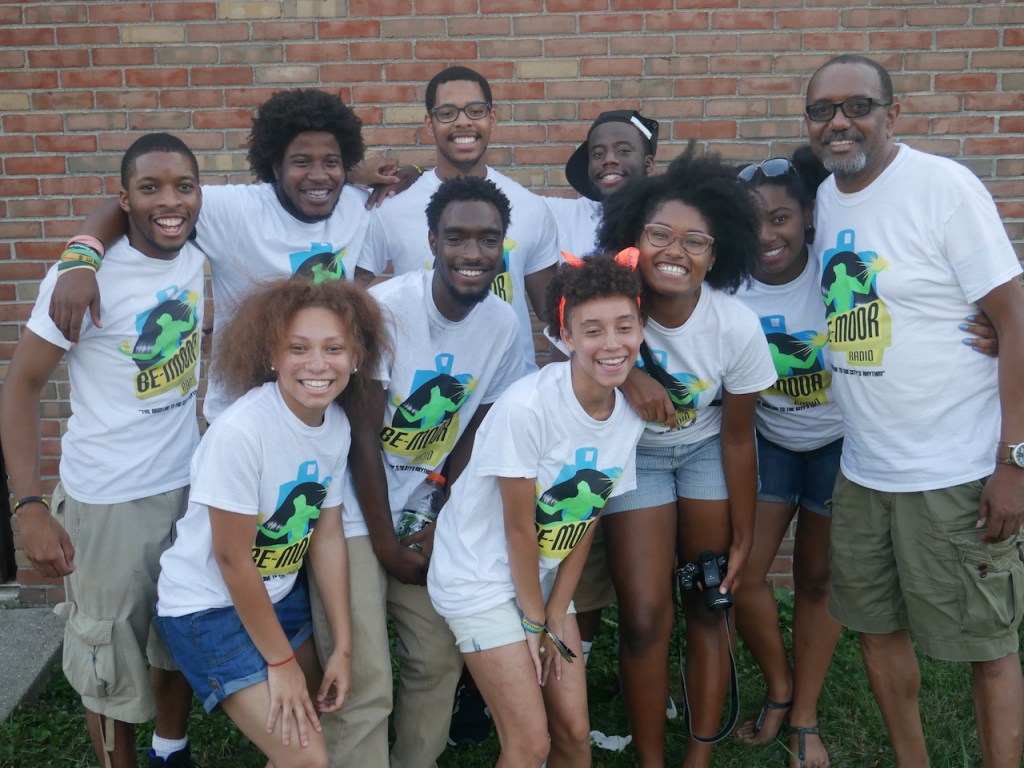
This year, Be-Moor Radio, one of the projects I lead, will explore alternative economic models—such as cooperative and collaborative economics—to build a community-based approach to sustainable wealth creation. When we launched in 2016 with the support of the Ross Business School at the University of Michigan, this was one of our primary goals. From the start, we aimed to create a new economic engine for urban youth while simultaneously developing the next generation of leaders and influencers.

What do you think? Can capitalism be a tool for Christian values, or does it inherently conflict with the teachings of Jesus? What say you?????

https://www.facebook.com/dennis.talbert

How About the Affirming Action Movement

You intended to harm me, but God intended it for good to accomplish what is now being done, the saving of many lives”.  Genesis 50:20

Since the inauguration of President Trump on January 20th and his series of presidential declarations, I’ve been looking for the silver lining or God amid these heavy-handed and race-centered actions.  Well, I think I may have found it in a concept or idea of building an Affirming Action Plan for Black Children and Youth. 

Now you ask, what is an Affirming Action Plan, and how does it differ from the Affirmative Action strategies of the sixties?  Here’s the concept: The Black Church has historically played a pivotal role in nurturing, educating, and advocating for the well-being of Black children and youth in response to contemporary challenges. However, under the incoming Trump administration, Black children and youth will probably experience the most significant challenge in decades.  

Gen Z, Generation Alpha, and the Millennials have inherited our failure not to have been razer focused on educational disparities, economic disenfranchisement, systemic injustice, and cultural misrepresentation. Nevertheless, thousands of Black Churches nationwide have an opportunity to regroup and implement a concept we are calling the Affirming Action Plan

This initiative is designed to uplift and empower Black children and youth through intentional, faith-driven strategies that promote academic excellence, emotional resilience, economic literacy, and spiritual grounding.  The Black ecclesia (body of believers in fellowship) could galvanize an army of volunteers, philanthropists, college students, retirees, and others to create an Affirming Action Network to embrace our children and youth who will bear the brunt of the most significant upheaval culturally, academically, and economically in centuries. 

Black children and youth face unique structural barriers that hinder their personal and professional growth. While societal affirmative action policies have provided some relief along with justice-centered programs, including diversity, equity, and inclusion commitments by corporations, governments, and universities, they are not enough.  Effective January 20, 2025, President Donald J. Trump has declared war on DEI and Affirmative Action programs globally. In the Department of Education, the Assistant Secretary for Civil Rights wrote a Dear Colleagues (See the letter at the bottom of the blog) saying they should abandon their DEI programs and activities by February 28, 2025, and risk losing federal funding. 

In the end, we need a new approach to ministry that combines faith and works, where our works and faith is our worship. I’m Just Saying…. 

The loss of federal funding could impact Title One funding, designed to serve underserved children, the Free and Reduced Lunch Program (NLSP), programs that help students with disabilities including autism and emotional and other learning disabilities (IDEA funding) through the Social Security Act, and the lists of programs funded by the federal government could present irreparable harm to Black children, youth and society. 

However, the Affirming Action Network group of ministries can fill the gap! This affirming network of Black churches could present a united front against evil and present possibilities of hope.  John 17:21. In this passage, Jesus asks God that his followers and others who believe in them through their word may be unified so that the world will believe that God sent Jesus. Isn’t our objective that the world would know and love Him?

Okay, Apostles, Bishops, Pastors, and Evangelists, this potentially is our opportunity to be the church we preach about and be a living epistle through our faith and works.  Below, I offer a few examples of where we can be effective, thrive, and witness a biblical revival in our neighborhoods. 

  1. Academic Empowerment: Provide tutoring, scholarship opportunities, and mentorship programs through church-based and community partnerships.
  2. Spiritual and Emotional Resilience: Establish faith-based counseling and mentorship programs to support mental health and identity formation.
  3. Economic Literacy and Entrepreneurial Development: Implement financial literacy workshops and entrepreneurship training tailored to Black youth.
  4. Civic Engagement and Leadership Development: Encourage active participation in civic duties and provide leadership training for emerging community advocates.
  5. Cultural Affirmation and Identity Formation: Celebrate and educate Black children on their rich cultural and historical heritage, reinforcing positive self-identity.
  6. Faith-Driven Counseling and Mentorship: Pair youth with mentors from within the church and professional networks to foster positive relationships.
  7. Entrepreneurship Incubators: Develop church-led initiatives that support youth in starting businesses and managing finances.

These are just a few ideas that can represent a silver lining and hope to the hopeless. As I write this blog and share some ideas with the readers, I’m reminded of the civil rights movement in Montgomery during the bus boycott, where every Black church decided it was time to challenge the system of racism, bigotry, and religious disunity.  We can do this, what say you?

Letter from U.S. Department of Education:

chrome-extension://efaidnbmnnnibpcajpcglclefindmkaj/https://www.ed.gov/media/document/dear-colleague-letter-sffa-v-harvard-109506.pdf?utm_source=substack&utm_medium=email

The Moral Compass – Who is controlling the magnetic needle?

Has the Black church lost its moral compass? Maybe even a different question, what is the role of the Black church in setting the moral compass within the Black community, locally and globally?

For a few years, I have pondered these questions in light of several critical issues, such as the unfettered legalization of marijuana, the fact that one in every three persons of color voted for Donald J. Trump, the crisis of urban education, health care, and yes PALISTINE.  All of these issues, at least as I see it, fall under morality. Our moral compass is off! There appears to be a moral compass guide controlled by someone or something outside the Black community. 

Historically, Black American leaders, mainly pastors, have been at the forefront of advocating for justice and calling out individuals, systems, and behaviors that harm the Black community. From the days of enslavement to the civil rights movement, the tradition of accountability has been a cornerstone of Black progress. Our global presence in the Black Christian church community had value to the world. Several years ago, our pastor (Rosedale Park Baptist Church) was contacted by a group of Gypsies from Romania to come to their country to discuss reconciliation as they admired the progress of Black Americans as a sign of progress. Our story of resilience in the face of racism was revered, respected, and celebrated by other marginalized ethnic groups worldwide. 

Our struggle and our voice mattered! During slavery, abolitionist pastors such as Henry Highland Garnet boldly used their pulpits to denounce not only the horrors of slavery but also the complicity of White Christians and institutions perpetuating it. Garnet’s famous 1843 “Call to Rebellion” sermon challenged enslaved people to resist their oppressions, marking one of the first examples of Black pastors directly confronting both internal and external challenges of Black liberation. A model championed by Christ ( read Luke 4: 18-19 Matthew 10:34). 

During the Reconstruction era, where men and women like Frederick Douglass and Ida B. Wells were unrelenting in exposing the betrayals of political leaders, bible-based churches, and other institutions that claimed to support Black progress while enabling racial violence and disenfranchisement. 

The Civil Rights Movement in the mid-20th century embodied Christians, setting a moral compass for not just the United States but also the world. Even though many of the old guard associated with the National Baptist Convention didn’t join the movement at first, eventually, they jumped on board. They followed in the leadership example of Christian leaders like Rev. Dr. Martin Luther King, Jr., who called out structural racism embedded in American society and church.  

In his “Letter from Birmingham Jail”, King emphasized the danger of inaction, criticizing white moderates and complacent Black Christian leaders alike for their unwillingness to confront injustice. But it wasn’t just Christian faith leaders who followed a moral compass; men like Malcolm X (a Black Muslim) challenged Black Americans to reject self-destructive behaviors and embrace empowerment. 

One of my favorite stories from the Civil Rights Movement is the 381-day Montgomery bus boycott. In his compilation of sermons, Rev. Dr. Martin Luther King, Jr talks about the struggle of preaching every Sunday to encourage Montgomery residents to boycott and walk or rideshare. For 52 Sundays, Black church leaders throughout Montgomery used every Sunday to preach a message of encouragement and a biblically centered sermon for justice. 

 I can only imagine what the state of Black children and youth in America would be if we took 52 Sundays across every urban city to emphasize education, loving our neighbor, and encouraging the congregants to mentor and adopt children who are orphaned because of circumstances outside of their doing or tutor a Black child.

But today, another force is at play, guiding the moral compass and setting the agenda and, ultimately, the course of action for our prophetic community. They are outsiders who beat us over the head with spiritual concepts on being biblically centered or adhering to a moral majority. Unfortunately, we have fallen prey to their demagoguery and are now victims of their version of truth and their moral compasses. There are even some who have discounted the legacy of our faith giants like Richard Allen, Martin Luther King, Jr, and Frederick Douglass for a new framework labeled evangelical. Can’t we decide what the moral code is or should be for our neighborhoods and community and follow a compass to discover our Northstar? 

We have made their truth the definitive truth without other options. This is why we need Black theology, Black critical thinking, or what I am now labeling Black Christian excellence (You will hear more about the concept of Black Christian Excellence in my future blogs, magazine, and newspaper articles, and potentially a book). 

As a community, we can’t allow our sacred institutions, biblical scholars, families, and moral compass to be driven by outside perspectives, including capitalism and the evangelical church. At some point, we must tell ourselves it’s not working or beneficial to our community. I’m concerned about urban youth development when we’ve made it our number one goal to produce entrepreneurs and career-based servants, not scholars, thinkers, and influencers. What we are perpetuating is pure self-centered trash that is both an impediment and disgraceful to our progress as a people, locally and globally. 

We need our prophetic voices. I can truly appreciate those prophetic voices who were willing to call out the destructive elements of our society and resolve not to be conformists.  Sisters like Dr. Helen Moore, JD, one of Detroit’s greatest champions for Black education, and C. Delores Tucker, former Pennsylvania Secretary of State who called out gangster rap before it was popular. Each of these sisters led by example.

We’ve got to rediscover our Moral Compass quickly, or we will become like the other lost tribes that are extinct, and we will be a few hundred years from now. I’m Just Saying….