Innovation: A Holy Calling for the Black Church

Innovation can sound like a curse word in some Black church circles. But for me, it’s never been about chasing trends or stirring up controversy. It’s always been about one thing—staying faithful to Christ’s call in ways that truly speak to the times.

I’ve always been drawn to swimming upstream. Not because I love conflict, but because I love discovery. I love finding new ways to reach Black children, youth, and families with the timeless message of Jesus.

Just this week, I found myself on the phone with a young man, talking about a church experimenting with fresh approaches to worship and community. At first, we both slipped back into the comfort of “how we used to do things.” But when I hung up, the Spirit convicted me: Talbert, are you losing your edge?

I’ve always believed that innovation should beat at the heart of every urban church that’s serious about advancing the Kingdom of God. The world may call it innovation, but I call it being in the right place, at the right time, with the right message—Christ.

Paul captured this spirit in 1 Corinthians 9:19-23 when he said:

“Though I am free and belong to no one, I have made myself a slave to everyone, to win as many as possible… I have become all things to all people so that by all possible means I might save some.”

That’s the essence of innovation: freedom to meet people where they are without ever compromising the gospel.

Of course, innovation comes at a cost. Financial risk. Skepticism from leaders. Resistance from traditionalists. I’ve paid that price, but I’ve also seen the fruit—and I’ll keep paying it, because innovation is the only way the church will stay effective in reaching our children, our neighbors, and the nations.

Hip Hop Sunday

Years ago, I grew weary of “Youth Sundays” that had become more about performance than proclamation. In my heart, it felt like heaven’s heartbreak hour. So, with my pastor’s blessing, we tried something different—Hip Hop Sunday. We filled the sanctuary with beats, rhymes, and the gospel, led by the old-school group Transformation Crusade.

From the very first track, something powerful happened: the seniors in the congregation lifted their hands in worship. God reminded us—it’s not about the style, it’s about the message. What started as one Sunday grew into a month. Young people packed the sanctuary, bringing their friends in droves. Attendance exploded to the point where men had to line the walls just to make room. One parent was so moved he bought every single youth a CD from the artist The Truth—not for himself, but to flood the community with gospel Hip-Hop music.

Eventually, Hip Hop Sundays ended—not because the Spirit wasn’t moving, but because the offering dipped and the men grew tired of standing. But for a season, God showed us what could happen when we broke free of tradition and let Christ lead us into new territory.

Sending Black Students to Africa

Later, while leading a major urban conference, I invited Rev. Bekele Shanko, a powerful African leader, to speak. His presence sparked resistance. Some didn’t think he belonged on that stage. But we pressed forward.

That night, Rev. Shanko called hundreds of Black college students to missions in Africa. The Spirit fell. Students pledged or gave more than $68,000 for ministry in Southeast Africa. The following summer, hundreds of young people—Black students—spent their summer serving people who looked like them, across the ocean.

Twenty years later, many of them are still on the field. Still serving. Still carrying the gospel. That’s the fruit of daring to innovate.

Why It Matters

Innovation is rarely comfortable. It can isolate you, even make you an outsider—especially in traditional Black church settings. But let’s be clear: innovation is not a threat to theology or doctrine. It’s an invitation to growth. When it’s rooted in Scripture and led by the Spirit, innovation strengthens the church.

Jesus Himself was an innovator. He broke religious traditions, shattered social barriers, and rewrote the script of history. His ministry birthed the New Testament church—the greatest innovation of all time.

I’m Just Saying….

A Tribute to the Chairman

Yesterday, I learned of the well-earned retirement of Mr. Mayce Webber as Chairman of the Deacon Board at Rosedale Park Baptist Church. And immediately, a flood of gratitude came rushing in.

If you know me, you know how much I love salmon. Like that determined fish, you have supported my swimming against the current —pressing upstream to create a first-class, Christ-centered, Black church-based youth ministry right in one of Detroit’s toughest neighborhoods. Looking back, I realize the vision I carried wasn’t always crystal-clear to you, or to most of the congregation and leadership. But you were steady, wise, and faithful—choosing to encourage and support me anyway, even when the path was hard to see.

Mr. Webber, you carved out space for our young people to dream big and thrive. Because of your unwavering “yes,” the Student Ministries Department (SMD) set a standard of excellence that rippled far beyond Detroit’s Black church community. I still remember the day we invited you into our little office down the street. Donnell Harlin and the team, along with me, shared our wild vision for youth outreach. Your face held the mystery of uncertainty, yet the words that leapt from your mouth—“You have my full support!”—ignited something powerful in us. Those words fueled our courage.

And we went to work. With your blessing, we did what once seemed impossible:

  • Built a Habitat for Humanity home from the ground up—the first youth group in the organization’s global history to lead such a project—partnering with Comerica Bank.
  • Adopted three neighborhood schools, forging genuine relationships with Vetal Elementary & Middle, Redford High, and Mann Elementary School.
  • Helped families move from homelessness to homeownership, with several of those households now boasting college graduates in every room.
  • Created a school-based program designed for underachieving elementary students that ultimately moved several students to Vetal’s 4.0 Club. Rosedale High School and college students developed the program and curriculum for  Super Kids. It created a hands-on and active learning environment as an after-school program.
  • Built three homes in Matamoros, Mexico; remodeled an orphanage in Jamaica; and hosted vibrant Vacation Bible Schools in the Bahamas, Jamaica, and in Detroit.
  • Launched countless Five-Day Backyard Bible Studies with a curriculum our own youth designed.
  • Advocated for Operation Sunrise, ultimately helping send more than 300 Black college students—including Rosedale youth—to serve in Southeast Africa, and Rosedale’s students in  Ethiopia.
  • Leading thousands to Christ either directly or indirectly through our partnerships, affiliations, or SMD.

These achievements matter—but what mattered most was knowing, deep down, that you had our backs. When our spirits sagged and our human batteries ran low, your words of encouragement lifted us.

On a personal note, your ministry of presence still humbles me. You sat with my brother through every one of my surgeries and hospital stays. I will never forget waking from recovery and hearing the very first voice—it was yours.

And, Mr. Chairman, you never missed an opportunity to exalt the name of Jesus. Whether holding the mic on Sunday or speaking quietly to one soul, you kept Christ at the center, always.

Your children—Chris, Jeffrey, Jason, David, and Rachel—are stars in their own right. But to me, you are a SUPERHERO.

Thank you, Mr. Webber, for showing us what steadfast faith, quiet strength, and joyful service look like. May God bless this new chapter as richly as you have blessed all of ours.

The Black Christian Church is beginning to look more like a Cult than Christ

This is a hard statement to make about an institution that I have loved and served nearly all of my life. But the black church appears to have lost its way, and we have become more entrepreneurial and business-centered and less Christ-centered, mission-driven, evangelistic, and social justice-oriented. 

I grew up in the AME Zion church, where we were taught the principles of Christ in the New Testament, but with a sense of being my brother’s keeper.  My AME Zion pastors and bishops were not perfect men, but they were committed men of God.  They clearly understood that salvation was from the Lord and righteousness was bestowed upon them.  Bishop Stephen Gill Spotswood would regularly visit and share the responsibilities of black Christians to shift the culture of not just our community but the world.  Pastor William Hillard and his wife, who served as my first pastor, were elected Bishop and moved to serve God on the continent of Africa as full-time missionaries and church planters. The church (St. Paul AME Zion) had a tremendous commitment to education through its financial and academic support of its HBCUs, Livingston and Paine Colleges. 

My family shifted to the CME church in my teen years, where I met Dr. Isaiah Sciptio, MD, DMin. Dr. Scipio, who was 6’8 and played college basketball at UCLA and attended medical school at UCLA.  While completing medical school at UCLA, he sensed a call from God to full-time Christian ministry, shifted his focus after graduating, and received his doctorate in ministry.  Dr. Scipio was perhaps one of the most eclectic brothers, who was like a chameleon that could fit in both a boardroom and a hood. He served on several corporate and non-profit boards of directors, including that of Monstono Corporation, a global corporation, as a voice of corporate responsibility. Needless to say, one of my Sunday School teachers was “Reperation Ray,” Detroit’s Ray Jenkins, a Detroit real estate broker who was committed to the reparations movement. 

I mention all of the above to lay out my background and inspiration for ministry, as well as my reference points and expectations for the Black church. After 30 years of serving within the Black evangelical church, it has been a unique experience participating in a community of believers who sought acceptance from White Christians to affirm their existence and reaffirm their value and work. 

Rediscovering Our North Star: A Call to the Black Church

Something about the current state of the Black church feels… off. Almost cultic. It seems we have lost our North Star — the guiding light of Christ that once anchored our identity and mission.

Take, for example, the elevation of the senior pastor to a celebrity status and the designation as the sole prophetic voice of God. In Acts 17:11, we see the Berean ministry leaders collectively diligently study the scriptures. Or the rise of the prosperity gospel, which promises wealth and blessings without demanding the cross or sacrifice. We have forgotten that Christianity is foundational to sacrificial living. Even more troubling is the lack of collaboration among Black churches to collectively advance both the Gospel of Christ and the upliftment of Black people — especially our youth.

How is it that in major cities across America, there can be over 3,000 Black-led churches, and yet the conditions in our communities remain so dire? How is it that Black children continue to suffer in broken systems, and the church — the very institution historically known for liberation and justice — seems paralyzed? Either our light is dimming, or we’ve been seduced by a system that has worked against us as a people.

And here’s what’s even more perplexing: every Sunday, thousands of sincere, loving men and women gather for spirited worship, dynamic preaching, and passionate praise — yet nothing seems to change. Our neighborhoods remain in crisis. Our children are still being left behind. Our prophetic voice has been muffled.

Years ago, I remember when a white worship ministry from Alabama introduced a simplistic three-line model for worship music. Slowly, the Black church began to conform. Traditional “Songs of Zion” and rich Gospel anthems were quietly pushed aside. In their place came two new categories: Worship and Praise music, Christian music — as if Black Gospel was somehow neither worship, nor praise, nor even Christian. That reclassification was more than a musical shift; it was a cultural dislocation. It was another sign that we were drifting from our roots — from our North Star.

I can’t tell you how many battles I’ve fought just to preserve Gospel music in Black church spaces. Not because I’m nostalgic, but because I believe our tradition holds a powerful theology that speaks to suffering, struggle, hope, and redemption — all wrapped in the lived experience of Black people in America.

This blog is a call — a plea — for the Black church to rediscover its mission and its first love. As the Spirit says in Revelation 2:4 5:

“Yet I hold this against you: You have forsaken the love you had at first. Consider how far you have fallen! Repent and do the things you did at first. If you do not repent, I will come to you and remove your lampstand from its place.”

We are not just another religious group. The Black church has a unique calling — to embody the life, love, and liberation of Christ in a broken world. We are meant to be a living witness to the transformative power of the Gospel — not just within our sanctuaries, but in every school, street corner, and system where our people cry out for justice and hope and beyond. 

It’s time to return. To repent. To reclaim the mantle of mission. If we truly believe in the power of the Holy Spirit, then we must reflect it — not only in praise breaks, but in broken neighborhoods. Not only in sermons, but in systems change. Not only in church growth, but in community transformation.

We have wandered. But it’s not too late to find our way back.

Pastor Dennis Talbert, a Social Justice Pastor from Detroit, Michigan – What Say You…..

Understanding the Anointing: A Practical Reflection from A Black Christian Perspective

By Dennis Talbert

There’s been a lot of talk in my circles lately about the anointing. For some, it’s become synonymous with a euphoric experience—a moment of intense feeling during worship or preaching. But I want to suggest a deeper, more biblical, and practical view. I don’t claim to be a scholar or an expert in all things Christian, but I do come with lived experience and a desire to see transformation in our churches and in the global Black community. So, I offer this brief, working definition of the anointing:

The anointing is God’s empowerment through the Holy Spirit for a divine purpose.

In the Old Testament, it was symbolized by the pouring of oil. In the New Testament, it is internal and spiritual, given freely to all in Christ. It equips us for service, for proclaiming truth, and for participating in transformation.

Imagine what our communities could look like if we lived in tune with our divine assignments—our North Star. Imagine a society shaped by community values that not only uplift our neighborhoods locally and nationally, but also globally. I write primarily to Black Christians, not just churchgoers. Men and women of faith who are sincerely striving to walk in their anointing and use it to bring healing, justice, and restoration to Black lives everywhere.

We can still do better, be more, and champion a Christ-centered value system rooted in our identity and relevant to the broader world. Our anointing should not isolate us, but instead inspire us to integrate and influence.

Personally, I anchor my understanding of my anointing in two scriptures:

  • Acts 1:8 – “But you will receive power when the Holy Spirit comes on you; and you will be my witnesses… to the ends of the earth.”
  • Luke 4:18 – “The Spirit of the Lord is upon me, because He has anointed me to proclaim good news to the poor…”

My Resume, My Anointing

  • Secured permanent housing for 41 homeless or housing-insecure families, many of whom went on to obtain college degrees and stable careers.
  • Participated in global missions to Kenya, Ethiopia, Jamaica, Brazil, South Africa, Mexico, Zimbabwe, the Bahamas, Mississippi, and Detroit.
  • Served as U.S. Coordinator for Operation Sunrise, sharing the Gospel with 68 million Africans in 23 countries over 50 days.
  • Facilitated Michigan’s first faith-based school adoption program.
  • Honored by three U.S. Presidents—George W. Bush, Bill Clinton, and Barack Obama.
  • Established the first data-based reading tracking system in Detroit Public Schools.
  • Operated a daily abstinence and health education program at Redford High School.
  • Co-created a unique Sunday School curriculum for Rosedale youth, written by parents and members.
  • Partnered with Detroit World Outreach for citywide prayer at public schools, including Vetal and Redford.
  • The Harambee Movement and Conference was founded, engaging hundreds of Black boys and men across the U.S.
  • Launched the SISTAS Conference and school-based clubs for middle school girls.
  • Created an annual Hip-Hop Worship Service, one of Rosedale’s most significant gatherings.
  • Shared the Gospel with thousands in nontraditional spaces: schools, clinics, concerts, rallies, and the streets of Detroit.
  • Led weekly street-by-street prayer walks.
  • Hosted citywide Five-Day Backyard Bible Clubs, empowering Rosedale members to reach their neighborhoods.
  • Conducted annual best-practice tours to study innovative urban ministry models across the country.
  • Served as Executive Producer of the redemptive movie Heart of Stone, starring Clifton Davis, and directed by Richard J. Polite;
  • Oversaw what became the world’s most extensive urban church-based youth outreach, employing 12 whole- and part-time staff.
  • Created the Senior Reads program with Rosedale senior citizens mentoring young readers.
  • Developed a mentoring program for adjudicated youth in Brightmoor.
  • From 1994 to 2007, 85 percent or more of the students we served in Brightmoor graduated from high school and either entered college or a professional trade school; Public, Private Ventures, and the U.S. Department of Justice
  • Helped establish Detroit as the official site of the National 10 Point Coalition.
  • Secured Ford Foundation funding for a church-based mentoring program for high-risk youth—R.I.S.E. (Reintegrating, Integrity, Success through Empowerment).
  • Supported the rise of Christian Hip-Hop, working with artists like The Yuinon, The Cross Movement, Corey Red, and The Mad Prophets.
  • Created nationally recognized mentoring programs, praised by the U.S. Department of Justice and Education.
  • Developed Super KIDS, a tutoring program for students with GPAs below 1.0, many of whom are now college graduates.
  • Advocated against juvenile life sentences in the Roper v. Simmons case.
  • Built a replicable abstinence-based health outreach in partnership with Henry Ford Health System.
  • Designed a six-week summer program for social service-dependent mothers, helping many find employment or launch businesses.
  • Co-founded the Brightmoor Alliance and Brightmoor Pastors Alliance.
  • Helped lead a two-year drop in violent crime in the Brightmoor community.
  • Co-developed L.U.C.Y. (Learning Under City Youth) with the University of Michigan—a precursor to an urban teacher college.
  • Represented the University of Michigan nationally as chairman of L.U.C.Y. and as a board member of the American College and Universities.
  • Launched a global pricing campaign that led Nike to reduce the retail price of Jordan sneakers internationally in 2002.
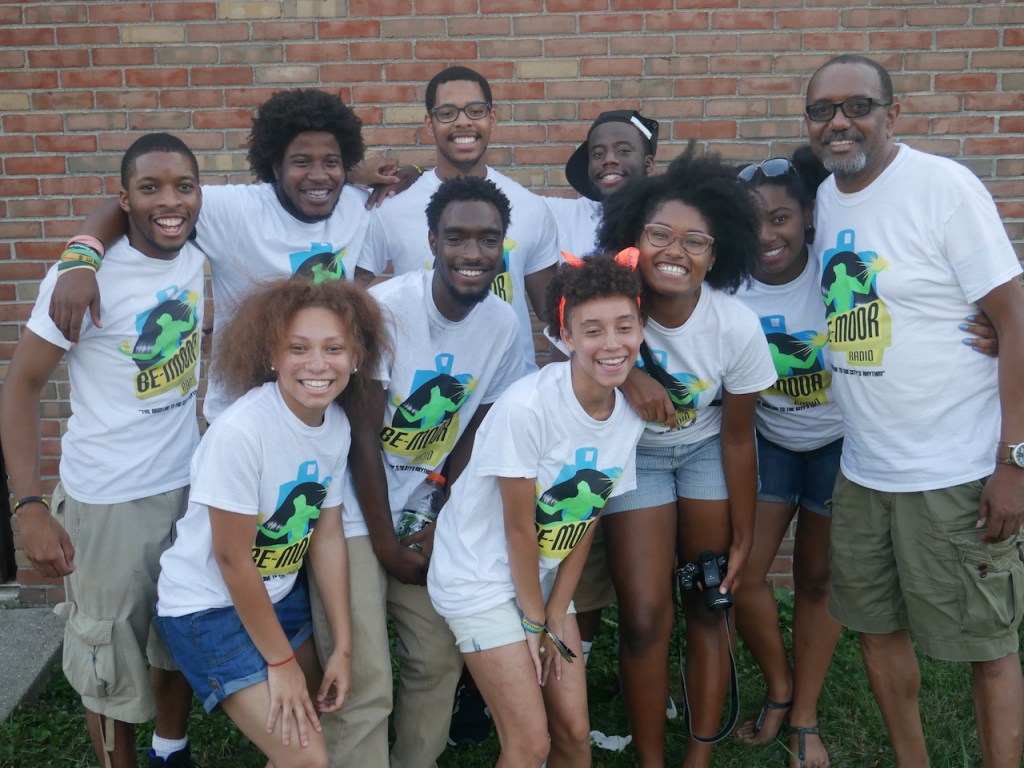
  • Founded Be-Moor Radio and Institute in 2016, which is now heard in 100+ countries, and is training over 300 emerging influencers and broadcasters.

The following is not a boast. It is simply evidence of what God can do through an ordinary servant who has made himself available. My journey is not about acclaim—it’s about calling. This is how I’ve lived out my anointing:

  • Finally, the thousands of young men and women that I have mentored, encouraged in Detroit, nationally, or within the African diaspora;
  • Finally, participated as a leader in many national organizational projects and Christian outreaches; 

In Closing

My life is a testimony to the truth of John 14:12:

“Very truly I tell you, whoever believes in me will do the works I have been doing, and they will do even greater things than these, because I am going to the Father.”

The anointing isn’t a feeling—it’s a calling. And when we respond to that calling with humility, faith, and action, we can indeed do greater things.

Let’s walk in our anointing. I’m Just Saying….

Should the Church Be Taxed? A Conversation worth having

by: Dennis Talbert

Let me be clear from the start: I am not advocating for churches or religious organizations to be taxed. But I am saying this — we need to have a serious conversation about the tax-exempt status of religious institutions, their role in philanthropy, their involvement in community economic development, and their responsibility as stewards of the communities they serve.

This is a weighty topic, with layers upon layers of complexity. It may be impossible to fully unpack it all in a single blog, but I will attempt to raise some key points that I’ve been sitting with for decades.

A Concern That Started in the ’70s

I began questioning the implications of church proliferation during the 1970s when I worked as a city employee in Detroit, responsible for community and economic development. It wasn’t the growth of churches that troubled me—it was the way zoning laws and city codes affected them. At that time, businesses were restricted from operating within a certain distance of religious institutions. I began to notice how the influx of small storefront churches impacted the economic vitality of Detroit’s commercial corridors.

Fast forward over 40 years, and I recently drove down Puritan Avenue — from 12th Street for nearly four miles — and to my dismay. What used to be a bustling commercial district has become a corridor dotted with closed church buildings, abandoned lots, and shuttered storefronts. What happened?

While there are theological layers to this, which I’ll set aside for now, it was hard not to conclude that the unchecked proliferation and eventual closure of tax-exempt churches had decimated a once-viable commercial zone.

These local observations reminded me of conversations in various African countries with young ministers seeking to become lead pastors.  We discussed launching churches in new regions and often looked to the Apostle Paul as the biblical model for church planting.

Paul’s efforts were transformative. His churches not only spread the Gospel but also created vibrant, empowered communities. So I began to wonder: Is this the model of church planting we’re following today? And more importantly, is this the model Christ intended?

There’s a growing trend in the U.S. called the church planter movement, where individuals, groups and denominations — often sincerely- believe God calls them to start churches. However, many churches, especially in urban communities, shut their doors within a few years. That raises a spiritual and practical question: What happened to the call?

A Brief History of Church Tax Exemption

Let’s step back for a moment. During the colonial era, churches like the Anglicans and Congregationalists were state-sponsored, particularly in Virginia and Massachusetts. This created tensions within the Christian community over state involvement in religious life.

Most states moved away from government-established churches after the American Revolution, influenced by Enlightenment ideals and a desire for religious freedom. By the 20th century, the Revenue Act of 1913 formally exempted churches from federal income tax, and Section 501(c)(3) was created for charitable organizations. Lawmakers seemed to assume that these entities would act in the public good, and for a time, many did.

But 112 years later, is it time to revisit those assumptions?

The Black Church: Mission, Vision, and Stewardship

Let me be clear: we need the Black church. Its historical contributions to education, liberation, and civil rights are unmatched. The mission to love, serve, and advance Christ has not changed.

Consider this: estimates suggest that the Black church in America collects between $100–$250 million every Sunday, more than $7.8 billion annually. That’s more than the annual GDP of Liberia, Haiti, Kosovo, Sierra Leone, Gambia, Burundi, and several other small nations combined.

According to Pew Research, over 85% of Black philanthropy in some neighborhoods flows through the church. That’s a staggering number. 

Despite the presence of hundreds of churches in Detroit and cities like it, far too many of our children, families, and neighborhoods continue to struggle with poverty, violence, educational gaps, and broken systems. A few years ago, a philanthropic foundation in Detroit attempted to mobilize Black churches to engage children in after-school programs. Despite the city’s high concentration of churches, the outcomes were limited.

We cannot afford to ignore these questions any longer. Are we truly being good stewards of the resources entrusted to us? Are we investing enough in the long-term success and transformation of Black children, youth, and families? Are we aligning our methods with our mission?

This conversation isn’t just about tax codes — it’s about Kingdom purpose. The moral and spiritual decline we see in America cannot be reversed by government programs or legislation alone. It demands a revitalized church — one that is committed to economic justice, social transformation, spiritual renewal, and community accountability.

We have the intellectual, theological, and moral capacity to explore these questions honestly and constructively. It’s time for the church — especially the Black church — to reimagine its role, revisit its vision, and renew its commitment to the cause of Christ in the 21st century. We can reimagine a tax code that reflects the economic and social justice issues of the 21st century, that creates a matrix that advances God’s kingdom-building agenda on earth, and fulfills the philanthropic needs of our communities and their residents.

I’m just saying. What say you? Let’s get the conversation going,,,,

I’m a Bigot!

By: Pastor Dennis Talbert

This week, I faced a hard truth—one I never thought I would apply to myself. I just might be a bigot. That’s a shocking realization for someone like me, a near lifelong Christian who has poured countless hours into mentoring and empowering thousands of young people through ministry, missions, and service projects around the world. And yet, here I am, saying it plainly: I am a bigot.

Bigotry, as I’ve come to define it, is more than just open hostility or hate. A bigot is someone who is intolerant of people who are different—be it in race, religion, gender, sexual orientation, or political belief. It’s an attitude, a posture, a resistance to seeing the humanity and dignity in others when they don’t mirror your own values or experiences. A bigot holds strong, unreasonable prejudices and often refuses to see things from another perspective, let alone treat those people with fairness or love. By that definition, the spirit of intolerance has, at times, influenced my own life. It has subtly and steadily crept in, impacting the very essence of who I am and distorting my grasp of the fruits of the Spirit described in Galatians 5:22–23: love, joy, peace, patience, kindness, goodness, faithfulness, gentleness, and self-control.

I never wanted this. I never meant for intolerance to settle in my heart. My Christian witness has long been centered on Romans 12:18: “If possible, as far as it depends on you, live at peace with everyone.” But I now find myself asking—how can one live at peace when bigotry poisons the soul and breeds division, anger, and even hate?

Growing up in the Church, I often heard the phrase attributed to St. Augustine: “Love the sinner, hate the sin.” It sounded noble, maybe even biblical. But in recent years, I’ve begun to question its true intent and impact. That phrase—repeated so often in Christian circles—now strikes me as a contradiction. It creates emotional distance, allowing us to avoid the messy, costly love that Jesus actually modeled. Jesus didn’t merely “tolerate” sinners. He embraced them. He ate with tax collectors, allowed a prostitute to anoint his feet, spoke freely with outcasts, and taught in parables that exalted acts of mercy over piety. He fed the hungry, welcomed the stranger, and clothed the naked. His love was complete, relational, and redemptive. If we say we “love the sinner,” shouldn’t that love resemble the embrace of Christ—patient, kind, and unflinchingly real?

This moment of self-reckoning compelled me to do what I’ve always done when facing a spiritual dilemma: I studied. I read the Scriptures, reflected on history, and dug into the roots of prejudice and hatred. What I discovered, and perhaps what you already know, is that bigotry has always been about more than feelings. It’s about power—who has it, who keeps it, and who is kept out. Bigotry is entangled with colonialism, racism, religious extremism, xenophobia, and nationalism. It’s been the fuel behind wars, oppression, and systems of injustice that continue to this day.

When I look around at the cultural climate we live in—politically divided, racially charged, and spiritually adrift—I understand how I got here. But my concern now stretches beyond myself. I am deeply troubled by what I see within the Body of Christ. Are we truly influencing the world for good? Or are we, in fact, being influenced by the world—conforming to its divisions and prejudices while hiding behind spiritual language?

One of Detroit’s great spiritual giants, the late Dr. Frederick G. Sampson, regularly prayed, “Lord, help me to rescue your church from your church.” That prayer echoes in my soul today. It might also be the silent cry of a generation of young people who keep walking in and out of our churches like they’re moving through a revolving door. They may lack formal theological training or institutional titles, but they know when something doesn’t add up. They can feel the dissonance between the Jesus we teach and the church we run. And many are choosing to walk away.

Perhaps it’s time for a new movement—not built on branding or tradition, but on truth and love. A movement that dares to preach the Christ of the cross, not a Christ of cultural conformity or political convenience. A movement that reclaims the radical humility and holy justice that defined the life of Jesus. Not a new denomination or a trendy campaign, but a rescue mission. A spiritual lifeboat for a church that may be drifting.  I’m just saying: What say you? Does the church need rescuing? Do we have the courage to confront our own prejudice, our institutional complacency, and the ways we’ve quietly accepted intolerance under the banner of faith?

P.S.    As for me, I return to the words of 1 Corinthians 9:27: “But I discipline my body and keep it under control, lest after preaching to others I should be disqualified.” I do not want to be disqualified—not from the race, the call, or the love I’ve spent a lifetime trying to embody. I need the Holy Spirit and my community to hold me accountable.

I am a sinner saved by grace and covered by mercy. But even grace demands that I grow.

Everybody Needs a Pastor

This has been a traumatic week.

Death and grief have visited our community through the tragic, accidental loss of a loving husband and wife, faithful urban missionaries serving in the Brightmoor neighborhood of Detroit. Their sudden departure has left five boys under the age of 15 without their parents, and a host of family members and friends drowning in sorrow.

Many Christians are quietly (or not quietly) asking: “Why, God?”

Because in the end, everybody needs a pastor.
Not just a preacher. Not just a leader. A pastor with the heart of Christ.

As I’ve sat with the weight of this trauma—both the personal grief and the collective grief of our believing community—it hit me deeply: we are like sheep without a shepherd. The same words that described the crowds in Matthew 9:36 and Mark 6:34 now describe the ache I feel for our city.

I remember during the height of the pandemic sensing this same void. And once again, the Spirit whispers: Lord, as pastors, we must have a resolve—mixed with a Word, connected to an action—for the people.

We need pastors in the spirit of Galatians 4:19, where Paul doesn’t speak of position or prestige, but of laboring in love “until Christ is formed in you.” That’s the heartbeat of faithful pastoral ministry. Yet, somewhere along the way, we’ve drifted.

Today, many pastors have become church administrators, strategic planners, authors, influencers, bible scholars, and church planters. There’s nothing inherently wrong with any of those roles—but when the art and love of pastoring God’s sheep falls out of fashion, we’re in trouble.

Revelation 2:4 echoes in my spirit: “You have forsaken the love you had at first.”

There’s a powerful little book called They Smell Like Sheep. Its message is clear: real pastors live among their people. Real shepherds carry the scent of the sheep. These past few days, after attending several homegoing celebrations and sitting with grieving souls, one truth rang loudly in my spirit:

Everybody needs a pastor.

Not one perched above the people, but one who walks with them. Through the mess. Through the pain. Through the grief. A shepherd, like the one described in Psalm 23, who leads, restores, comforts, and remains present in the valley of the shadow of death.

And here’s another truth that pierced me this weekend:

Even pastors need a pastor.

As someone who has launched mentoring programs and worked with youth for years, I’ve often said, “Everyone needs a mentor.” The same is true in ministry: everyone needs a pastor.

A real pastor doesn’t lead with control, but with care. They don’t see people as numbers, but as souls. They are teachable, humble, and submissive. They don’t isolate themselves in pride or burnout because they know—they’re sheep too.

We don’t need to be Superman or Superwoman. We just need to be servants of Christ, not with pessimism, but with hope. Trusting Christ to be Christ and to do what only He can do: transform lives.

True pastors give more than inspiration.
They give biblical direction—even when it’s hard.
They preach truth, not trends.
Their goal is not to entertain, but to equip.

We must return to our first love—not the platform or programs, but the pastoral vocation—to love people deeply, walk with them patiently, correct them biblically, and carry their burdens when life becomes too heavy for them to bear alone.

As They Smell Like Sheep reminds us, ministry isn’t clean.
It’s relational. It’s gritty. It’s deeply personal.

This week has reminded me:
The world is full of people silently crying out for care.
Let us not forget our call.

Everybody needs a pastor.

I’m just saying… what do you think?

“The Snake in the Sanctuary” Christianity vs Capitalism

The prosperity gospel has deeply influenced the theology of many Black churches, often distorting biblical truth and historical context. Many clerical leaders have embraced this flawed doctrine, whether knowingly or unknowingly, raising the question of why such a deviation has occurred. One possible explanation lies in the financial struggles faced by Black communities globally, where economic hardship has made the promise of wealth and success through faith especially appealing. This theological shift has had significant implications, shaping the church’s spiritual and social perspectives.

Christianity and capitalism often intersect in the modern world, yet their core values sometimes compete. While both systems have influenced societies across the globe, their fundamental principles raise essential questions about morality, economic justice, and human relationships. Are Christianity and capitalism truly at odds, or can they be reconciled?

Core Principles of Christianity

Christianity is centered on the teachings of Jesus Christ, emphasizing love, compassion, humility, and service to others. Key biblical principles include:

  • Generosity: “It is more blessed to give than to receive” (Acts 20:35).
  • Concern for the Poor: “Whoever oppresses the poor shows contempt for their Maker, but whoever is kind to the needy honors God” (Proverbs 14:31).
  • Community and Equality: The early church in Acts 2:44-45 practiced communal living, sharing resources so that no one was in need.

Core Principles of Capitalism

Capitalism is an economic system built on private ownership, competition, and profit. It thrives on:

  • Individualism: Success is often determined by personal effort and market dynamics.
  • Free Markets: Supply and demand drive economic growth.
  • Profit Motive: Pursuing financial gain is a primary driver of innovation and economic expansion.

Points of Tension

While capitalism encourages innovation and wealth creation, it can also lead to inequality, exploitation, and materialism—issues that Christianity warns against.

  1. Wealth and Greed: The Bible warns against the love of money (1 Timothy 6:10), yet capitalism often promotes accumulation as a sign of success.
  2. Social Responsibility: Christianity teaches care for the marginalized, but capitalism can sometimes prioritize profits over people.
  3. Competition vs. Cooperation: While capitalism thrives on competition, Christianity calls for unity and love for one’s neighbor.

Can They Coexist?

Despite their differences, some argue that capitalism can align with Christian values when tempered by ethical considerations. Concepts like conscious capitalism, fair trade, and corporate social responsibility aim to balance profit with purpose. Many Christian entrepreneurs and businesses strive to operate ethically, ensuring that economic pursuits do not compromise moral values.

A Call for Balance

Rather than rejecting capitalism, the key may be to reshape it in ways that align with Christian principles. Economic systems should serve people, not the other way around. By integrating generosity, fairness, and ethical stewardship into capitalism, we can create a society that upholds both faith and prosperity. 

This year, Be-Moor Radio, one of the projects I lead, will explore alternative economic models—such as cooperative and collaborative economics—to build a community-based approach to sustainable wealth creation. When we launched in 2016 with the support of the Ross Business School at the University of Michigan, this was one of our primary goals. From the start, we aimed to create a new economic engine for urban youth while simultaneously developing the next generation of leaders and influencers.

What do you think? Can capitalism be a tool for Christian values, or does it inherently conflict with the teachings of Jesus? What say you?????

https://www.facebook.com/dennis.talbert

How About the Affirming Action Movement

You intended to harm me, but God intended it for good to accomplish what is now being done, the saving of many lives”.  Genesis 50:20

Since the inauguration of President Trump on January 20th and his series of presidential declarations, I’ve been looking for the silver lining or God amid these heavy-handed and race-centered actions.  Well, I think I may have found it in a concept or idea of building an Affirming Action Plan for Black Children and Youth. 

Now you ask, what is an Affirming Action Plan, and how does it differ from the Affirmative Action strategies of the sixties?  Here’s the concept: The Black Church has historically played a pivotal role in nurturing, educating, and advocating for the well-being of Black children and youth in response to contemporary challenges. However, under the incoming Trump administration, Black children and youth will probably experience the most significant challenge in decades.  

Gen Z, Generation Alpha, and the Millennials have inherited our failure not to have been razer focused on educational disparities, economic disenfranchisement, systemic injustice, and cultural misrepresentation. Nevertheless, thousands of Black Churches nationwide have an opportunity to regroup and implement a concept we are calling the Affirming Action Plan

This initiative is designed to uplift and empower Black children and youth through intentional, faith-driven strategies that promote academic excellence, emotional resilience, economic literacy, and spiritual grounding.  The Black ecclesia (body of believers in fellowship) could galvanize an army of volunteers, philanthropists, college students, retirees, and others to create an Affirming Action Network to embrace our children and youth who will bear the brunt of the most significant upheaval culturally, academically, and economically in centuries. 

Black children and youth face unique structural barriers that hinder their personal and professional growth. While societal affirmative action policies have provided some relief along with justice-centered programs, including diversity, equity, and inclusion commitments by corporations, governments, and universities, they are not enough.  Effective January 20, 2025, President Donald J. Trump has declared war on DEI and Affirmative Action programs globally. In the Department of Education, the Assistant Secretary for Civil Rights wrote a Dear Colleagues (See the letter at the bottom of the blog) saying they should abandon their DEI programs and activities by February 28, 2025, and risk losing federal funding. 

In the end, we need a new approach to ministry that combines faith and works, where our works and faith is our worship. I’m Just Saying…. 

The loss of federal funding could impact Title One funding, designed to serve underserved children, the Free and Reduced Lunch Program (NLSP), programs that help students with disabilities including autism and emotional and other learning disabilities (IDEA funding) through the Social Security Act, and the lists of programs funded by the federal government could present irreparable harm to Black children, youth and society. 

However, the Affirming Action Network group of ministries can fill the gap! This affirming network of Black churches could present a united front against evil and present possibilities of hope.  John 17:21. In this passage, Jesus asks God that his followers and others who believe in them through their word may be unified so that the world will believe that God sent Jesus. Isn’t our objective that the world would know and love Him?

Okay, Apostles, Bishops, Pastors, and Evangelists, this potentially is our opportunity to be the church we preach about and be a living epistle through our faith and works.  Below, I offer a few examples of where we can be effective, thrive, and witness a biblical revival in our neighborhoods. 

  1. Academic Empowerment: Provide tutoring, scholarship opportunities, and mentorship programs through church-based and community partnerships.
  2. Spiritual and Emotional Resilience: Establish faith-based counseling and mentorship programs to support mental health and identity formation.
  3. Economic Literacy and Entrepreneurial Development: Implement financial literacy workshops and entrepreneurship training tailored to Black youth.
  4. Civic Engagement and Leadership Development: Encourage active participation in civic duties and provide leadership training for emerging community advocates.
  5. Cultural Affirmation and Identity Formation: Celebrate and educate Black children on their rich cultural and historical heritage, reinforcing positive self-identity.
  6. Faith-Driven Counseling and Mentorship: Pair youth with mentors from within the church and professional networks to foster positive relationships.
  7. Entrepreneurship Incubators: Develop church-led initiatives that support youth in starting businesses and managing finances.

These are just a few ideas that can represent a silver lining and hope to the hopeless. As I write this blog and share some ideas with the readers, I’m reminded of the civil rights movement in Montgomery during the bus boycott, where every Black church decided it was time to challenge the system of racism, bigotry, and religious disunity.  We can do this, what say you?

Letter from U.S. Department of Education:

chrome-extension://efaidnbmnnnibpcajpcglclefindmkaj/https://www.ed.gov/media/document/dear-colleague-letter-sffa-v-harvard-109506.pdf?utm_source=substack&utm_medium=email

The Moral Compass – Who is controlling the magnetic needle?

Has the Black church lost its moral compass? Maybe even a different question, what is the role of the Black church in setting the moral compass within the Black community, locally and globally?

For a few years, I have pondered these questions in light of several critical issues, such as the unfettered legalization of marijuana, the fact that one in every three persons of color voted for Donald J. Trump, the crisis of urban education, health care, and yes PALISTINE.  All of these issues, at least as I see it, fall under morality. Our moral compass is off! There appears to be a moral compass guide controlled by someone or something outside the Black community. 

Historically, Black American leaders, mainly pastors, have been at the forefront of advocating for justice and calling out individuals, systems, and behaviors that harm the Black community. From the days of enslavement to the civil rights movement, the tradition of accountability has been a cornerstone of Black progress. Our global presence in the Black Christian church community had value to the world. Several years ago, our pastor (Rosedale Park Baptist Church) was contacted by a group of Gypsies from Romania to come to their country to discuss reconciliation as they admired the progress of Black Americans as a sign of progress. Our story of resilience in the face of racism was revered, respected, and celebrated by other marginalized ethnic groups worldwide. 

Our struggle and our voice mattered! During slavery, abolitionist pastors such as Henry Highland Garnet boldly used their pulpits to denounce not only the horrors of slavery but also the complicity of White Christians and institutions perpetuating it. Garnet’s famous 1843 “Call to Rebellion” sermon challenged enslaved people to resist their oppressions, marking one of the first examples of Black pastors directly confronting both internal and external challenges of Black liberation. A model championed by Christ ( read Luke 4: 18-19 Matthew 10:34). 

During the Reconstruction era, where men and women like Frederick Douglass and Ida B. Wells were unrelenting in exposing the betrayals of political leaders, bible-based churches, and other institutions that claimed to support Black progress while enabling racial violence and disenfranchisement. 

The Civil Rights Movement in the mid-20th century embodied Christians, setting a moral compass for not just the United States but also the world. Even though many of the old guard associated with the National Baptist Convention didn’t join the movement at first, eventually, they jumped on board. They followed in the leadership example of Christian leaders like Rev. Dr. Martin Luther King, Jr., who called out structural racism embedded in American society and church.  

In his “Letter from Birmingham Jail”, King emphasized the danger of inaction, criticizing white moderates and complacent Black Christian leaders alike for their unwillingness to confront injustice. But it wasn’t just Christian faith leaders who followed a moral compass; men like Malcolm X (a Black Muslim) challenged Black Americans to reject self-destructive behaviors and embrace empowerment. 

One of my favorite stories from the Civil Rights Movement is the 381-day Montgomery bus boycott. In his compilation of sermons, Rev. Dr. Martin Luther King, Jr talks about the struggle of preaching every Sunday to encourage Montgomery residents to boycott and walk or rideshare. For 52 Sundays, Black church leaders throughout Montgomery used every Sunday to preach a message of encouragement and a biblically centered sermon for justice. 

 I can only imagine what the state of Black children and youth in America would be if we took 52 Sundays across every urban city to emphasize education, loving our neighbor, and encouraging the congregants to mentor and adopt children who are orphaned because of circumstances outside of their doing or tutor a Black child.

But today, another force is at play, guiding the moral compass and setting the agenda and, ultimately, the course of action for our prophetic community. They are outsiders who beat us over the head with spiritual concepts on being biblically centered or adhering to a moral majority. Unfortunately, we have fallen prey to their demagoguery and are now victims of their version of truth and their moral compasses. There are even some who have discounted the legacy of our faith giants like Richard Allen, Martin Luther King, Jr, and Frederick Douglass for a new framework labeled evangelical. Can’t we decide what the moral code is or should be for our neighborhoods and community and follow a compass to discover our Northstar? 

We have made their truth the definitive truth without other options. This is why we need Black theology, Black critical thinking, or what I am now labeling Black Christian excellence (You will hear more about the concept of Black Christian Excellence in my future blogs, magazine, and newspaper articles, and potentially a book). 

As a community, we can’t allow our sacred institutions, biblical scholars, families, and moral compass to be driven by outside perspectives, including capitalism and the evangelical church. At some point, we must tell ourselves it’s not working or beneficial to our community. I’m concerned about urban youth development when we’ve made it our number one goal to produce entrepreneurs and career-based servants, not scholars, thinkers, and influencers. What we are perpetuating is pure self-centered trash that is both an impediment and disgraceful to our progress as a people, locally and globally. 

We need our prophetic voices. I can truly appreciate those prophetic voices who were willing to call out the destructive elements of our society and resolve not to be conformists.  Sisters like Dr. Helen Moore, JD, one of Detroit’s greatest champions for Black education, and C. Delores Tucker, former Pennsylvania Secretary of State who called out gangster rap before it was popular. Each of these sisters led by example.

We’ve got to rediscover our Moral Compass quickly, or we will become like the other lost tribes that are extinct, and we will be a few hundred years from now. I’m Just Saying….