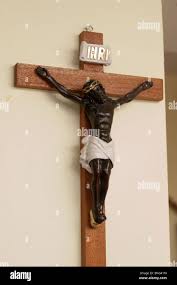
A Call to Wake Up: Giving Our Children a Fighting Chance

On Thursday, October 9, 2025, a seventeen-year-old young man was shot in the back—just twenty feet in front of my home—by a white adult male. I mention his race not out of racial animosity, but because it’s uncommon to see a white man on my street, and this man needs to be found and taken off the streets of Detroit.

Yesterday, I learned that the young brother died from his wounds.

As I sat in my home office that day, I heard a single gunshot. When I opened my blinds, I saw the young man lying motionless in the street and the White man running to his white Ford 150. I rushed outside, joined by a young man working in my home. As we knelt beside him, he kept repeating, “I don’t want to die.” We tried to reassure him that he would live while calling 911.

Within minutes—no more than three or four—Detroit’s first responders arrived and worked with professionalism and urgency. The police investigators spent over an hour inside my home and at least three hours outside gathering evidence and statements. But the young man never had a fighting chance. He was shot in the back.

That night, I lay awake hearing his words—“I don’t want to die”—echoing in my mind. Those words still ring in my ears. And the painful truth is this: just as that young man didn’t have a fighting chance, so it is for far too many children and youth growing up in our communities across urban America.

The next morning, I had to return to the rhythm of my daily ministry—praying with high schoolers at 6:30 a.m., as I’ve done for over 25 years, and later launching a new small group of young leaders through Be-Moor Radio.

That same day, only a few blocks from my house, tragedy struck again. At our neighborhood elementary school, a young girl stabbed another student—using a knife her mother brought to the school and handed to her. Yes, the mother gave her daughter a weapon and told her to use it.

Our children are in trauma. Our communities are in trauma. And too many have no fighting chance.

We no longer have a North Star—no shared moral compass or value-centered community. Black church, wake up! This is our role, our commission, and our divine assignment. Luke 4:18-19 makes it clear: “The Spirit of the Lord is upon me, because He has anointed me to preach good news to the poor…”

We need a reset—a return to our mission, our values, and our call to a people-centered spiritual renewal. Genesis 4:10 reminds us, “The blood of your brother cries out to me from the ground.” The blood of our sons and daughters is crying out from our streets for justice. They must not be forgotten.

Every child living in an urban community is experiencing trauma. In truth, every person in our communities is carrying trauma. We all need healing, hope, and an intervention—and the Black church, as the ambassador of Christ, is God’s chosen instrument for that healing.

Jesus said in John 10:10, “The thief comes only to steal, kill, and destroy; but I have come that you might have life—and have it more abundantly.”
An abundant life is a trauma-free life.

After decades of serving as an urban youth development specialist, I’ve seen more death and destruction than I care to recall. Yet this moment feels different. The urgency is greater. It was at my front door! The cries are louder.

Black church, wake up! It’s time for a people-centered revival—a movement that heals, restores, and reclaims our communities. Everything else we’re doing is insignificant compared to this call. As God said in Amos 5:21–23, “I hate your festivals (could it be our church services)… take away from me the noise of your songs (could it be our praise and worship).”

Let’s resolve, together, to give our children—and our communities—a fighting chance.

P.S. There is a Truth and Trauma Conference—sponsored by the Detroit Leadership Foundation—that will be held on Saturday, November 18th, from 9:00 a.m. to 3:00 p.m. at the McGregor Memorial Conference Center on the campus of Wayne State University.
Get healed. Get equipped. And let’s get to work.
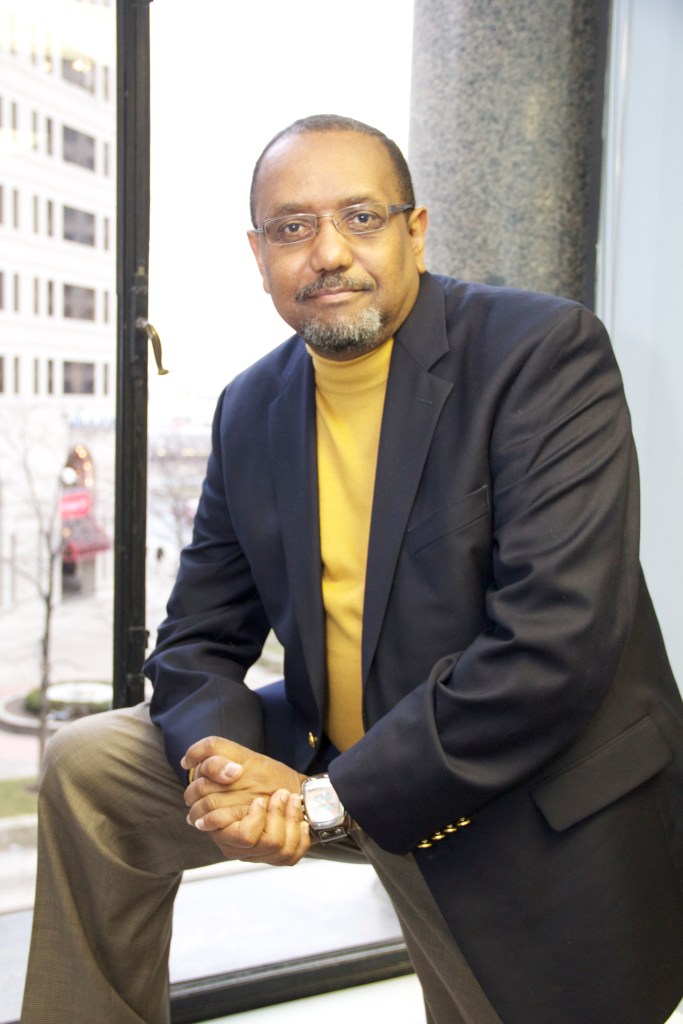

Innovation: A Holy Calling for the Black Church

Innovation can sound like a curse word in some Black church circles. But for me, it’s never been about chasing trends or stirring up controversy. It’s always been about one thing—staying faithful to Christ’s call in ways that truly speak to the times.

I’ve always been drawn to swimming upstream. Not because I love conflict, but because I love discovery. I love finding new ways to reach Black children, youth, and families with the timeless message of Jesus.

Just this week, I found myself on the phone with a young man, talking about a church experimenting with fresh approaches to worship and community. At first, we both slipped back into the comfort of “how we used to do things.” But when I hung up, the Spirit convicted me: Talbert, are you losing your edge?

I’ve always believed that innovation should beat at the heart of every urban church that’s serious about advancing the Kingdom of God. The world may call it innovation, but I call it being in the right place, at the right time, with the right message—Christ.

Paul captured this spirit in 1 Corinthians 9:19-23 when he said:

“Though I am free and belong to no one, I have made myself a slave to everyone, to win as many as possible… I have become all things to all people so that by all possible means I might save some.”

That’s the essence of innovation: freedom to meet people where they are without ever compromising the gospel.

Of course, innovation comes at a cost. Financial risk. Skepticism from leaders. Resistance from traditionalists. I’ve paid that price, but I’ve also seen the fruit—and I’ll keep paying it, because innovation is the only way the church will stay effective in reaching our children, our neighbors, and the nations.

Hip Hop Sunday

Years ago, I grew weary of “Youth Sundays” that had become more about performance than proclamation. In my heart, it felt like heaven’s heartbreak hour. So, with my pastor’s blessing, we tried something different—Hip Hop Sunday. We filled the sanctuary with beats, rhymes, and the gospel, led by the old-school group Transformation Crusade.

From the very first track, something powerful happened: the seniors in the congregation lifted their hands in worship. God reminded us—it’s not about the style, it’s about the message. What started as one Sunday grew into a month. Young people packed the sanctuary, bringing their friends in droves. Attendance exploded to the point where men had to line the walls just to make room. One parent was so moved he bought every single youth a CD from the artist The Truth—not for himself, but to flood the community with gospel Hip-Hop music.

Eventually, Hip Hop Sundays ended—not because the Spirit wasn’t moving, but because the offering dipped and the men grew tired of standing. But for a season, God showed us what could happen when we broke free of tradition and let Christ lead us into new territory.

Sending Black Students to Africa

Later, while leading a major urban conference, I invited Rev. Bekele Shanko, a powerful African leader, to speak. His presence sparked resistance. Some didn’t think he belonged on that stage. But we pressed forward.

That night, Rev. Shanko called hundreds of Black college students to missions in Africa. The Spirit fell. Students pledged or gave more than $68,000 for ministry in Southeast Africa. The following summer, hundreds of young people—Black students—spent their summer serving people who looked like them, across the ocean.

Twenty years later, many of them are still on the field. Still serving. Still carrying the gospel. That’s the fruit of daring to innovate.

Why It Matters

Innovation is rarely comfortable. It can isolate you, even make you an outsider—especially in traditional Black church settings. But let’s be clear: innovation is not a threat to theology or doctrine. It’s an invitation to growth. When it’s rooted in Scripture and led by the Spirit, innovation strengthens the church.

Jesus Himself was an innovator. He broke religious traditions, shattered social barriers, and rewrote the script of history. His ministry birthed the New Testament church—the greatest innovation of all time.

I’m Just Saying….

Should the Church Be Taxed? A Conversation worth having

by: Dennis Talbert

Let me be clear from the start: I am not advocating for churches or religious organizations to be taxed. But I am saying this — we need to have a serious conversation about the tax-exempt status of religious institutions, their role in philanthropy, their involvement in community economic development, and their responsibility as stewards of the communities they serve.

This is a weighty topic, with layers upon layers of complexity. It may be impossible to fully unpack it all in a single blog, but I will attempt to raise some key points that I’ve been sitting with for decades.

A Concern That Started in the ’70s

I began questioning the implications of church proliferation during the 1970s when I worked as a city employee in Detroit, responsible for community and economic development. It wasn’t the growth of churches that troubled me—it was the way zoning laws and city codes affected them. At that time, businesses were restricted from operating within a certain distance of religious institutions. I began to notice how the influx of small storefront churches impacted the economic vitality of Detroit’s commercial corridors.

Fast forward over 40 years, and I recently drove down Puritan Avenue — from 12th Street for nearly four miles — and to my dismay. What used to be a bustling commercial district has become a corridor dotted with closed church buildings, abandoned lots, and shuttered storefronts. What happened?

While there are theological layers to this, which I’ll set aside for now, it was hard not to conclude that the unchecked proliferation and eventual closure of tax-exempt churches had decimated a once-viable commercial zone.

These local observations reminded me of conversations in various African countries with young ministers seeking to become lead pastors.  We discussed launching churches in new regions and often looked to the Apostle Paul as the biblical model for church planting.

Paul’s efforts were transformative. His churches not only spread the Gospel but also created vibrant, empowered communities. So I began to wonder: Is this the model of church planting we’re following today? And more importantly, is this the model Christ intended?

There’s a growing trend in the U.S. called the church planter movement, where individuals, groups and denominations — often sincerely- believe God calls them to start churches. However, many churches, especially in urban communities, shut their doors within a few years. That raises a spiritual and practical question: What happened to the call?

A Brief History of Church Tax Exemption

Let’s step back for a moment. During the colonial era, churches like the Anglicans and Congregationalists were state-sponsored, particularly in Virginia and Massachusetts. This created tensions within the Christian community over state involvement in religious life.

Most states moved away from government-established churches after the American Revolution, influenced by Enlightenment ideals and a desire for religious freedom. By the 20th century, the Revenue Act of 1913 formally exempted churches from federal income tax, and Section 501(c)(3) was created for charitable organizations. Lawmakers seemed to assume that these entities would act in the public good, and for a time, many did.

But 112 years later, is it time to revisit those assumptions?

The Black Church: Mission, Vision, and Stewardship

Let me be clear: we need the Black church. Its historical contributions to education, liberation, and civil rights are unmatched. The mission to love, serve, and advance Christ has not changed.

Consider this: estimates suggest that the Black church in America collects between $100–$250 million every Sunday, more than $7.8 billion annually. That’s more than the annual GDP of Liberia, Haiti, Kosovo, Sierra Leone, Gambia, Burundi, and several other small nations combined.

According to Pew Research, over 85% of Black philanthropy in some neighborhoods flows through the church. That’s a staggering number. 

Despite the presence of hundreds of churches in Detroit and cities like it, far too many of our children, families, and neighborhoods continue to struggle with poverty, violence, educational gaps, and broken systems. A few years ago, a philanthropic foundation in Detroit attempted to mobilize Black churches to engage children in after-school programs. Despite the city’s high concentration of churches, the outcomes were limited.

We cannot afford to ignore these questions any longer. Are we truly being good stewards of the resources entrusted to us? Are we investing enough in the long-term success and transformation of Black children, youth, and families? Are we aligning our methods with our mission?

This conversation isn’t just about tax codes — it’s about Kingdom purpose. The moral and spiritual decline we see in America cannot be reversed by government programs or legislation alone. It demands a revitalized church — one that is committed to economic justice, social transformation, spiritual renewal, and community accountability.

We have the intellectual, theological, and moral capacity to explore these questions honestly and constructively. It’s time for the church — especially the Black church — to reimagine its role, revisit its vision, and renew its commitment to the cause of Christ in the 21st century. We can reimagine a tax code that reflects the economic and social justice issues of the 21st century, that creates a matrix that advances God’s kingdom-building agenda on earth, and fulfills the philanthropic needs of our communities and their residents.

I’m just saying. What say you? Let’s get the conversation going,,,,

I’m a Bigot!

By: Pastor Dennis Talbert

This week, I faced a hard truth—one I never thought I would apply to myself. I just might be a bigot. That’s a shocking realization for someone like me, a near lifelong Christian who has poured countless hours into mentoring and empowering thousands of young people through ministry, missions, and service projects around the world. And yet, here I am, saying it plainly: I am a bigot.

Bigotry, as I’ve come to define it, is more than just open hostility or hate. A bigot is someone who is intolerant of people who are different—be it in race, religion, gender, sexual orientation, or political belief. It’s an attitude, a posture, a resistance to seeing the humanity and dignity in others when they don’t mirror your own values or experiences. A bigot holds strong, unreasonable prejudices and often refuses to see things from another perspective, let alone treat those people with fairness or love. By that definition, the spirit of intolerance has, at times, influenced my own life. It has subtly and steadily crept in, impacting the very essence of who I am and distorting my grasp of the fruits of the Spirit described in Galatians 5:22–23: love, joy, peace, patience, kindness, goodness, faithfulness, gentleness, and self-control.

I never wanted this. I never meant for intolerance to settle in my heart. My Christian witness has long been centered on Romans 12:18: “If possible, as far as it depends on you, live at peace with everyone.” But I now find myself asking—how can one live at peace when bigotry poisons the soul and breeds division, anger, and even hate?

Growing up in the Church, I often heard the phrase attributed to St. Augustine: “Love the sinner, hate the sin.” It sounded noble, maybe even biblical. But in recent years, I’ve begun to question its true intent and impact. That phrase—repeated so often in Christian circles—now strikes me as a contradiction. It creates emotional distance, allowing us to avoid the messy, costly love that Jesus actually modeled. Jesus didn’t merely “tolerate” sinners. He embraced them. He ate with tax collectors, allowed a prostitute to anoint his feet, spoke freely with outcasts, and taught in parables that exalted acts of mercy over piety. He fed the hungry, welcomed the stranger, and clothed the naked. His love was complete, relational, and redemptive. If we say we “love the sinner,” shouldn’t that love resemble the embrace of Christ—patient, kind, and unflinchingly real?

This moment of self-reckoning compelled me to do what I’ve always done when facing a spiritual dilemma: I studied. I read the Scriptures, reflected on history, and dug into the roots of prejudice and hatred. What I discovered, and perhaps what you already know, is that bigotry has always been about more than feelings. It’s about power—who has it, who keeps it, and who is kept out. Bigotry is entangled with colonialism, racism, religious extremism, xenophobia, and nationalism. It’s been the fuel behind wars, oppression, and systems of injustice that continue to this day.

When I look around at the cultural climate we live in—politically divided, racially charged, and spiritually adrift—I understand how I got here. But my concern now stretches beyond myself. I am deeply troubled by what I see within the Body of Christ. Are we truly influencing the world for good? Or are we, in fact, being influenced by the world—conforming to its divisions and prejudices while hiding behind spiritual language?

One of Detroit’s great spiritual giants, the late Dr. Frederick G. Sampson, regularly prayed, “Lord, help me to rescue your church from your church.” That prayer echoes in my soul today. It might also be the silent cry of a generation of young people who keep walking in and out of our churches like they’re moving through a revolving door. They may lack formal theological training or institutional titles, but they know when something doesn’t add up. They can feel the dissonance between the Jesus we teach and the church we run. And many are choosing to walk away.

Perhaps it’s time for a new movement—not built on branding or tradition, but on truth and love. A movement that dares to preach the Christ of the cross, not a Christ of cultural conformity or political convenience. A movement that reclaims the radical humility and holy justice that defined the life of Jesus. Not a new denomination or a trendy campaign, but a rescue mission. A spiritual lifeboat for a church that may be drifting.  I’m just saying: What say you? Does the church need rescuing? Do we have the courage to confront our own prejudice, our institutional complacency, and the ways we’ve quietly accepted intolerance under the banner of faith?

P.S.    As for me, I return to the words of 1 Corinthians 9:27: “But I discipline my body and keep it under control, lest after preaching to others I should be disqualified.” I do not want to be disqualified—not from the race, the call, or the love I’ve spent a lifetime trying to embody. I need the Holy Spirit and my community to hold me accountable.

I am a sinner saved by grace and covered by mercy. But even grace demands that I grow.