
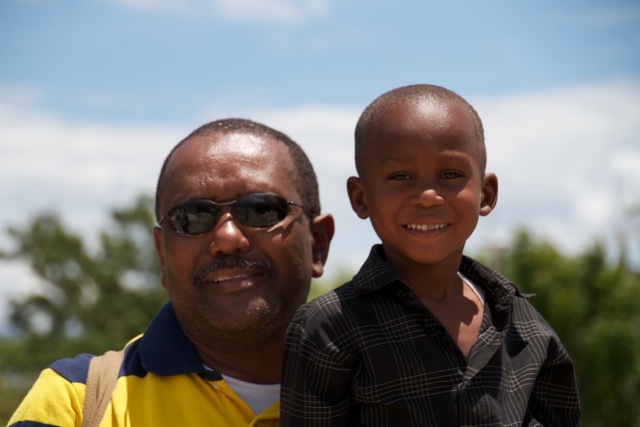
I have dedicated more than forty years of my life to the work of urban youth development. I walked away from a fairly successful career in communications because I believed—deeply and sincerely—that my life’s work should contribute to building a world where Black and Brown children could thrive, compete globally, and live with dignity, purpose, and hope.
Now, after four decades, I am forced to ask the most uncomfortable but necessary question: Are Black and Brown children and youth actually better off? Because in the end, that was my only objective.
Over the years, I have watched billions of dollars flow into systems, programs, institutions, and initiatives designed to “serve,” “fix,” and “support” Black children. I’ve also had to confront a sobering reality: while some progress has been made, in many ways our children are not better off—and in some cases, they may be worse off. This blog is not an exercise in rehearsing statistics or highlighting deficits; that story has been told repeatedly. My concern is deeper, more existential, and more moral.
As a believer, I was deeply troubled years ago while attending a conference hosted by the Association of American Colleges and Universities. During a keynote address, Peter McPherson, then President of Michigan State University, stated—paraphrased—that we are raising the first generation in American history that will do less with more than any generation before it. Sitting next to me was the legendary Dr. Grace Lee Boggs. We were the only people of color in the room. We looked at one another, stunned. In her unmistakably direct and prophetic voice, Dr. Boggs leaned over and said, “He’s not talking about us.”
I walked away from that conference determined to prove that statement wrong as it related to Black children in Detroit and across the nation. I knew what we were doing on the ground was working—often without gimmicks, without excessive resources, and without national attention. As my former pastor used to say, we were making bricks with leftover straw. And yet, here we are. The community reality remains what it is. We must be honest enough to say that we have failed Black children.
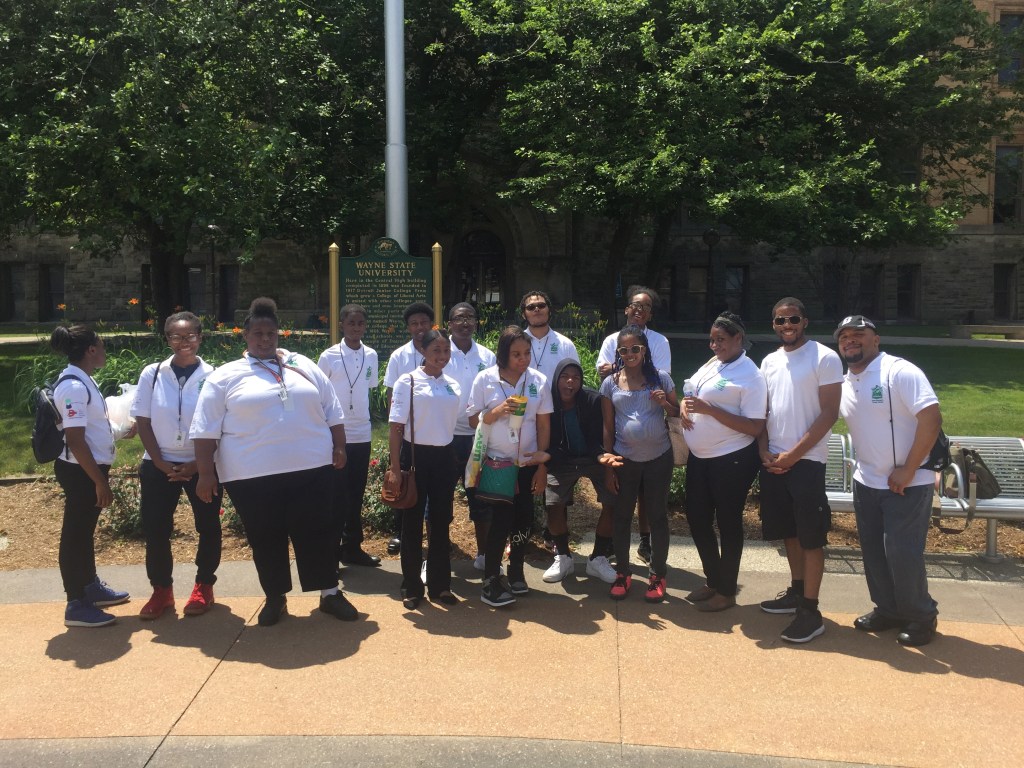
Let me be clear: adults in many sectors have done better. Careers have flourished. Institutions have grown. Professional classes have expanded. I am not asserting that the struggles of Black children are caused by adult success—but the contrast is real and undeniable. Resources did not trickle down in any meaningful or sustained way, even as theory suggested they would. In urban youth development, far too little attention has been given to the true cost of professionalization, infrastructure, administrative overhead, and fragmented systems of service. Too often, the work became about sustaining organizations rather than transforming outcomes.
And yet, I am not without hope.
Across this country—and throughout the African diaspora—there are outstanding programs doing incredible work. Dedicated educators, mentors, faith leaders, coaches, artists, and advocates are showing up daily. The problem is not passion or talent. The problem is scale, coherence, and unity.

The question we must now ask is this: how do we take what works and scale it in ways that are replicable, adaptable, and sustainable across diverse Black communities?
I want to suggest that the time has come for the development of national mentoring models, workforce development frameworks, educational pathways, and character-based youth development systems that can be implemented in local contexts without losing fidelity to core principles. This cannot remain a collection of isolated best practices. It must become a shared architecture.
To that end, I believe it is time—past time—for a true national, and ultimately global, urban youth development convening. A gathering funded not just by institutions, but by Black philanthropists and what I’ll boldly call our modern-day Black superheroes: athletes, entertainers, executives, entrepreneurs, and cultural leaders who have benefited enormously from the sacrifices of earlier generations. Men and women willing to say, for the next ten years, we will focus a significant portion of our attention, influence, and resources on Black children and youth.
Not for branding. Not for ego. Not for temporary impact.
But for the sole purpose of moving the needle toward excellence, achievement, character formation, spiritual grounding, and educational rigor.
This convening must do more than inspire. It must produce agreement around clear community values—values that can be affirmed by the majority and lived out consistently in streets, schools, hallways, homes, and faith institutions across the globe. Values that transcend ideology, denomination, class, and geography. Values that say, plainly: our children matter, and mediocrity is not an option.
Some may say this is naïve. Others may argue that consensus is impossible. I reject both claims.
I am crazy enough to believe that we have the intellectual capital, cultural wisdom, theological grounding, and lived experience to develop a comprehensive and inclusive strategy—one that honors every valuable entity in our communities while calling all of us to something higher. I believe we can set aside unchecked individualism and even lawful, well-meaning self-interest when the stakes are this high.
This is not a call to erase differences. It is a call to prioritize what matters most.
It is time to call the meeting.
A meeting that asks hard questions, names hard truths, and demands courageous commitments. A meeting that centers children rather than institutions, outcomes rather than optics, and unity rather than competition. A meeting grounded in love for our people and responsibility to future generations.
If we cannot unify around wanting more for our children—then we must be honest enough to admit that the problem is not a lack of resources, but a lack of will.
Are Our Children Better Off? A Call to Unity and Action in Urban Youth Development:
Time to Scale Up!
I still believe. I still hope. And I still believe that together, we can do better—because our children deserve nothing less. I’m Just Saying…

 I'm Just Saying