Innovation: A Holy Calling for the Black Church

Innovation can sound like a curse word in some Black church circles. But for me, it’s never been about chasing trends or stirring up controversy. It’s always been about one thing—staying faithful to Christ’s call in ways that truly speak to the times.

I’ve always been drawn to swimming upstream. Not because I love conflict, but because I love discovery. I love finding new ways to reach Black children, youth, and families with the timeless message of Jesus.

Just this week, I found myself on the phone with a young man, talking about a church experimenting with fresh approaches to worship and community. At first, we both slipped back into the comfort of “how we used to do things.” But when I hung up, the Spirit convicted me: Talbert, are you losing your edge?

I’ve always believed that innovation should beat at the heart of every urban church that’s serious about advancing the Kingdom of God. The world may call it innovation, but I call it being in the right place, at the right time, with the right message—Christ.

Paul captured this spirit in 1 Corinthians 9:19-23 when he said:

“Though I am free and belong to no one, I have made myself a slave to everyone, to win as many as possible… I have become all things to all people so that by all possible means I might save some.”

That’s the essence of innovation: freedom to meet people where they are without ever compromising the gospel.

Of course, innovation comes at a cost. Financial risk. Skepticism from leaders. Resistance from traditionalists. I’ve paid that price, but I’ve also seen the fruit—and I’ll keep paying it, because innovation is the only way the church will stay effective in reaching our children, our neighbors, and the nations.

Hip Hop Sunday

Years ago, I grew weary of “Youth Sundays” that had become more about performance than proclamation. In my heart, it felt like heaven’s heartbreak hour. So, with my pastor’s blessing, we tried something different—Hip Hop Sunday. We filled the sanctuary with beats, rhymes, and the gospel, led by the old-school group Transformation Crusade.

From the very first track, something powerful happened: the seniors in the congregation lifted their hands in worship. God reminded us—it’s not about the style, it’s about the message. What started as one Sunday grew into a month. Young people packed the sanctuary, bringing their friends in droves. Attendance exploded to the point where men had to line the walls just to make room. One parent was so moved he bought every single youth a CD from the artist The Truth—not for himself, but to flood the community with gospel Hip-Hop music.

Eventually, Hip Hop Sundays ended—not because the Spirit wasn’t moving, but because the offering dipped and the men grew tired of standing. But for a season, God showed us what could happen when we broke free of tradition and let Christ lead us into new territory.

Sending Black Students to Africa

Later, while leading a major urban conference, I invited Rev. Bekele Shanko, a powerful African leader, to speak. His presence sparked resistance. Some didn’t think he belonged on that stage. But we pressed forward.

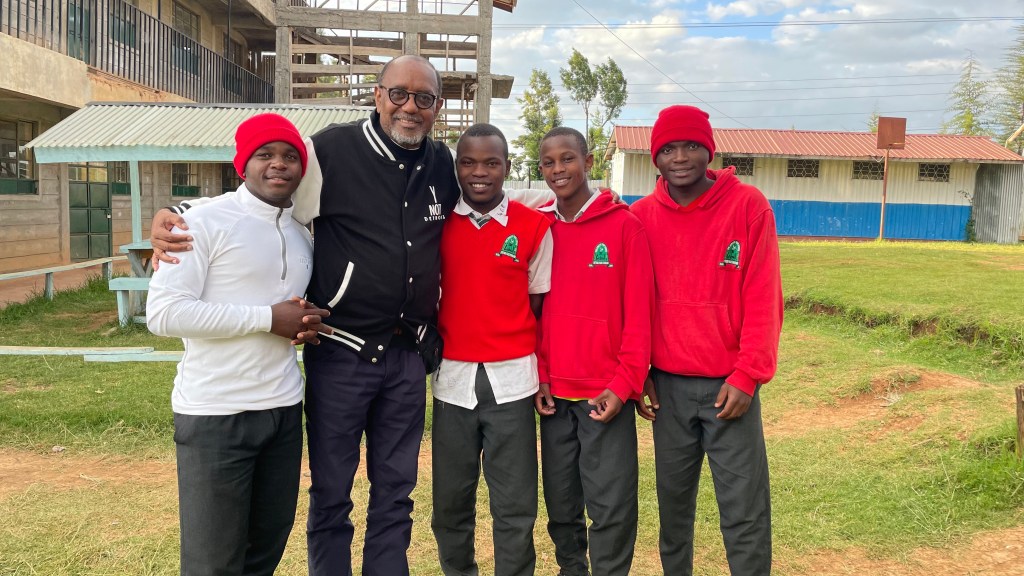
That night, Rev. Shanko called hundreds of Black college students to missions in Africa. The Spirit fell. Students pledged or gave more than $68,000 for ministry in Southeast Africa. The following summer, hundreds of young people—Black students—spent their summer serving people who looked like them, across the ocean.

Twenty years later, many of them are still on the field. Still serving. Still carrying the gospel. That’s the fruit of daring to innovate.

Why It Matters

Innovation is rarely comfortable. It can isolate you, even make you an outsider—especially in traditional Black church settings. But let’s be clear: innovation is not a threat to theology or doctrine. It’s an invitation to growth. When it’s rooted in Scripture and led by the Spirit, innovation strengthens the church.

Jesus Himself was an innovator. He broke religious traditions, shattered social barriers, and rewrote the script of history. His ministry birthed the New Testament church—the greatest innovation of all time.

I’m Just Saying….

A Tribute to the Chairman

Yesterday, I learned of the well-earned retirement of Mr. Mayce Webber as Chairman of the Deacon Board at Rosedale Park Baptist Church. And immediately, a flood of gratitude came rushing in.

If you know me, you know how much I love salmon. Like that determined fish, you have supported my swimming against the current —pressing upstream to create a first-class, Christ-centered, Black church-based youth ministry right in one of Detroit’s toughest neighborhoods. Looking back, I realize the vision I carried wasn’t always crystal-clear to you, or to most of the congregation and leadership. But you were steady, wise, and faithful—choosing to encourage and support me anyway, even when the path was hard to see.

Mr. Webber, you carved out space for our young people to dream big and thrive. Because of your unwavering “yes,” the Student Ministries Department (SMD) set a standard of excellence that rippled far beyond Detroit’s Black church community. I still remember the day we invited you into our little office down the street. Donnell Harlin and the team, along with me, shared our wild vision for youth outreach. Your face held the mystery of uncertainty, yet the words that leapt from your mouth—“You have my full support!”—ignited something powerful in us. Those words fueled our courage.

And we went to work. With your blessing, we did what once seemed impossible:

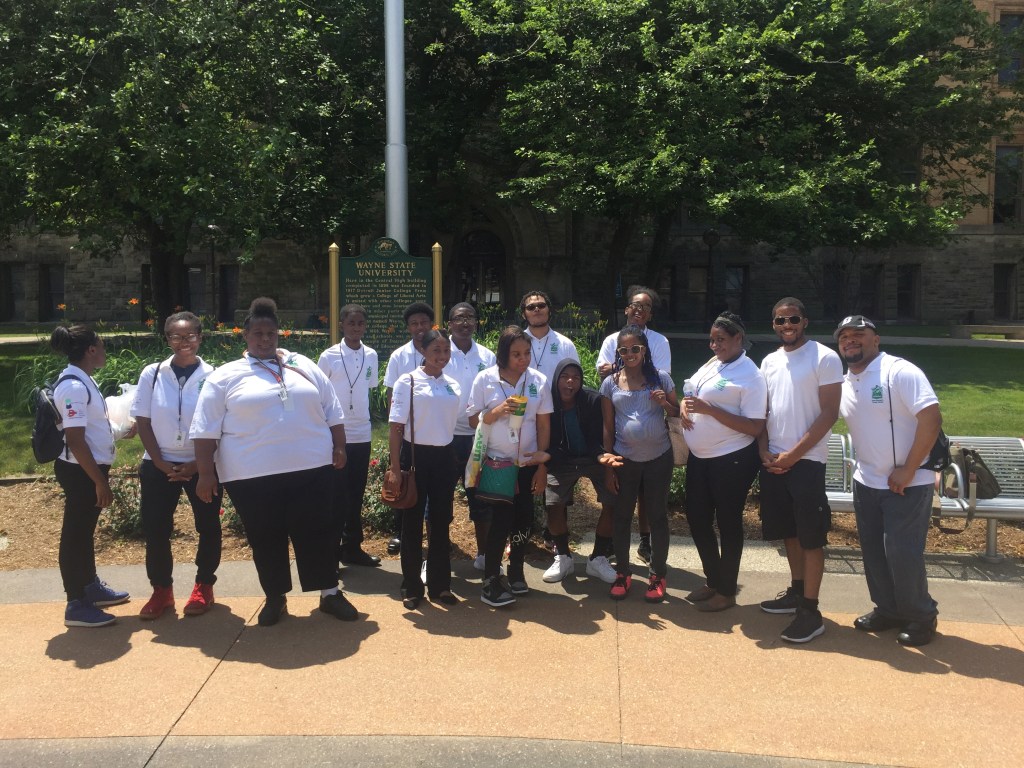
  • Built a Habitat for Humanity home from the ground up—the first youth group in the organization’s global history to lead such a project—partnering with Comerica Bank.
  • Adopted three neighborhood schools, forging genuine relationships with Vetal Elementary & Middle, Redford High, and Mann Elementary School.
  • Helped families move from homelessness to homeownership, with several of those households now boasting college graduates in every room.
  • Created a school-based program designed for underachieving elementary students that ultimately moved several students to Vetal’s 4.0 Club. Rosedale High School and college students developed the program and curriculum for  Super Kids. It created a hands-on and active learning environment as an after-school program.
  • Built three homes in Matamoros, Mexico; remodeled an orphanage in Jamaica; and hosted vibrant Vacation Bible Schools in the Bahamas, Jamaica, and in Detroit.
  • Launched countless Five-Day Backyard Bible Studies with a curriculum our own youth designed.
  • Advocated for Operation Sunrise, ultimately helping send more than 300 Black college students—including Rosedale youth—to serve in Southeast Africa, and Rosedale’s students in  Ethiopia.
  • Leading thousands to Christ either directly or indirectly through our partnerships, affiliations, or SMD.

These achievements matter—but what mattered most was knowing, deep down, that you had our backs. When our spirits sagged and our human batteries ran low, your words of encouragement lifted us.

On a personal note, your ministry of presence still humbles me. You sat with my brother through every one of my surgeries and hospital stays. I will never forget waking from recovery and hearing the very first voice—it was yours.

And, Mr. Chairman, you never missed an opportunity to exalt the name of Jesus. Whether holding the mic on Sunday or speaking quietly to one soul, you kept Christ at the center, always.

Your children—Chris, Jeffrey, Jason, David, and Rachel—are stars in their own right. But to me, you are a SUPERHERO.

Thank you, Mr. Webber, for showing us what steadfast faith, quiet strength, and joyful service look like. May God bless this new chapter as richly as you have blessed all of ours.

Are Black Children Resilient – Or Just Surviving?

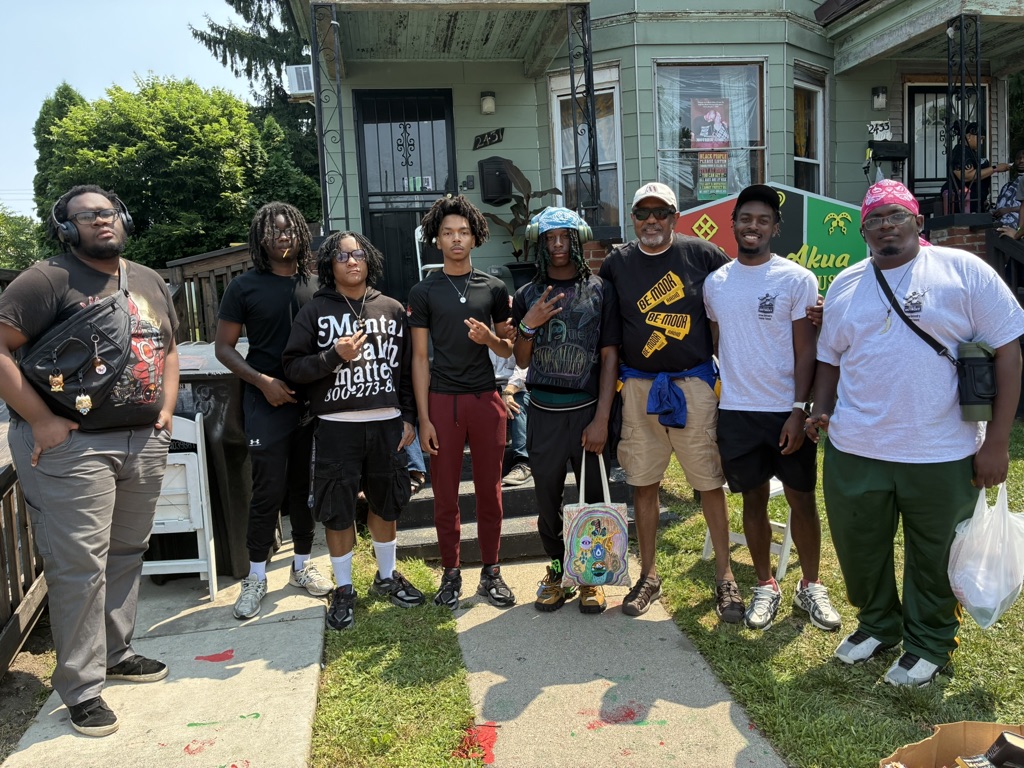
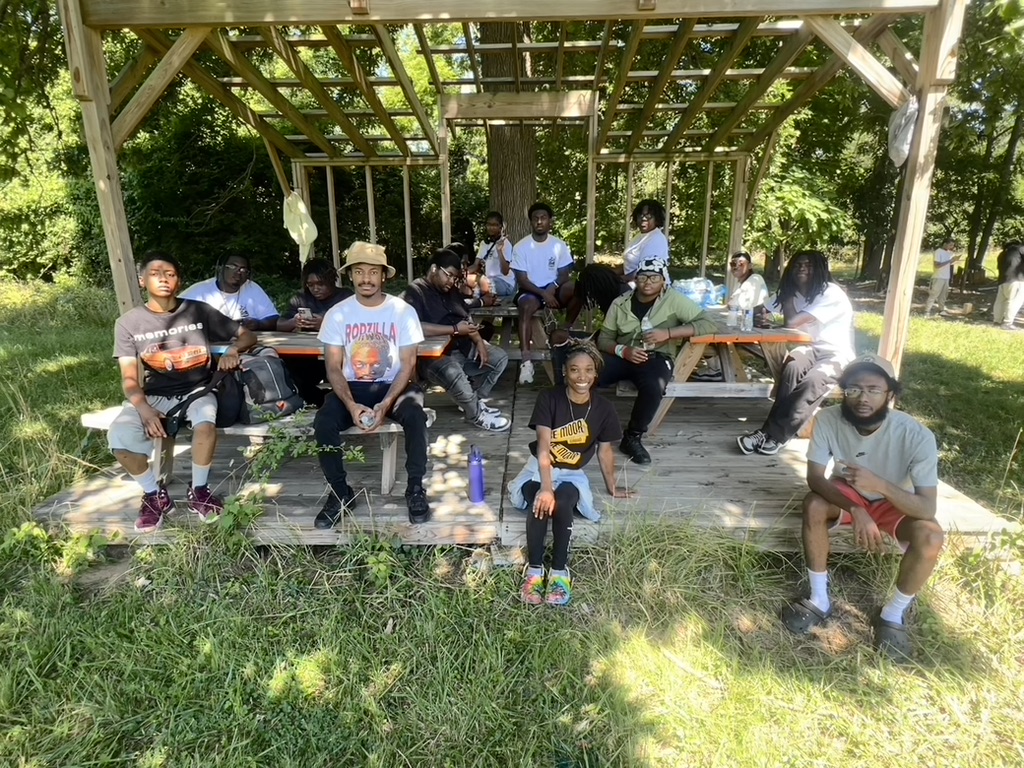
The older I become, the more it feels as if the axles of this earth are moving faster and faster. The summer of 2025 has been a revealing one for me. I had the honor of serving 43 young people as interns—most from Detroit, a few from other parts of the country. What I witnessed in their lives has both inspired me and deeply troubled me.

What stands out most is how much adult trauma rests on the shoulders of our young people—trauma created by adults and absorbed by children. In just six weeks, I walked with young people through experiences that could shake anyone to the core.

  • One young man whose father was murdered by his grandmother.
  • A young lady, not yet twenty, is already raising three sons.
  • At least five who faced homelessness, forcing them to relocate—some across the city, others out of state.
  • A 21-year-old is already addicted to drugs.
  • Several more caring for an adult, whether a sick parent or a struggling grandparent.
  • A young man who was finishing his last treatment for cancer
  • A significant number of these young men and women are afflicted with ADHD

I spent my summer counseling, listening, and encouraging. And yet, I left with a sobering question: Are Black children truly resilient, or are they simply survivalists?

We know the story of Black people in this country. Oppression, racism, and systemic mistreatment have weighed heavily on our community. Out of that suffering, we have often celebrated “resilience.” But what if what we call resilience is sometimes just survivalist self-reliance—a posture that helps us endure, but also leaves us carrying wounds too heavy to heal on our own? Gina Samuels, writing about young people in the foster care system, calls this tension: “What doesn’t kill you makes you stronger.” But strength without restoration still leaves scars.

Resilience, in truth, is not just grit. It is the ability to manage stress and still function in the face of challenge. It is not a personality trait—it is a learned ability, something nurtured in families, churches, and communities. And because the adversity Black children face is often unlike that of others, our parenting, mentoring, and ministry must go deeper.

The Scriptures remind us of the truth of who our children are:

“Black children are fearfully and wonderfully made in the image of God (Psalm 139:14; Genesis 1:27). Though they may face trials, injustices, and obstacles, they are more than conquerors through Christ who loves them (Romans 8:37). The Lord is their refuge and strength, a very present help in trouble (Psalm 46:1). No weapon formed against them shall prosper (Isaiah 54:17), for God has plans to give them hope and a future (Jeremiah 29:11). Their resilience is not just survival—it is a testimony of God’s power, endurance, and faithfulness working through them (2 Corinthians 4:8–9).”

That’s why Christian urban youth development must move beyond pizza parties and Sunday School as usual. We are not just entertaining teenagers or babysitting children. We are confronting trauma, cultivating resilience, and building the faith that heals. This is the work of raising a generation that “knew not Joseph”—children growing up without memory of God’s wonders, unless we remind them.

This reality hit home again just last week. I stood among young adults in my neighborhood at the funeral of a young leader I had known since he was about 10 years old. He died of an overdose. His death haunts me—as should the death of every child who ever set foot in a Black church. Each life lost reminds us: our work cannot wait.

The question remains: Will we help our children do more than survive? Will we nurture a resilience rooted in faith, family, and community that allows them to thrive?

That is the calling on us all, and I’m just saying….

I’m a Bigot!

By: Pastor Dennis Talbert

This week, I faced a hard truth—one I never thought I would apply to myself. I just might be a bigot. That’s a shocking realization for someone like me, a near lifelong Christian who has poured countless hours into mentoring and empowering thousands of young people through ministry, missions, and service projects around the world. And yet, here I am, saying it plainly: I am a bigot.

Bigotry, as I’ve come to define it, is more than just open hostility or hate. A bigot is someone who is intolerant of people who are different—be it in race, religion, gender, sexual orientation, or political belief. It’s an attitude, a posture, a resistance to seeing the humanity and dignity in others when they don’t mirror your own values or experiences. A bigot holds strong, unreasonable prejudices and often refuses to see things from another perspective, let alone treat those people with fairness or love. By that definition, the spirit of intolerance has, at times, influenced my own life. It has subtly and steadily crept in, impacting the very essence of who I am and distorting my grasp of the fruits of the Spirit described in Galatians 5:22–23: love, joy, peace, patience, kindness, goodness, faithfulness, gentleness, and self-control.

I never wanted this. I never meant for intolerance to settle in my heart. My Christian witness has long been centered on Romans 12:18: “If possible, as far as it depends on you, live at peace with everyone.” But I now find myself asking—how can one live at peace when bigotry poisons the soul and breeds division, anger, and even hate?

Growing up in the Church, I often heard the phrase attributed to St. Augustine: “Love the sinner, hate the sin.” It sounded noble, maybe even biblical. But in recent years, I’ve begun to question its true intent and impact. That phrase—repeated so often in Christian circles—now strikes me as a contradiction. It creates emotional distance, allowing us to avoid the messy, costly love that Jesus actually modeled. Jesus didn’t merely “tolerate” sinners. He embraced them. He ate with tax collectors, allowed a prostitute to anoint his feet, spoke freely with outcasts, and taught in parables that exalted acts of mercy over piety. He fed the hungry, welcomed the stranger, and clothed the naked. His love was complete, relational, and redemptive. If we say we “love the sinner,” shouldn’t that love resemble the embrace of Christ—patient, kind, and unflinchingly real?

This moment of self-reckoning compelled me to do what I’ve always done when facing a spiritual dilemma: I studied. I read the Scriptures, reflected on history, and dug into the roots of prejudice and hatred. What I discovered, and perhaps what you already know, is that bigotry has always been about more than feelings. It’s about power—who has it, who keeps it, and who is kept out. Bigotry is entangled with colonialism, racism, religious extremism, xenophobia, and nationalism. It’s been the fuel behind wars, oppression, and systems of injustice that continue to this day.

When I look around at the cultural climate we live in—politically divided, racially charged, and spiritually adrift—I understand how I got here. But my concern now stretches beyond myself. I am deeply troubled by what I see within the Body of Christ. Are we truly influencing the world for good? Or are we, in fact, being influenced by the world—conforming to its divisions and prejudices while hiding behind spiritual language?

One of Detroit’s great spiritual giants, the late Dr. Frederick G. Sampson, regularly prayed, “Lord, help me to rescue your church from your church.” That prayer echoes in my soul today. It might also be the silent cry of a generation of young people who keep walking in and out of our churches like they’re moving through a revolving door. They may lack formal theological training or institutional titles, but they know when something doesn’t add up. They can feel the dissonance between the Jesus we teach and the church we run. And many are choosing to walk away.

Perhaps it’s time for a new movement—not built on branding or tradition, but on truth and love. A movement that dares to preach the Christ of the cross, not a Christ of cultural conformity or political convenience. A movement that reclaims the radical humility and holy justice that defined the life of Jesus. Not a new denomination or a trendy campaign, but a rescue mission. A spiritual lifeboat for a church that may be drifting.  I’m just saying: What say you? Does the church need rescuing? Do we have the courage to confront our own prejudice, our institutional complacency, and the ways we’ve quietly accepted intolerance under the banner of faith?

P.S.    As for me, I return to the words of 1 Corinthians 9:27: “But I discipline my body and keep it under control, lest after preaching to others I should be disqualified.” I do not want to be disqualified—not from the race, the call, or the love I’ve spent a lifetime trying to embody. I need the Holy Spirit and my community to hold me accountable.

I am a sinner saved by grace and covered by mercy. But even grace demands that I grow.