
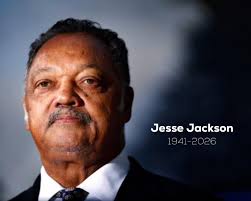
On February 17, 2026, the world lost one of the most consequential moral voices of the last half century—Rev. Dr. Jesse L. Jackson. History will ultimately place him among the small group of leaders who not only spoke about justice, but reshaped the possibilities of democracy itself.
For me, his passing is not only a moment of national reflection, but a deeply personal one.
As a young man growing up in the North End of Detroit, God granted me an extraordinary privilege. I was present in Chicago at the earliest gatherings when Rev. Jackson launched Operation PUSH (People United to Save Humanity) in 1971. At the time, I had no idea I was witnessing the birth of a movement that would influence politics, economics, and civil rights across America.
Looking back now, it seems almost unbelievable that Rev. Jackson and the late Abe Cherry would entrust an unproven young communicator to help co-produce parts of the Operation PUSH conference. But that was part of Jackson’s genius—he saw potential in young people before the world did.
As a private citizen with global influence, he often served as an informal diplomat during moments of international crisis. In 1984, he helped secure the release of U.S. Navy pilot Lt. Robert “Bobby” Goodman from Syria and negotiated the release of American prisoners from Cuba. He engaged leaders across Africa, the Middle East, and Latin America, demonstrating that civil rights leadership could also function as a global moral voice.
Operation PUSH grew from Operation Breadbasket, the economic justice initiative Jackson led under Dr. Martin Luther King Jr.’s Southern Christian Leadership Conference. Through this work, Jackson helped negotiate with major corporations and government institutions to hire millions of Black employees and open doors for minority-owned businesses.
But Rev. Jackson’s vision did not stop with economic justice.
During his 1984 presidential campaign, he created the National Rainbow Coalition, a bold attempt to unite African Americans, Latinos, labor unions, farmers, Native Americans, working-class whites, and peace activists into a powerful political alliance. It was a daring vision of American democracy built around shared struggle and shared hope.
For many of us, the soundtrack of that era was the chant heard in cities across America:
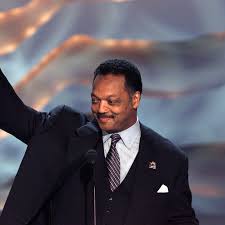
“Run Jesse Run!”
Jackson ran for the Democratic nomination for President in 1984 and 1988, registering millions of new voters and winning several state primaries in 1988. His campaigns proved that a Black candidate could build a national coalition and compete for the presidency. In many ways, those campaigns helped open the door for the election of Barack Obama two decades later.
Yet Jackson’s impact extended beyond American politics.
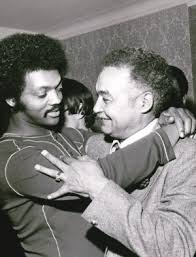
Like every human being, Rev. Jackson had flaws. But we must never allow those imperfections to overshadow the scale of his contributions.
I was simply a gifted young communicator from Detroit who had been recruited by the legendary Kim Weston and Mickey Stevenson to volunteer with a rising civil rights leader named Jesse Jackson.
For more than five decades, he stood on the front lines advocating for economic equity, voting rights, education access, corporate diversity, and social justice. He spoke out against apartheid in South Africa, economic injustice around the world, and human rights abuses wherever they occurred.
In many ways, his life reflected the mission described in Luke 4:18–19:
“The Spirit of the Lord is upon me, because He has anointed me to proclaim good news to the poor… to proclaim liberty to the captives… to set at liberty those who are oppressed.”
Rev. Jesse L. Jackson lived that scripture.
He lived his purpose.
And for those of us who were fortunate enough to witness his work up close, we know this truth: history did not simply observe Jesse Jackson—he helped bend it toward justice.
Thank you, Rev. Jackson, for a life of courage, conviction, and service to the most marginalized people on this planet.
And thank you to Jacqueline Jackson, who stood faithfully beside him while raising their remarkable children and supporting a life devoted to public service.
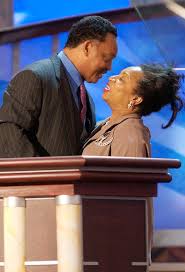
The voice that once declared “I am somebody” may now be silent—but the movement it helped inspire will echo for generations, and I’m Just Saying….
 I'm Just Saying