Are Our Children Better Off? A Call to Unity and Action in Urban Youth Development: Time to Scale Up!

I have dedicated more than forty years of my life to the work of urban youth development. I walked away from a fairly successful career in communications because I believed—deeply and sincerely—that my life’s work should contribute to building a world where Black and Brown children could thrive, compete globally, and live with dignity, purpose, and hope.

Now, after four decades, I am forced to ask the most uncomfortable but necessary question: Are Black and Brown children and youth actually better off? Because in the end, that was my only objective.

Over the years, I have watched billions of dollars flow into systems, programs, institutions, and initiatives designed to “serve,” “fix,” and “support” Black children. I’ve also had to confront a sobering reality: while some progress has been made, in many ways our children are not better off—and in some cases, they may be worse off. This blog is not an exercise in rehearsing statistics or highlighting deficits; that story has been told repeatedly. My concern is deeper, more existential, and more moral.

As a believer, I was deeply troubled years ago while attending a conference hosted by the Association of American Colleges and Universities. During a keynote address, Peter McPherson, then President of Michigan State University, stated—paraphrased—that we are raising the first generation in American history that will do less with more than any generation before it. Sitting next to me was the legendary Dr. Grace Lee Boggs. We were the only people of color in the room. We looked at one another, stunned. In her unmistakably direct and prophetic voice, Dr. Boggs leaned over and said, “He’s not talking about us.”

I walked away from that conference determined to prove that statement wrong as it related to Black children in Detroit and across the nation. I knew what we were doing on the ground was working—often without gimmicks, without excessive resources, and without national attention. As my former pastor used to say, we were making bricks with leftover straw. And yet, here we are. The community reality remains what it is. We must be honest enough to say that we have failed Black children.
Let me be clear: adults in many sectors have done better. Careers have flourished. Institutions have grown. Professional classes have expanded. I am not asserting that the struggles of Black children are caused by adult success—but the contrast is real and undeniable. Resources did not trickle down in any meaningful or sustained way, even as theory suggested they would. In urban youth development, far too little attention has been given to the true cost of professionalization, infrastructure, administrative overhead, and fragmented systems of service. Too often, the work became about sustaining organizations rather than transforming outcomes.

And yet, I am not without hope.

Across this country—and throughout the African diaspora—there are outstanding programs doing incredible work. Dedicated educators, mentors, faith leaders, coaches, artists, and advocates are showing up daily. The problem is not passion or talent. The problem is scale, coherence, and unity.

The question we must now ask is this: how do we take what works and scale it in ways that are replicable, adaptable, and sustainable across diverse Black communities?

I want to suggest that the time has come for the development of national mentoring models, workforce development frameworks, educational pathways, and character-based youth development systems that can be implemented in local contexts without losing fidelity to core principles. This cannot remain a collection of isolated best practices. It must become a shared architecture.

To that end, I believe it is time—past time—for a true national, and ultimately global, urban youth development convening. A gathering funded not just by institutions, but by Black philanthropists and what I’ll boldly call our modern-day Black superheroes: athletes, entertainers, executives, entrepreneurs, and cultural leaders who have benefited enormously from the sacrifices of earlier generations. Men and women willing to say, for the next ten years, we will focus a significant portion of our attention, influence, and resources on Black children and youth.

Not for branding. Not for ego. Not for temporary impact.

But for the sole purpose of moving the needle toward excellence, achievement, character formation, spiritual grounding, and educational rigor.

This convening must do more than inspire. It must produce agreement around clear community values—values that can be affirmed by the majority and lived out consistently in streets, schools, hallways, homes, and faith institutions across the globe. Values that transcend ideology, denomination, class, and geography. Values that say, plainly: our children matter, and mediocrity is not an option.

Some may say this is naïve. Others may argue that consensus is impossible. I reject both claims.

I am crazy enough to believe that we have the intellectual capital, cultural wisdom, theological grounding, and lived experience to develop a comprehensive and inclusive strategy—one that honors every valuable entity in our communities while calling all of us to something higher. I believe we can set aside unchecked individualism and even lawful, well-meaning self-interest when the stakes are this high.

This is not a call to erase differences. It is a call to prioritize what matters most.

It is time to call the meeting.

A meeting that asks hard questions, names hard truths, and demands courageous commitments. A meeting that centers children rather than institutions, outcomes rather than optics, and unity rather than competition. A meeting grounded in love for our people and responsibility to future generations.

If we cannot unify around wanting more for our children—then we must be honest enough to admit that the problem is not a lack of resources, but a lack of will.

Are Our Children Better Off? A Call to Unity and Action in Urban Youth Development:

Time to Scale Up!

I still believe. I still hope. And I still believe that together, we can do better—because our children deserve nothing less.  I’m Just Saying…

A Call to Wake Up: Giving Our Children a Fighting Chance

On Thursday, October 9, 2025, a seventeen-year-old young man was shot in the back—just twenty feet in front of my home—by a white adult male. I mention his race not out of racial animosity, but because it’s uncommon to see a white man on my street, and this man needs to be found and taken off the streets of Detroit.

Yesterday, I learned that the young brother died from his wounds.

As I sat in my home office that day, I heard a single gunshot. When I opened my blinds, I saw the young man lying motionless in the street and the White man running to his white Ford 150. I rushed outside, joined by a young man working in my home. As we knelt beside him, he kept repeating, “I don’t want to die.” We tried to reassure him that he would live while calling 911.

Within minutes—no more than three or four—Detroit’s first responders arrived and worked with professionalism and urgency. The police investigators spent over an hour inside my home and at least three hours outside gathering evidence and statements. But the young man never had a fighting chance. He was shot in the back.

That night, I lay awake hearing his words—“I don’t want to die”—echoing in my mind. Those words still ring in my ears. And the painful truth is this: just as that young man didn’t have a fighting chance, so it is for far too many children and youth growing up in our communities across urban America.

The next morning, I had to return to the rhythm of my daily ministry—praying with high schoolers at 6:30 a.m., as I’ve done for over 25 years, and later launching a new small group of young leaders through Be-Moor Radio.

That same day, only a few blocks from my house, tragedy struck again. At our neighborhood elementary school, a young girl stabbed another student—using a knife her mother brought to the school and handed to her. Yes, the mother gave her daughter a weapon and told her to use it.

Our children are in trauma. Our communities are in trauma. And too many have no fighting chance.

We no longer have a North Star—no shared moral compass or value-centered community. Black church, wake up! This is our role, our commission, and our divine assignment. Luke 4:18-19 makes it clear: “The Spirit of the Lord is upon me, because He has anointed me to preach good news to the poor…”

We need a reset—a return to our mission, our values, and our call to a people-centered spiritual renewal. Genesis 4:10 reminds us, “The blood of your brother cries out to me from the ground.” The blood of our sons and daughters is crying out from our streets for justice. They must not be forgotten.

Every child living in an urban community is experiencing trauma. In truth, every person in our communities is carrying trauma. We all need healing, hope, and an intervention—and the Black church, as the ambassador of Christ, is God’s chosen instrument for that healing.

Jesus said in John 10:10, “The thief comes only to steal, kill, and destroy; but I have come that you might have life—and have it more abundantly.”
An abundant life is a trauma-free life.

After decades of serving as an urban youth development specialist, I’ve seen more death and destruction than I care to recall. Yet this moment feels different. The urgency is greater. It was at my front door! The cries are louder.

Black church, wake up! It’s time for a people-centered revival—a movement that heals, restores, and reclaims our communities. Everything else we’re doing is insignificant compared to this call. As God said in Amos 5:21–23, “I hate your festivals (could it be our church services)… take away from me the noise of your songs (could it be our praise and worship).”

Let’s resolve, together, to give our children—and our communities—a fighting chance.

P.S. There is a Truth and Trauma Conference—sponsored by the Detroit Leadership Foundation—that will be held on Saturday, November 18th, from 9:00 a.m. to 3:00 p.m. at the McGregor Memorial Conference Center on the campus of Wayne State University.
Get healed. Get equipped. And let’s get to work.


Are Black Children Resilient – Or Just Surviving?

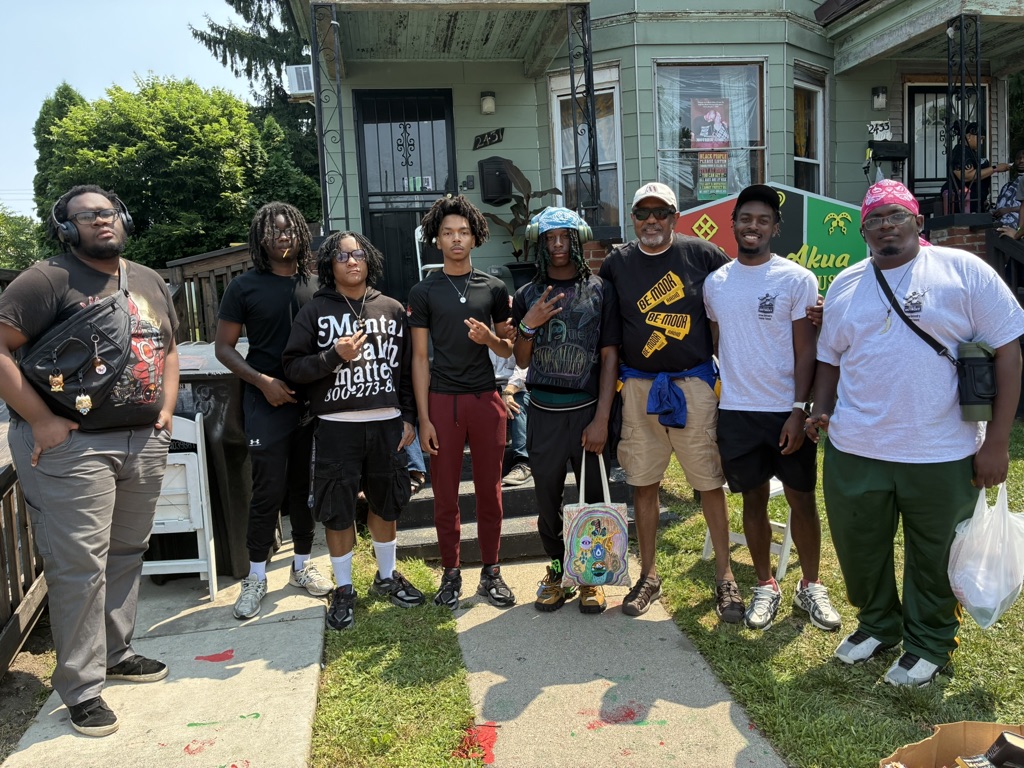
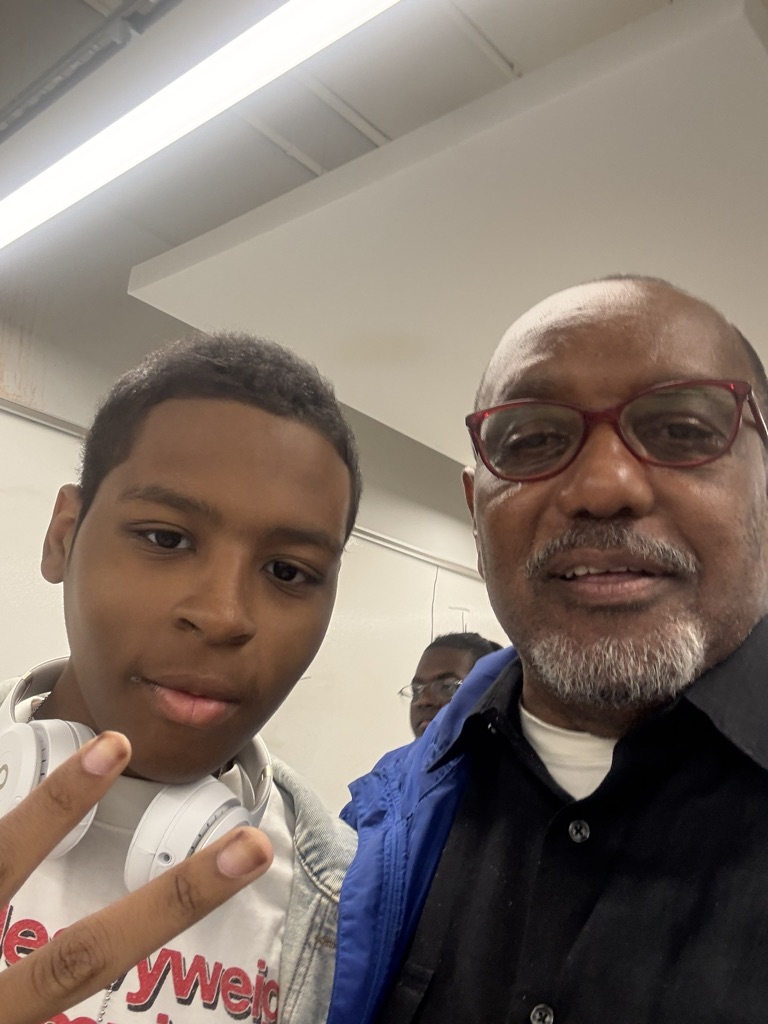
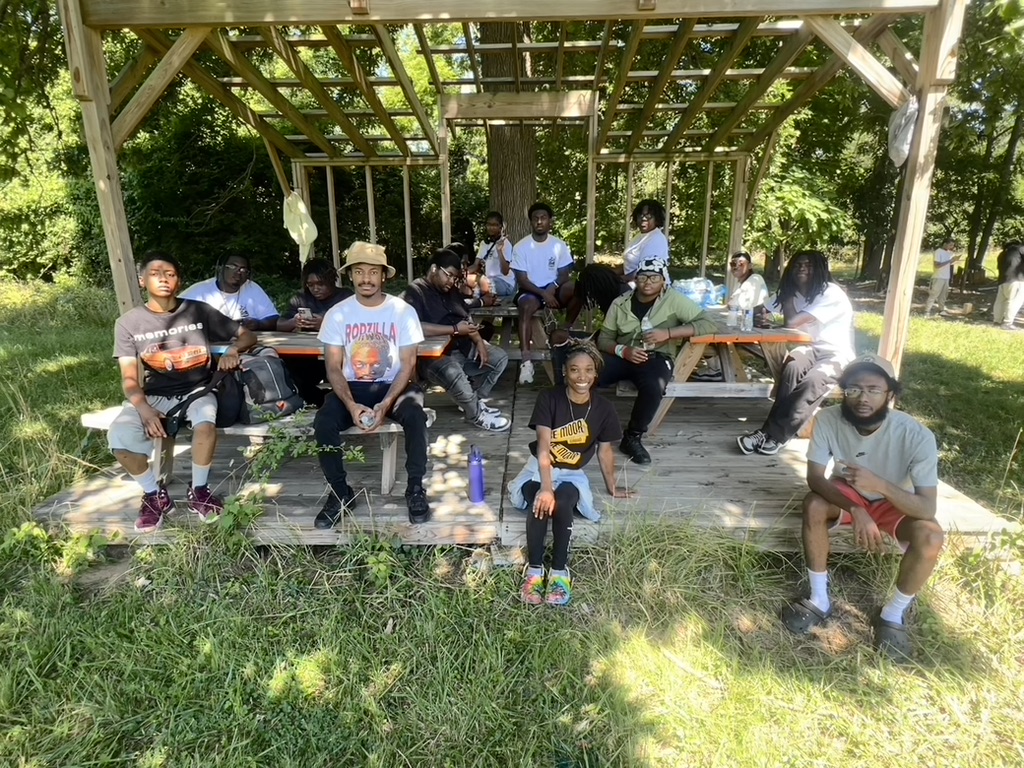
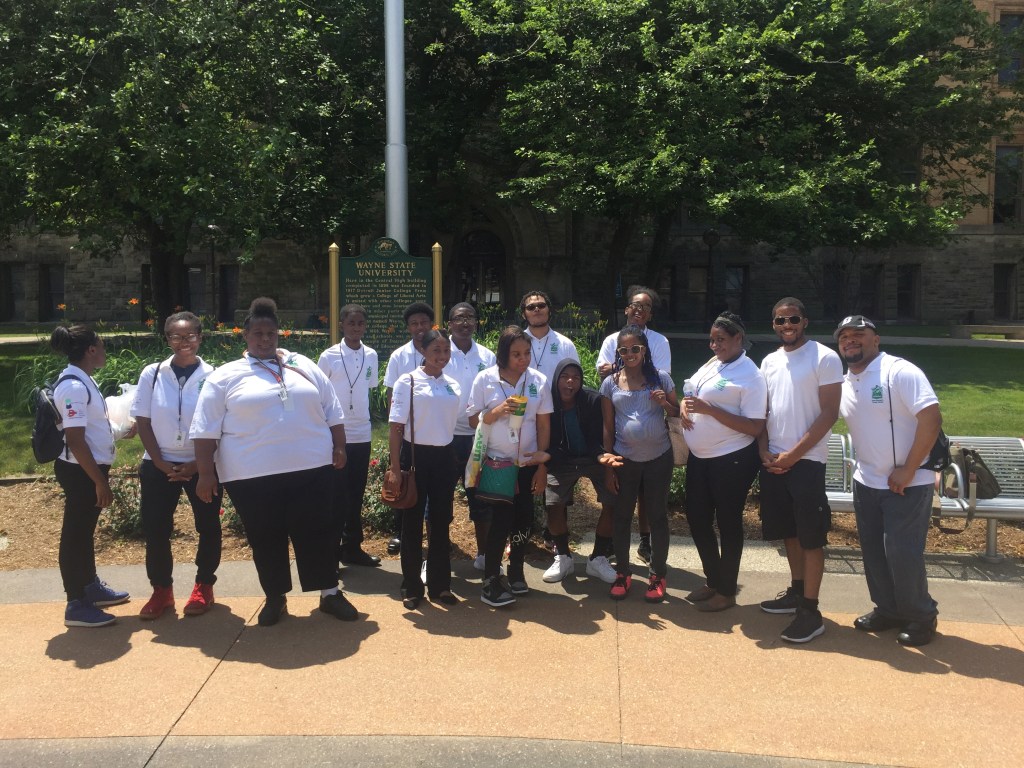
The older I become, the more it feels as if the axles of this earth are moving faster and faster. The summer of 2025 has been a revealing one for me. I had the honor of serving 43 young people as interns—most from Detroit, a few from other parts of the country. What I witnessed in their lives has both inspired me and deeply troubled me.

What stands out most is how much adult trauma rests on the shoulders of our young people—trauma created by adults and absorbed by children. In just six weeks, I walked with young people through experiences that could shake anyone to the core.

  • One young man whose father was murdered by his grandmother.
  • A young lady, not yet twenty, is already raising three sons.
  • At least five who faced homelessness, forcing them to relocate—some across the city, others out of state.
  • A 21-year-old is already addicted to drugs.
  • Several more caring for an adult, whether a sick parent or a struggling grandparent.
  • A young man who was finishing his last treatment for cancer
  • A significant number of these young men and women are afflicted with ADHD

I spent my summer counseling, listening, and encouraging. And yet, I left with a sobering question: Are Black children truly resilient, or are they simply survivalists?

We know the story of Black people in this country. Oppression, racism, and systemic mistreatment have weighed heavily on our community. Out of that suffering, we have often celebrated “resilience.” But what if what we call resilience is sometimes just survivalist self-reliance—a posture that helps us endure, but also leaves us carrying wounds too heavy to heal on our own? Gina Samuels, writing about young people in the foster care system, calls this tension: “What doesn’t kill you makes you stronger.” But strength without restoration still leaves scars.

Resilience, in truth, is not just grit. It is the ability to manage stress and still function in the face of challenge. It is not a personality trait—it is a learned ability, something nurtured in families, churches, and communities. And because the adversity Black children face is often unlike that of others, our parenting, mentoring, and ministry must go deeper.

The Scriptures remind us of the truth of who our children are:

“Black children are fearfully and wonderfully made in the image of God (Psalm 139:14; Genesis 1:27). Though they may face trials, injustices, and obstacles, they are more than conquerors through Christ who loves them (Romans 8:37). The Lord is their refuge and strength, a very present help in trouble (Psalm 46:1). No weapon formed against them shall prosper (Isaiah 54:17), for God has plans to give them hope and a future (Jeremiah 29:11). Their resilience is not just survival—it is a testimony of God’s power, endurance, and faithfulness working through them (2 Corinthians 4:8–9).”

That’s why Christian urban youth development must move beyond pizza parties and Sunday School as usual. We are not just entertaining teenagers or babysitting children. We are confronting trauma, cultivating resilience, and building the faith that heals. This is the work of raising a generation that “knew not Joseph”—children growing up without memory of God’s wonders, unless we remind them.

This reality hit home again just last week. I stood among young adults in my neighborhood at the funeral of a young leader I had known since he was about 10 years old. He died of an overdose. His death haunts me—as should the death of every child who ever set foot in a Black church. Each life lost reminds us: our work cannot wait.

The question remains: Will we help our children do more than survive? Will we nurture a resilience rooted in faith, family, and community that allows them to thrive?

That is the calling on us all, and I’m just saying….

Dear Detroit’s Candidates for Mayor: Don’t Forget the Children and Youth

Detroit is at a crossroads.

As the city prepares to elect its next mayor, much of the political conversation revolves around affordable housing, job creation, and economic development. Important? Absolutely. But if Detroit is genuinely going to rise—not just in buildings, but in spirit—it must begin with its children and youth.

This blog is a direct message to every candidate running for mayor in 2025:
We expect a bold, comprehensive youth development strategy to be a prominent part of your platform.

For far too long, young people in Detroit have been treated as the “future” when, in reality, they are the now. Too many urban policies are adult-centered, leaving children and teens to navigate broken schools, unsafe neighborhoods, and a digital world with little guidance and fewer opportunities.

Jobs Matter—But Our Youth Need More Than Employment. They Need Empowerment.

We acknowledge and appreciate the work of the former Youth Development Commission and the Skillman Foundation, whose early investments in youth employment were ultimately expanded under Mayor Duggan. That foundation matters.

But our young people need more than jobs—they need joy.

Empowerment means reducing childhood poverty and food insecurity, improving access to safe recreational spaces, investing in robust, year-round youth employment and entrepreneurship programs, and funding arts, sports, and cultural experiences in every neighborhood—not just downtown.

Reimagine Public Safety—Start With Public Healing

Perhaps it’s time to rename the Detroit Police Department to the Detroit Public Safety Department, with a central mission of protecting and healing our communities—starting with children and youth.

Let’s be honest: The word “police” is not neutral. For many Black children, it is traumatic—intertwined with a long history of systemic harm. As noted in The New Yorker, the roots of modern policing in the South trace back to slave patrols: organized forces designed to capture and control enslaved people. That legacy matters. It shapes how our youth see law enforcement today.

The new Public Safety Department must include:

  • Comprehensive trauma counseling
  • Violence intervention and prevention
  • Restorative justice programs
  • Community-based mentoring
  • Let’s stop saying just “public safety.” Say public healing.

Urban Youth Deserve Policy, Not Pity

Detroit’s children are not problems to manage—they’re people to invest in.

They deserve a mayor who will:

  • Build a Detroit Children’s and Youth Cabinet that includes actual young people and grassroots leaders
  • Establish a Citywide Youth Development Fund to support the real work being done in the neighborhoods

The next mayor must be bold enough to declare:

🗣 “We will not rebuild Detroit on the backs of abandoned youth.”

What We Need: A Real Urban Youth Strategy

Detroit doesn’t need more seasonal after-school programs or summer job fairs. We need a strategy—rooted in equity, creativity, and long-term investment. Here’s where to start:

1. Create a Department of Youth Wellbeing and Leadership

Not just a youth liaison or a few programs under Parks & Rec. We need a cabinet-level department solely focused on the mental health, education, safety, and leadership development of young people—especially in historically under-resourced neighborhoods.

2. Fund Neighborhood-Based Youth Hubs

Reimagine vacant buildings and underused city properties. Let’s turn them into youth centers equipped with mentorship programs, digital media labs, tutoring spaces, and safe recreation zones.
Think libraries-meet-startup-labs-meet-counseling-havens.

3. Prioritize Early Childhood Development

Affordable childcare and quality early education should not be luxuries. The next mayor must champion:

  • Early learning centers across every district
  • Trauma-informed training for everyone who works with children—from bus drivers to daycare providers

4. Invest in a Youth-Led Civic Agenda

Listen to our young people. Build a citywide Youth Council with real decision-making power—one that works alongside city departments and Detroit Public Schools to shape budgets, policies, and community design.

Nothing about them without them.

The city’s budget is a moral document. Show us where your heart is.

Detroit Can’t Wait.

If we don’t center kids in Detroit’s transformation, we will repeat the same cycles:
Development for the few. Displacement for the many. Disillusionment for the next generation.

Detroit’s children are not collateral damage—they are co-builders of our city’s future.

Let’s build a Detroit where kids don’t just survive—they thrive. Just some thoughts from who a brother who has devoted his life to Urban Youth Development, I’m Just Saying… What say you?