

by: Dennis Talbert
Let me be clear from the start: I am not advocating for churches or religious organizations to be taxed. But I am saying this — we need to have a serious conversation about the tax-exempt status of religious institutions, their role in philanthropy, their involvement in community economic development, and their responsibility as stewards of the communities they serve.
This is a weighty topic, with layers upon layers of complexity. It may be impossible to fully unpack it all in a single blog, but I will attempt to raise some key points that I’ve been sitting with for decades.
A Concern That Started in the ’70s
I began questioning the implications of church proliferation during the 1970s when I worked as a city employee in Detroit, responsible for community and economic development. It wasn’t the growth of churches that troubled me—it was the way zoning laws and city codes affected them. At that time, businesses were restricted from operating within a certain distance of religious institutions. I began to notice how the influx of small storefront churches impacted the economic vitality of Detroit’s commercial corridors.
Fast forward over 40 years, and I recently drove down Puritan Avenue — from 12th Street for nearly four miles — and to my dismay. What used to be a bustling commercial district has become a corridor dotted with closed church buildings, abandoned lots, and shuttered storefronts. What happened?
While there are theological layers to this, which I’ll set aside for now, it was hard not to conclude that the unchecked proliferation and eventual closure of tax-exempt churches had decimated a once-viable commercial zone.
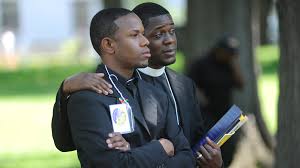
These local observations reminded me of conversations in various African countries with young ministers seeking to become lead pastors. We discussed launching churches in new regions and often looked to the Apostle Paul as the biblical model for church planting.
Paul’s efforts were transformative. His churches not only spread the Gospel but also created vibrant, empowered communities. So I began to wonder: Is this the model of church planting we’re following today? And more importantly, is this the model Christ intended?
There’s a growing trend in the U.S. called the church planter movement, where individuals, groups and denominations — often sincerely- believe God calls them to start churches. However, many churches, especially in urban communities, shut their doors within a few years. That raises a spiritual and practical question: What happened to the call?

A Brief History of Church Tax Exemption
Let’s step back for a moment. During the colonial era, churches like the Anglicans and Congregationalists were state-sponsored, particularly in Virginia and Massachusetts. This created tensions within the Christian community over state involvement in religious life.
Most states moved away from government-established churches after the American Revolution, influenced by Enlightenment ideals and a desire for religious freedom. By the 20th century, the Revenue Act of 1913 formally exempted churches from federal income tax, and Section 501(c)(3) was created for charitable organizations. Lawmakers seemed to assume that these entities would act in the public good, and for a time, many did.
But 112 years later, is it time to revisit those assumptions?

The Black Church: Mission, Vision, and Stewardship
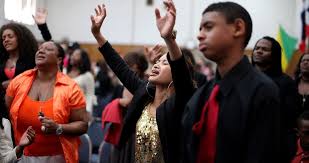
Let me be clear: we need the Black church. Its historical contributions to education, liberation, and civil rights are unmatched. The mission to love, serve, and advance Christ has not changed.
Consider this: estimates suggest that the Black church in America collects between $100–$250 million every Sunday, more than $7.8 billion annually. That’s more than the annual GDP of Liberia, Haiti, Kosovo, Sierra Leone, Gambia, Burundi, and several other small nations combined.
According to Pew Research, over 85% of Black philanthropy in some neighborhoods flows through the church. That’s a staggering number.
Despite the presence of hundreds of churches in Detroit and cities like it, far too many of our children, families, and neighborhoods continue to struggle with poverty, violence, educational gaps, and broken systems. A few years ago, a philanthropic foundation in Detroit attempted to mobilize Black churches to engage children in after-school programs. Despite the city’s high concentration of churches, the outcomes were limited.
We cannot afford to ignore these questions any longer. Are we truly being good stewards of the resources entrusted to us? Are we investing enough in the long-term success and transformation of Black children, youth, and families? Are we aligning our methods with our mission?

This conversation isn’t just about tax codes — it’s about Kingdom purpose. The moral and spiritual decline we see in America cannot be reversed by government programs or legislation alone. It demands a revitalized church — one that is committed to economic justice, social transformation, spiritual renewal, and community accountability.
We have the intellectual, theological, and moral capacity to explore these questions honestly and constructively. It’s time for the church — especially the Black church — to reimagine its role, revisit its vision, and renew its commitment to the cause of Christ in the 21st century. We can reimagine a tax code that reflects the economic and social justice issues of the 21st century, that creates a matrix that advances God’s kingdom-building agenda on earth, and fulfills the philanthropic needs of our communities and their residents.
I’m just saying. What say you? Let’s get the conversation going,,,,

 I'm Just Saying