I’m Just Saying: It’s Time to Take Back Public Education

Somehow, the people who lead our governmental, philanthropic, and corporate sectors have decided that urban public education should be shaped and guided by corporate executives. Let me say this plainly: that decision is one of the greatest educational atrocities of our time. It may very well be the reason our children continue to be failed by the very systems meant to uplift them.

What troubles me even more is that we, as a society, don’t seem to recognize how deeply capitalism—unchecked, unchallenged, and unexamined—has damaged the world we live in. And before anyone starts labeling me a communist or socialist, let me be clear: I am a follower of Christ. Through a Christian lens, I view this conversation about education, human dignity, and communal responsibility.

Recently, I attended the screening of a new documentary produced by Mr. Quan Neloms. In it, a community activist said something that struck me with the force of a thunderbolt:
“Our students are not failing; our system is failing our students.”
That statement alone is worth a hundred billion dollars—especially since we’ve begun evaluating everything through the lens of dollars and cents.

For more than twenty years, I have watched our public educational institutions shift from being grounded in urban pedagogical wisdom to being transformed into corporate training centers. The focus is no longer on children, families, or community. Instead, the agenda is shaped by corporate profitability and workforce preparation. We have displaced parents from the center of their children’s educational journey and handed that authority to corporate and philanthropic executives—many of whom have never taught, never lived in our communities, and never raised a Black or Brown child.

And the justification seems to be rooted in a dangerous, unspoken theory:
that urban parents lack the love, care, or competence to know what is best for their own children.

What’s even more alarming is that far too many faith-based institutions have bought into the same narrative. Churches—historically the backbone of Black educational empowerment—are now echoing corporate talking points rather than community wisdom. Our system has shifted from prioritizing the public good to prioritizing profit. From nurturing critical thinkers to mass-producing compliant workers.

I often wonder what Horace Mann, the father of American public education, would think about the direction in which we’ve drifted. He fought for an education system that served everyone, but he was not confronted with the realities of race and diversity as we are today. Would he be shocked? Or would he say that the inequities we see are intentional design?

And that’s the question I wrestle with:
Are those in high places truly committed to giving Black and Brown children a quality education—one that would make them competitive with the privileged?

Back in 1973, my dear friend Judge Longworth Quinn Jr., who served on the Detroit Public Schools Board, said something I’ll never forget:
“The only hope for educational reform would be to blow it up and redesign it.”
More than 50 years later, he might very well have been an educational prophet.

We cannot allow our system to be reimagined by people whose primary interests are reform metrics, funding streams, and political agendas—not the dignity and destiny of our children. As my friend and retired educator William Batchelor often reminds me,
“We know how to educate our children.”
And my response today is: Let’s move the systems out of the way and let the educators do what they were called to do.

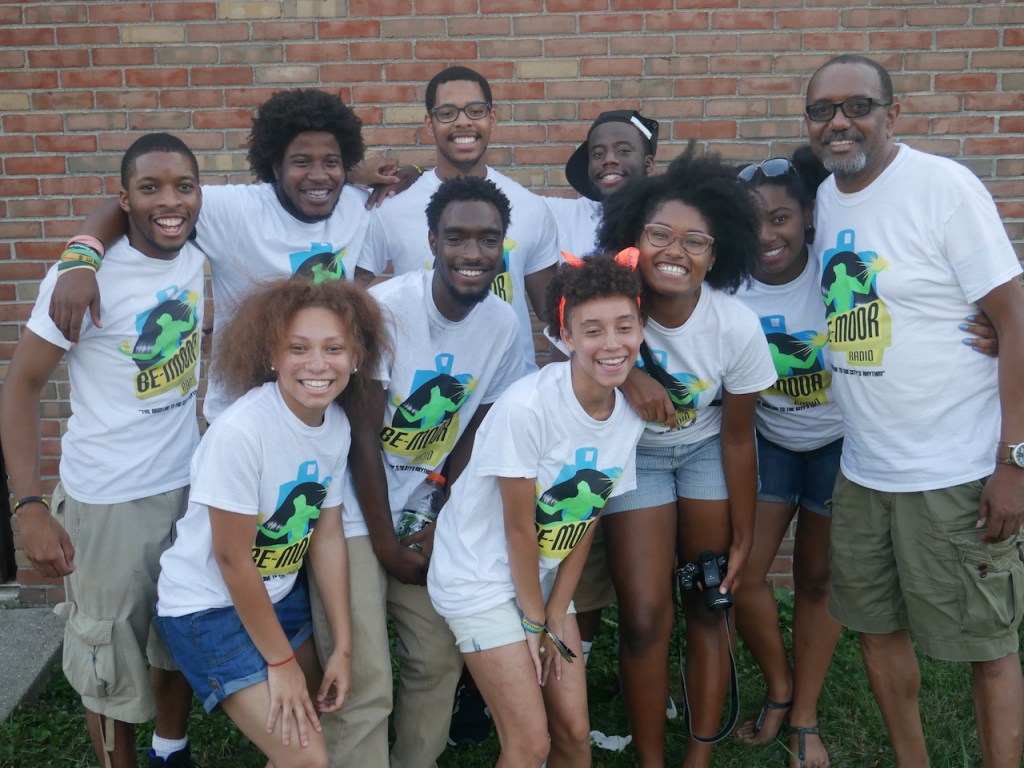
Beginning this February, Be-Moor Radio and the Be-Moor Radio Institute will launch an educational podcast series titled “Class Is in Session. This platform will feature students, educators, retired educators, parents, community leaders—and yes, we want you to be part of it. Our goal is to build a real, authentic grassroots movement that transforms education with tangible, measurable results.

We hope to uplift the legacy of champions like Helen Moore, Judge Longworth Quinn Jr., Fannie Jackson Coppin, Benjamin Banneker, Mary McLeod Bethune, and my aunt Katie E.M. Mallett—a proud Jackson State graduate who, as a young girl in Kosciusko, Mississippi, taught all her siblings before moving to Detroit and serving the Highland Park School System. These are the giants whose shoulders we stand on. And they are joined by thousands of unnamed educators who have carried the torch of Black educational excellence quietly and faithfully.

It is time—past time—to reclaim public education for our Black and Brown children. Time to rewrite our academic agenda based on our history, our values, our culture, and our vision.

So I ask you—
What say you?

Understanding the Anointing: A Practical Reflection from A Black Christian Perspective

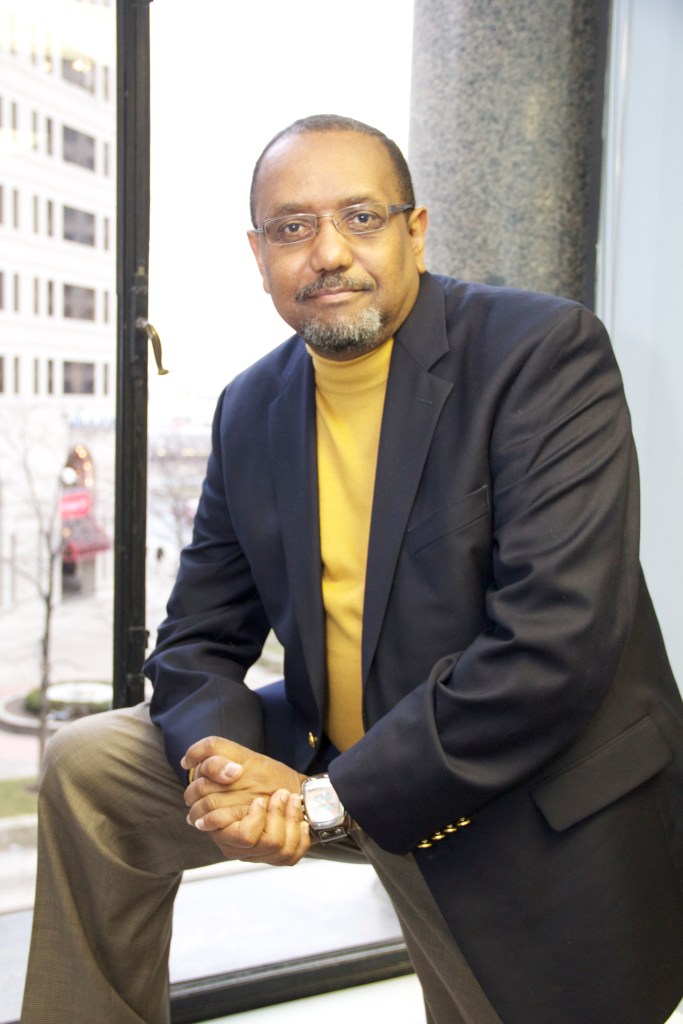
By Dennis Talbert

There’s been a lot of talk in my circles lately about the anointing. For some, it’s become synonymous with a euphoric experience—a moment of intense feeling during worship or preaching. But I want to suggest a deeper, more biblical, and practical view. I don’t claim to be a scholar or an expert in all things Christian, but I do come with lived experience and a desire to see transformation in our churches and in the global Black community. So, I offer this brief, working definition of the anointing:

The anointing is God’s empowerment through the Holy Spirit for a divine purpose.

In the Old Testament, it was symbolized by the pouring of oil. In the New Testament, it is internal and spiritual, given freely to all in Christ. It equips us for service, for proclaiming truth, and for participating in transformation.

Imagine what our communities could look like if we lived in tune with our divine assignments—our North Star. Imagine a society shaped by community values that not only uplift our neighborhoods locally and nationally, but also globally. I write primarily to Black Christians, not just churchgoers. Men and women of faith who are sincerely striving to walk in their anointing and use it to bring healing, justice, and restoration to Black lives everywhere.

We can still do better, be more, and champion a Christ-centered value system rooted in our identity and relevant to the broader world. Our anointing should not isolate us, but instead inspire us to integrate and influence.

Personally, I anchor my understanding of my anointing in two scriptures:

  • Acts 1:8 – “But you will receive power when the Holy Spirit comes on you; and you will be my witnesses… to the ends of the earth.”
  • Luke 4:18 – “The Spirit of the Lord is upon me, because He has anointed me to proclaim good news to the poor…”

My Resume, My Anointing

  • Secured permanent housing for 41 homeless or housing-insecure families, many of whom went on to obtain college degrees and stable careers.
  • Participated in global missions to Kenya, Ethiopia, Jamaica, Brazil, South Africa, Mexico, Zimbabwe, the Bahamas, Mississippi, and Detroit.
  • Served as U.S. Coordinator for Operation Sunrise, sharing the Gospel with 68 million Africans in 23 countries over 50 days.
  • Facilitated Michigan’s first faith-based school adoption program.
  • Honored by three U.S. Presidents—George W. Bush, Bill Clinton, and Barack Obama.
  • Established the first data-based reading tracking system in Detroit Public Schools.
  • Operated a daily abstinence and health education program at Redford High School.
  • Co-created a unique Sunday School curriculum for Rosedale youth, written by parents and members.
  • Partnered with Detroit World Outreach for citywide prayer at public schools, including Vetal and Redford.
  • The Harambee Movement and Conference was founded, engaging hundreds of Black boys and men across the U.S.
  • Launched the SISTAS Conference and school-based clubs for middle school girls.
  • Created an annual Hip-Hop Worship Service, one of Rosedale’s most significant gatherings.
  • Shared the Gospel with thousands in nontraditional spaces: schools, clinics, concerts, rallies, and the streets of Detroit.
  • Led weekly street-by-street prayer walks.
  • Hosted citywide Five-Day Backyard Bible Clubs, empowering Rosedale members to reach their neighborhoods.
  • Conducted annual best-practice tours to study innovative urban ministry models across the country.
  • Served as Executive Producer of the redemptive movie Heart of Stone, starring Clifton Davis, and directed by Richard J. Polite;
  • Oversaw what became the world’s most extensive urban church-based youth outreach, employing 12 whole- and part-time staff.
  • Created the Senior Reads program with Rosedale senior citizens mentoring young readers.
  • Developed a mentoring program for adjudicated youth in Brightmoor.
  • From 1994 to 2007, 85 percent or more of the students we served in Brightmoor graduated from high school and either entered college or a professional trade school; Public, Private Ventures, and the U.S. Department of Justice
  • Helped establish Detroit as the official site of the National 10 Point Coalition.
  • Secured Ford Foundation funding for a church-based mentoring program for high-risk youth—R.I.S.E. (Reintegrating, Integrity, Success through Empowerment).
  • Supported the rise of Christian Hip-Hop, working with artists like The Yuinon, The Cross Movement, Corey Red, and The Mad Prophets.
  • Created nationally recognized mentoring programs, praised by the U.S. Department of Justice and Education.
  • Developed Super KIDS, a tutoring program for students with GPAs below 1.0, many of whom are now college graduates.
  • Advocated against juvenile life sentences in the Roper v. Simmons case.
  • Built a replicable abstinence-based health outreach in partnership with Henry Ford Health System.
  • Designed a six-week summer program for social service-dependent mothers, helping many find employment or launch businesses.
  • Co-founded the Brightmoor Alliance and Brightmoor Pastors Alliance.
  • Helped lead a two-year drop in violent crime in the Brightmoor community.
  • Co-developed L.U.C.Y. (Learning Under City Youth) with the University of Michigan—a precursor to an urban teacher college.
  • Represented the University of Michigan nationally as chairman of L.U.C.Y. and as a board member of the American College and Universities.
  • Launched a global pricing campaign that led Nike to reduce the retail price of Jordan sneakers internationally in 2002.
  • Founded Be-Moor Radio and Institute in 2016, which is now heard in 100+ countries, and is training over 300 emerging influencers and broadcasters.

The following is not a boast. It is simply evidence of what God can do through an ordinary servant who has made himself available. My journey is not about acclaim—it’s about calling. This is how I’ve lived out my anointing:

  • Finally, the thousands of young men and women that I have mentored, encouraged in Detroit, nationally, or within the African diaspora;
  • Finally, participated as a leader in many national organizational projects and Christian outreaches; 

In Closing

My life is a testimony to the truth of John 14:12:

“Very truly I tell you, whoever believes in me will do the works I have been doing, and they will do even greater things than these, because I am going to the Father.”

The anointing isn’t a feeling—it’s a calling. And when we respond to that calling with humility, faith, and action, we can indeed do greater things.

Let’s walk in our anointing. I’m Just Saying….

Reclaiming Racial Reconcillation: Why the Wounded Must Lead the Healing

In the United States, the language of “racial reconciliation” is increasingly invoked in churches, corporate boardrooms, nonprofit organizations, and political platforms. Yet too often, the process is led and defined by the descendants of those who benefited most from racial injustice, rather than those who bore its deepest wounds. This imbalance not only distorts the process but also undermines its potential to be genuinely transformative.

True racial reconciliation cannot be orchestrated by those who have historically held the power, dictated the narratives, or controlled the systems of wealth and influence. It must be led by those most impacted by racial violence, dispossession, and systemic exclusion. Anything less risks becoming either a symbolic gesture or, worse, a retraumatizing reenactment of colonial power dynamics dressed in the language of healing.

When descendants of slaveholders, colonizers, or beneficiaries of racial hierarchies lead the reconciliation process, the outcomes often center on comfort and image management rather than truth, justice, or repair. Apologies are issued, but no reparations follow. Dialogues are held, but decision-making remains centralized in historically white institutions. Workshops are facilitated, but budgets remain unequally distributed. These patterns reinforce the status quo, pacifying discomfort without redistributing power.

This dynamic also privileges the emotional ease of the dominant group. The goal becomes creating a sense of closure, of “moving on,” rather than honestly confronting the enduring consequences of racial harm, including generational poverty, institutional mistrust, educational disparities, cultural erasure, and political disenfranchisement. In this sense, mainstream racial reconciliation efforts often cater to white guilt and fragility rather than Black trauma and resilience.

Having lived in the Black Christian evangelical world for the past 35-plus years, I have witnessed firsthand, across a wide range of Christian organizations, the bastardization of the concept of racial reconciliation. Sadly, even many Black Christians have internalized these diluted versions. As a result, the underserved — especially Black believers — have been marginalized within evangelical spaces, excluded from preaching opportunities, board leadership, and publishing platforms. Even when access is granted, it often benefits the individual rather than the broader community.

One of the critical missing links in all of this is the power of the Holy Spirit. As John 3:30 reminds us, “He must increase, and I must decrease.” The Spirit empowers us to think differently — to imagine reconciliation not as a symbolic gesture, but as a transformative, systemic process rooted in humility and divine justice.

There’s an expression that says, “Power concedes nothing.” Jesus understood that. In fact, He changed the game. He led with a radically inclusive vision — one that built a level playing field for all people, especially the poor and the oppressed. His Beatitudes are a blueprint for this reversal of worldly power: “Blessed are the meek, for they shall inherit the earth” (Matthew 5:5).

If biblical reconciliation is to reflect the heart of Christ, then power must be conceded, and systems must be redesigned and transformed. Acknowledgment and apology alone are not enough. What is needed is a rebalancing of power, voice, and resources. This shift must be systemic, not symbolic.

Here are five key principles I believe are essential for genuine reconciliation:

1. Leadership by the Wounded

Those most harmed — descendants of enslaved people, Indigenous communities, and historically marginalized groups — must lead the process. Their lived experience must shape the design, language, timeline, and goals of any reconciliation efforts. Healing must be led by those who know the pain.

2. Narrative Control

The stories and frameworks used to guide reconciliation must come from the grassroots. This includes centering oral histories, truth commissions rooted in community, and cultural practices that reflect the values of the oppressed, not sanitized retellings curated for institutional comfort.

3. Structural Reparations

There can be no true reconciliation without a material response. That means wealth redistribution, divestment from oppressive systems (such as the prison-industrial complex and exploitative corporations), and reinvestment in Black, Brown, and Indigenous futures.

4. Shared Governance

Institutional power must be shared — or surrendered. Boards, churches, universities, and civic bodies must include and empower those who were previously excluded, not as tokens but as equal—if not primary—stakeholders in decision-making.

5. The Right to Say “No”

True reconciliation honors the right of harmed communities to decline participation in performative or insufficient efforts. They must be able to reject gestures that do not lead to meaningful change and protect their own boundaries around trauma and healing. Without consent, any effort risks becoming a reenactment of control.

The future of racial reconciliation in America depends on a righteous disruption of the old frameworks. We must unlearn models that prize politeness over justice and comfort over truth. We must reject the temptation to “move on” before we’ve even faced the truth.

Churches, Christian organizations, universities, and governments must go beyond panels, pledges, and performative diversity campaigns. They must make room for radical honesty, historical reckoning, and the tangible restructuring of power. Without this, what is meant to heal will only deepen the wound.

This is not about revenge — it is about repair.
It is not about guilt — it is about justice.
It is not about erasing anyone’s humanity — it is about finally affirming the full humanity of those whose dignity has been denied for generations.

The path toward racial healing must be built by those who know the terrain of suffering and survival best. Their leadership is not only legitimate but also essential. Until we understand that reconciliation without justice is not true reconciliation, we will continue to mistake performance for progress.

Now is the time to shift the center
From the privileged to the oppressed.
From symbolic gestures to systemic change.
From control to shared liberation.

Only then can the body of Christ begin the work of true reconciliation — not as a moment, but as a movement. I’m just saying…. What say you?

Dear Detroit’s Candidates for Mayor: Don’t Forget the Children and Youth

Detroit is at a crossroads.

As the city prepares to elect its next mayor, much of the political conversation revolves around affordable housing, job creation, and economic development. Important? Absolutely. But if Detroit is genuinely going to rise—not just in buildings, but in spirit—it must begin with its children and youth.

This blog is a direct message to every candidate running for mayor in 2025:
We expect a bold, comprehensive youth development strategy to be a prominent part of your platform.

For far too long, young people in Detroit have been treated as the “future” when, in reality, they are the now. Too many urban policies are adult-centered, leaving children and teens to navigate broken schools, unsafe neighborhoods, and a digital world with little guidance and fewer opportunities.

Jobs Matter—But Our Youth Need More Than Employment. They Need Empowerment.

We acknowledge and appreciate the work of the former Youth Development Commission and the Skillman Foundation, whose early investments in youth employment were ultimately expanded under Mayor Duggan. That foundation matters.

But our young people need more than jobs—they need joy.

Empowerment means reducing childhood poverty and food insecurity, improving access to safe recreational spaces, investing in robust, year-round youth employment and entrepreneurship programs, and funding arts, sports, and cultural experiences in every neighborhood—not just downtown.

Reimagine Public Safety—Start With Public Healing

Perhaps it’s time to rename the Detroit Police Department to the Detroit Public Safety Department, with a central mission of protecting and healing our communities—starting with children and youth.

Let’s be honest: The word “police” is not neutral. For many Black children, it is traumatic—intertwined with a long history of systemic harm. As noted in The New Yorker, the roots of modern policing in the South trace back to slave patrols: organized forces designed to capture and control enslaved people. That legacy matters. It shapes how our youth see law enforcement today.

The new Public Safety Department must include:

  • Comprehensive trauma counseling
  • Violence intervention and prevention
  • Restorative justice programs
  • Community-based mentoring
  • Let’s stop saying just “public safety.” Say public healing.

Urban Youth Deserve Policy, Not Pity

Detroit’s children are not problems to manage—they’re people to invest in.

They deserve a mayor who will:

  • Build a Detroit Children’s and Youth Cabinet that includes actual young people and grassroots leaders
  • Establish a Citywide Youth Development Fund to support the real work being done in the neighborhoods

The next mayor must be bold enough to declare:

🗣 “We will not rebuild Detroit on the backs of abandoned youth.”

What We Need: A Real Urban Youth Strategy

Detroit doesn’t need more seasonal after-school programs or summer job fairs. We need a strategy—rooted in equity, creativity, and long-term investment. Here’s where to start:

1. Create a Department of Youth Wellbeing and Leadership

Not just a youth liaison or a few programs under Parks & Rec. We need a cabinet-level department solely focused on the mental health, education, safety, and leadership development of young people—especially in historically under-resourced neighborhoods.

2. Fund Neighborhood-Based Youth Hubs

Reimagine vacant buildings and underused city properties. Let’s turn them into youth centers equipped with mentorship programs, digital media labs, tutoring spaces, and safe recreation zones.
Think libraries-meet-startup-labs-meet-counseling-havens.

3. Prioritize Early Childhood Development

Affordable childcare and quality early education should not be luxuries. The next mayor must champion:

  • Early learning centers across every district
  • Trauma-informed training for everyone who works with children—from bus drivers to daycare providers

4. Invest in a Youth-Led Civic Agenda

Listen to our young people. Build a citywide Youth Council with real decision-making power—one that works alongside city departments and Detroit Public Schools to shape budgets, policies, and community design.

Nothing about them without them.

The city’s budget is a moral document. Show us where your heart is.

Detroit Can’t Wait.

If we don’t center kids in Detroit’s transformation, we will repeat the same cycles:
Development for the few. Displacement for the many. Disillusionment for the next generation.

Detroit’s children are not collateral damage—they are co-builders of our city’s future.

Let’s build a Detroit where kids don’t just survive—they thrive. Just some thoughts from who a brother who has devoted his life to Urban Youth Development, I’m Just Saying… What say you?

“The Snake in the Sanctuary” Christianity vs Capitalism

The prosperity gospel has deeply influenced the theology of many Black churches, often distorting biblical truth and historical context. Many clerical leaders have embraced this flawed doctrine, whether knowingly or unknowingly, raising the question of why such a deviation has occurred. One possible explanation lies in the financial struggles faced by Black communities globally, where economic hardship has made the promise of wealth and success through faith especially appealing. This theological shift has had significant implications, shaping the church’s spiritual and social perspectives.

Christianity and capitalism often intersect in the modern world, yet their core values sometimes compete. While both systems have influenced societies across the globe, their fundamental principles raise essential questions about morality, economic justice, and human relationships. Are Christianity and capitalism truly at odds, or can they be reconciled?

Core Principles of Christianity

Christianity is centered on the teachings of Jesus Christ, emphasizing love, compassion, humility, and service to others. Key biblical principles include:

  • Generosity: “It is more blessed to give than to receive” (Acts 20:35).
  • Concern for the Poor: “Whoever oppresses the poor shows contempt for their Maker, but whoever is kind to the needy honors God” (Proverbs 14:31).
  • Community and Equality: The early church in Acts 2:44-45 practiced communal living, sharing resources so that no one was in need.

Core Principles of Capitalism

Capitalism is an economic system built on private ownership, competition, and profit. It thrives on:

  • Individualism: Success is often determined by personal effort and market dynamics.
  • Free Markets: Supply and demand drive economic growth.
  • Profit Motive: Pursuing financial gain is a primary driver of innovation and economic expansion.

Points of Tension

While capitalism encourages innovation and wealth creation, it can also lead to inequality, exploitation, and materialism—issues that Christianity warns against.

  1. Wealth and Greed: The Bible warns against the love of money (1 Timothy 6:10), yet capitalism often promotes accumulation as a sign of success.
  2. Social Responsibility: Christianity teaches care for the marginalized, but capitalism can sometimes prioritize profits over people.
  3. Competition vs. Cooperation: While capitalism thrives on competition, Christianity calls for unity and love for one’s neighbor.

Can They Coexist?

Despite their differences, some argue that capitalism can align with Christian values when tempered by ethical considerations. Concepts like conscious capitalism, fair trade, and corporate social responsibility aim to balance profit with purpose. Many Christian entrepreneurs and businesses strive to operate ethically, ensuring that economic pursuits do not compromise moral values.

A Call for Balance

Rather than rejecting capitalism, the key may be to reshape it in ways that align with Christian principles. Economic systems should serve people, not the other way around. By integrating generosity, fairness, and ethical stewardship into capitalism, we can create a society that upholds both faith and prosperity. 

This year, Be-Moor Radio, one of the projects I lead, will explore alternative economic models—such as cooperative and collaborative economics—to build a community-based approach to sustainable wealth creation. When we launched in 2016 with the support of the Ross Business School at the University of Michigan, this was one of our primary goals. From the start, we aimed to create a new economic engine for urban youth while simultaneously developing the next generation of leaders and influencers.

What do you think? Can capitalism be a tool for Christian values, or does it inherently conflict with the teachings of Jesus? What say you?????

https://www.facebook.com/dennis.talbert

How About the Affirming Action Movement

You intended to harm me, but God intended it for good to accomplish what is now being done, the saving of many lives”.  Genesis 50:20

Since the inauguration of President Trump on January 20th and his series of presidential declarations, I’ve been looking for the silver lining or God amid these heavy-handed and race-centered actions.  Well, I think I may have found it in a concept or idea of building an Affirming Action Plan for Black Children and Youth. 

Now you ask, what is an Affirming Action Plan, and how does it differ from the Affirmative Action strategies of the sixties?  Here’s the concept: The Black Church has historically played a pivotal role in nurturing, educating, and advocating for the well-being of Black children and youth in response to contemporary challenges. However, under the incoming Trump administration, Black children and youth will probably experience the most significant challenge in decades.  

Gen Z, Generation Alpha, and the Millennials have inherited our failure not to have been razer focused on educational disparities, economic disenfranchisement, systemic injustice, and cultural misrepresentation. Nevertheless, thousands of Black Churches nationwide have an opportunity to regroup and implement a concept we are calling the Affirming Action Plan

This initiative is designed to uplift and empower Black children and youth through intentional, faith-driven strategies that promote academic excellence, emotional resilience, economic literacy, and spiritual grounding.  The Black ecclesia (body of believers in fellowship) could galvanize an army of volunteers, philanthropists, college students, retirees, and others to create an Affirming Action Network to embrace our children and youth who will bear the brunt of the most significant upheaval culturally, academically, and economically in centuries. 

Black children and youth face unique structural barriers that hinder their personal and professional growth. While societal affirmative action policies have provided some relief along with justice-centered programs, including diversity, equity, and inclusion commitments by corporations, governments, and universities, they are not enough.  Effective January 20, 2025, President Donald J. Trump has declared war on DEI and Affirmative Action programs globally. In the Department of Education, the Assistant Secretary for Civil Rights wrote a Dear Colleagues (See the letter at the bottom of the blog) saying they should abandon their DEI programs and activities by February 28, 2025, and risk losing federal funding. 

In the end, we need a new approach to ministry that combines faith and works, where our works and faith is our worship. I’m Just Saying…. 

The loss of federal funding could impact Title One funding, designed to serve underserved children, the Free and Reduced Lunch Program (NLSP), programs that help students with disabilities including autism and emotional and other learning disabilities (IDEA funding) through the Social Security Act, and the lists of programs funded by the federal government could present irreparable harm to Black children, youth and society. 

However, the Affirming Action Network group of ministries can fill the gap! This affirming network of Black churches could present a united front against evil and present possibilities of hope.  John 17:21. In this passage, Jesus asks God that his followers and others who believe in them through their word may be unified so that the world will believe that God sent Jesus. Isn’t our objective that the world would know and love Him?

Okay, Apostles, Bishops, Pastors, and Evangelists, this potentially is our opportunity to be the church we preach about and be a living epistle through our faith and works.  Below, I offer a few examples of where we can be effective, thrive, and witness a biblical revival in our neighborhoods. 

  1. Academic Empowerment: Provide tutoring, scholarship opportunities, and mentorship programs through church-based and community partnerships.
  2. Spiritual and Emotional Resilience: Establish faith-based counseling and mentorship programs to support mental health and identity formation.
  3. Economic Literacy and Entrepreneurial Development: Implement financial literacy workshops and entrepreneurship training tailored to Black youth.
  4. Civic Engagement and Leadership Development: Encourage active participation in civic duties and provide leadership training for emerging community advocates.
  5. Cultural Affirmation and Identity Formation: Celebrate and educate Black children on their rich cultural and historical heritage, reinforcing positive self-identity.
  6. Faith-Driven Counseling and Mentorship: Pair youth with mentors from within the church and professional networks to foster positive relationships.
  7. Entrepreneurship Incubators: Develop church-led initiatives that support youth in starting businesses and managing finances.

These are just a few ideas that can represent a silver lining and hope to the hopeless. As I write this blog and share some ideas with the readers, I’m reminded of the civil rights movement in Montgomery during the bus boycott, where every Black church decided it was time to challenge the system of racism, bigotry, and religious disunity.  We can do this, what say you?

Letter from U.S. Department of Education:

chrome-extension://efaidnbmnnnibpcajpcglclefindmkaj/https://www.ed.gov/media/document/dear-colleague-letter-sffa-v-harvard-109506.pdf?utm_source=substack&utm_medium=email