
By Dennis Talbert

There’s been a lot of talk in my circles lately about the anointing. For some, it’s become synonymous with a euphoric experience—a moment of intense feeling during worship or preaching. But I want to suggest a deeper, more biblical, and practical view. I don’t claim to be a scholar or an expert in all things Christian, but I do come with lived experience and a desire to see transformation in our churches and in the global Black community. So, I offer this brief, working definition of the anointing:
The anointing is God’s empowerment through the Holy Spirit for a divine purpose.
In the Old Testament, it was symbolized by the pouring of oil. In the New Testament, it is internal and spiritual, given freely to all in Christ. It equips us for service, for proclaiming truth, and for participating in transformation.
Imagine what our communities could look like if we lived in tune with our divine assignments—our North Star. Imagine a society shaped by community values that not only uplift our neighborhoods locally and nationally, but also globally. I write primarily to Black Christians, not just churchgoers. Men and women of faith who are sincerely striving to walk in their anointing and use it to bring healing, justice, and restoration to Black lives everywhere.
We can still do better, be more, and champion a Christ-centered value system rooted in our identity and relevant to the broader world. Our anointing should not isolate us, but instead inspire us to integrate and influence.
Personally, I anchor my understanding of my anointing in two scriptures:
- Acts 1:8 – “But you will receive power when the Holy Spirit comes on you; and you will be my witnesses… to the ends of the earth.”
- Luke 4:18 – “The Spirit of the Lord is upon me, because He has anointed me to proclaim good news to the poor…”
My Resume, My Anointing
- Secured permanent housing for 41 homeless or housing-insecure families, many of whom went on to obtain college degrees and stable careers.
- Participated in global missions to Kenya, Ethiopia, Jamaica, Brazil, South Africa, Mexico, Zimbabwe, the Bahamas, Mississippi, and Detroit.
- Served as U.S. Coordinator for Operation Sunrise, sharing the Gospel with 68 million Africans in 23 countries over 50 days.
- Facilitated Michigan’s first faith-based school adoption program.
- Honored by three U.S. Presidents—George W. Bush, Bill Clinton, and Barack Obama.
- Established the first data-based reading tracking system in Detroit Public Schools.
- Operated a daily abstinence and health education program at Redford High School.
- Co-created a unique Sunday School curriculum for Rosedale youth, written by parents and members.
- Partnered with Detroit World Outreach for citywide prayer at public schools, including Vetal and Redford.
- The Harambee Movement and Conference was founded, engaging hundreds of Black boys and men across the U.S.
- Launched the SISTAS Conference and school-based clubs for middle school girls.
- Created an annual Hip-Hop Worship Service, one of Rosedale’s most significant gatherings.
- Shared the Gospel with thousands in nontraditional spaces: schools, clinics, concerts, rallies, and the streets of Detroit.
- Led weekly street-by-street prayer walks.
- Hosted citywide Five-Day Backyard Bible Clubs, empowering Rosedale members to reach their neighborhoods.
- Conducted annual best-practice tours to study innovative urban ministry models across the country.
- Served as Executive Producer of the redemptive movie Heart of Stone, starring Clifton Davis, and directed by Richard J. Polite;
- Oversaw what became the world’s most extensive urban church-based youth outreach, employing 12 whole- and part-time staff.
- Created the Senior Reads program with Rosedale senior citizens mentoring young readers.
- Developed a mentoring program for adjudicated youth in Brightmoor.
- From 1994 to 2007, 85 percent or more of the students we served in Brightmoor graduated from high school and either entered college or a professional trade school; Public, Private Ventures, and the U.S. Department of Justice
- Helped establish Detroit as the official site of the National 10 Point Coalition.
- Secured Ford Foundation funding for a church-based mentoring program for high-risk youth—R.I.S.E. (Reintegrating, Integrity, Success through Empowerment).
- Supported the rise of Christian Hip-Hop, working with artists like The Yuinon, The Cross Movement, Corey Red, and The Mad Prophets.
- Created nationally recognized mentoring programs, praised by the U.S. Department of Justice and Education.
- Developed Super KIDS, a tutoring program for students with GPAs below 1.0, many of whom are now college graduates.
- Advocated against juvenile life sentences in the Roper v. Simmons case.
- Built a replicable abstinence-based health outreach in partnership with Henry Ford Health System.
- Designed a six-week summer program for social service-dependent mothers, helping many find employment or launch businesses.
- Co-founded the Brightmoor Alliance and Brightmoor Pastors Alliance.
- Helped lead a two-year drop in violent crime in the Brightmoor community.
- Co-developed L.U.C.Y. (Learning Under City Youth) with the University of Michigan—a precursor to an urban teacher college.
- Represented the University of Michigan nationally as chairman of L.U.C.Y. and as a board member of the American College and Universities.
- Launched a global pricing campaign that led Nike to reduce the retail price of Jordan sneakers internationally in 2002.
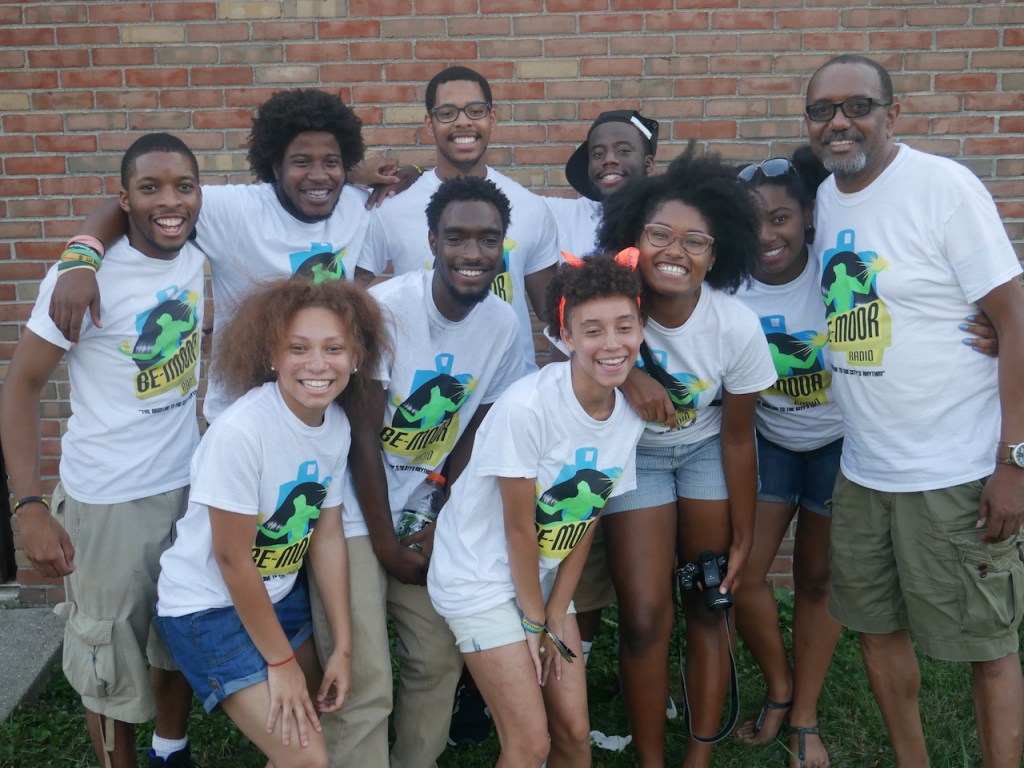
- Founded Be-Moor Radio and Institute in 2016, which is now heard in 100+ countries, and is training over 300 emerging influencers and broadcasters.
The following is not a boast. It is simply evidence of what God can do through an ordinary servant who has made himself available. My journey is not about acclaim—it’s about calling. This is how I’ve lived out my anointing:
- Finally, the thousands of young men and women that I have mentored, encouraged in Detroit, nationally, or within the African diaspora;
- Finally, participated as a leader in many national organizational projects and Christian outreaches;
In Closing
My life is a testimony to the truth of John 14:12:
“Very truly I tell you, whoever believes in me will do the works I have been doing, and they will do even greater things than these, because I am going to the Father.”
The anointing isn’t a feeling—it’s a calling. And when we respond to that calling with humility, faith, and action, we can indeed do greater things.
Let’s walk in our anointing. I’m Just Saying….



 I'm Just Saying