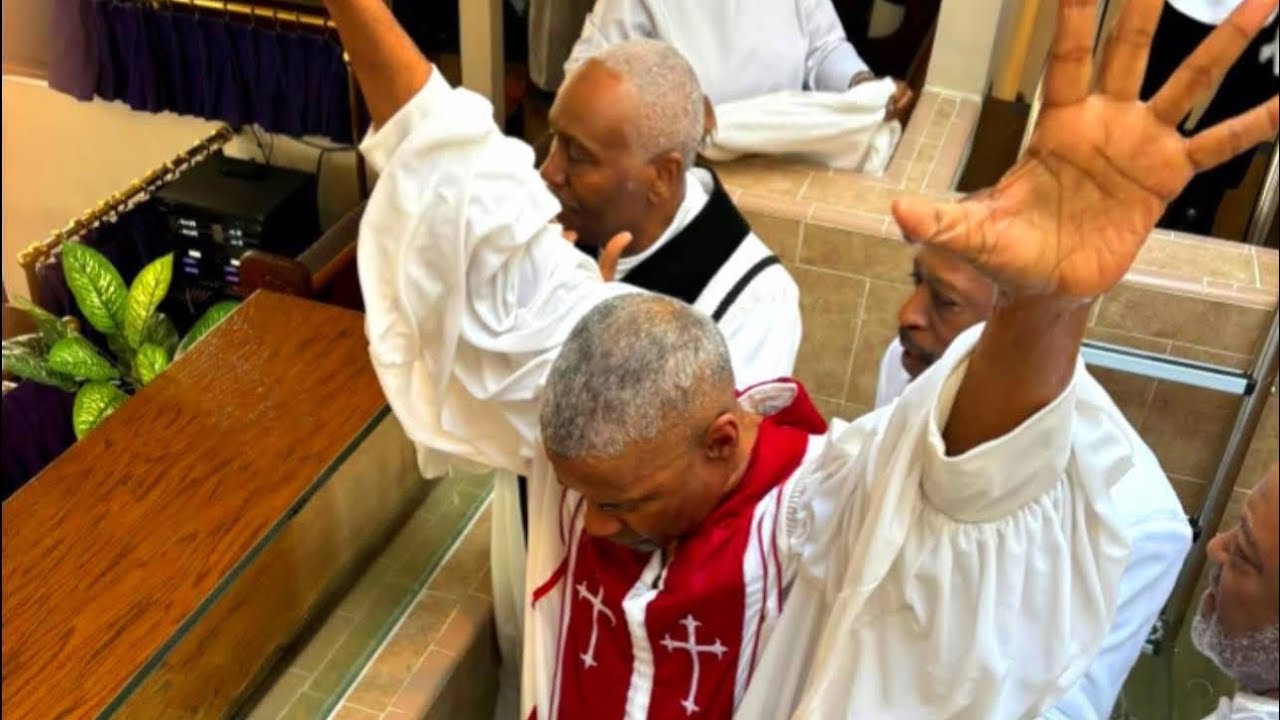
A Call to Wake Up: Giving Our Children a Fighting Chance

On Thursday, October 9, 2025, a seventeen-year-old young man was shot in the back—just twenty feet in front of my home—by a white adult male. I mention his race not out of racial animosity, but because it’s uncommon to see a white man on my street, and this man needs to be found and taken off the streets of Detroit.

Yesterday, I learned that the young brother died from his wounds.

As I sat in my home office that day, I heard a single gunshot. When I opened my blinds, I saw the young man lying motionless in the street and the White man running to his white Ford 150. I rushed outside, joined by a young man working in my home. As we knelt beside him, he kept repeating, “I don’t want to die.” We tried to reassure him that he would live while calling 911.

Within minutes—no more than three or four—Detroit’s first responders arrived and worked with professionalism and urgency. The police investigators spent over an hour inside my home and at least three hours outside gathering evidence and statements. But the young man never had a fighting chance. He was shot in the back.

That night, I lay awake hearing his words—“I don’t want to die”—echoing in my mind. Those words still ring in my ears. And the painful truth is this: just as that young man didn’t have a fighting chance, so it is for far too many children and youth growing up in our communities across urban America.

The next morning, I had to return to the rhythm of my daily ministry—praying with high schoolers at 6:30 a.m., as I’ve done for over 25 years, and later launching a new small group of young leaders through Be-Moor Radio.

That same day, only a few blocks from my house, tragedy struck again. At our neighborhood elementary school, a young girl stabbed another student—using a knife her mother brought to the school and handed to her. Yes, the mother gave her daughter a weapon and told her to use it.

Our children are in trauma. Our communities are in trauma. And too many have no fighting chance.

We no longer have a North Star—no shared moral compass or value-centered community. Black church, wake up! This is our role, our commission, and our divine assignment. Luke 4:18-19 makes it clear: “The Spirit of the Lord is upon me, because He has anointed me to preach good news to the poor…”

We need a reset—a return to our mission, our values, and our call to a people-centered spiritual renewal. Genesis 4:10 reminds us, “The blood of your brother cries out to me from the ground.” The blood of our sons and daughters is crying out from our streets for justice. They must not be forgotten.

Every child living in an urban community is experiencing trauma. In truth, every person in our communities is carrying trauma. We all need healing, hope, and an intervention—and the Black church, as the ambassador of Christ, is God’s chosen instrument for that healing.

Jesus said in John 10:10, “The thief comes only to steal, kill, and destroy; but I have come that you might have life—and have it more abundantly.”
An abundant life is a trauma-free life.

After decades of serving as an urban youth development specialist, I’ve seen more death and destruction than I care to recall. Yet this moment feels different. The urgency is greater. It was at my front door! The cries are louder.

Black church, wake up! It’s time for a people-centered revival—a movement that heals, restores, and reclaims our communities. Everything else we’re doing is insignificant compared to this call. As God said in Amos 5:21–23, “I hate your festivals (could it be our church services)… take away from me the noise of your songs (could it be our praise and worship).”

Let’s resolve, together, to give our children—and our communities—a fighting chance.

P.S. There is a Truth and Trauma Conference—sponsored by the Detroit Leadership Foundation—that will be held on Saturday, November 18th, from 9:00 a.m. to 3:00 p.m. at the McGregor Memorial Conference Center on the campus of Wayne State University.
Get healed. Get equipped. And let’s get to work.
How About the Affirming Action Movement

You intended to harm me, but God intended it for good to accomplish what is now being done, the saving of many lives”.  Genesis 50:20

Since the inauguration of President Trump on January 20th and his series of presidential declarations, I’ve been looking for the silver lining or God amid these heavy-handed and race-centered actions.  Well, I think I may have found it in a concept or idea of building an Affirming Action Plan for Black Children and Youth. 

Now you ask, what is an Affirming Action Plan, and how does it differ from the Affirmative Action strategies of the sixties?  Here’s the concept: The Black Church has historically played a pivotal role in nurturing, educating, and advocating for the well-being of Black children and youth in response to contemporary challenges. However, under the incoming Trump administration, Black children and youth will probably experience the most significant challenge in decades.  

Gen Z, Generation Alpha, and the Millennials have inherited our failure not to have been razer focused on educational disparities, economic disenfranchisement, systemic injustice, and cultural misrepresentation. Nevertheless, thousands of Black Churches nationwide have an opportunity to regroup and implement a concept we are calling the Affirming Action Plan

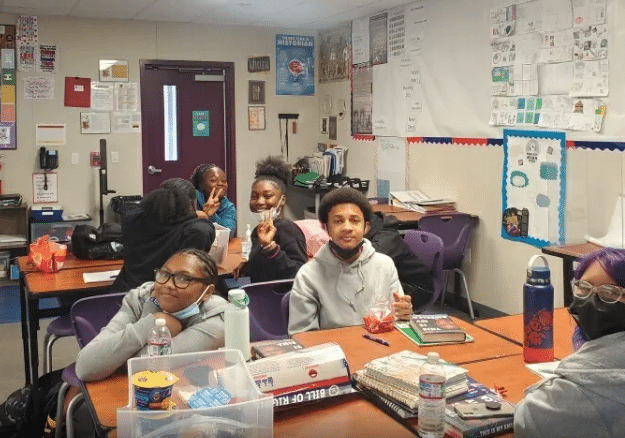
This initiative is designed to uplift and empower Black children and youth through intentional, faith-driven strategies that promote academic excellence, emotional resilience, economic literacy, and spiritual grounding.  The Black ecclesia (body of believers in fellowship) could galvanize an army of volunteers, philanthropists, college students, retirees, and others to create an Affirming Action Network to embrace our children and youth who will bear the brunt of the most significant upheaval culturally, academically, and economically in centuries. 

Black children and youth face unique structural barriers that hinder their personal and professional growth. While societal affirmative action policies have provided some relief along with justice-centered programs, including diversity, equity, and inclusion commitments by corporations, governments, and universities, they are not enough.  Effective January 20, 2025, President Donald J. Trump has declared war on DEI and Affirmative Action programs globally. In the Department of Education, the Assistant Secretary for Civil Rights wrote a Dear Colleagues (See the letter at the bottom of the blog) saying they should abandon their DEI programs and activities by February 28, 2025, and risk losing federal funding. 

In the end, we need a new approach to ministry that combines faith and works, where our works and faith is our worship. I’m Just Saying…. 

The loss of federal funding could impact Title One funding, designed to serve underserved children, the Free and Reduced Lunch Program (NLSP), programs that help students with disabilities including autism and emotional and other learning disabilities (IDEA funding) through the Social Security Act, and the lists of programs funded by the federal government could present irreparable harm to Black children, youth and society. 

However, the Affirming Action Network group of ministries can fill the gap! This affirming network of Black churches could present a united front against evil and present possibilities of hope.  John 17:21. In this passage, Jesus asks God that his followers and others who believe in them through their word may be unified so that the world will believe that God sent Jesus. Isn’t our objective that the world would know and love Him?

Okay, Apostles, Bishops, Pastors, and Evangelists, this potentially is our opportunity to be the church we preach about and be a living epistle through our faith and works.  Below, I offer a few examples of where we can be effective, thrive, and witness a biblical revival in our neighborhoods. 

  1. Academic Empowerment: Provide tutoring, scholarship opportunities, and mentorship programs through church-based and community partnerships.
  2. Spiritual and Emotional Resilience: Establish faith-based counseling and mentorship programs to support mental health and identity formation.
  3. Economic Literacy and Entrepreneurial Development: Implement financial literacy workshops and entrepreneurship training tailored to Black youth.
  4. Civic Engagement and Leadership Development: Encourage active participation in civic duties and provide leadership training for emerging community advocates.
  5. Cultural Affirmation and Identity Formation: Celebrate and educate Black children on their rich cultural and historical heritage, reinforcing positive self-identity.
  6. Faith-Driven Counseling and Mentorship: Pair youth with mentors from within the church and professional networks to foster positive relationships.
  7. Entrepreneurship Incubators: Develop church-led initiatives that support youth in starting businesses and managing finances.

These are just a few ideas that can represent a silver lining and hope to the hopeless. As I write this blog and share some ideas with the readers, I’m reminded of the civil rights movement in Montgomery during the bus boycott, where every Black church decided it was time to challenge the system of racism, bigotry, and religious disunity.  We can do this, what say you?

Letter from U.S. Department of Education:

chrome-extension://efaidnbmnnnibpcajpcglclefindmkaj/https://www.ed.gov/media/document/dear-colleague-letter-sffa-v-harvard-109506.pdf?utm_source=substack&utm_medium=email

Welcome Aboard Denzel (No Greater Calling)

Welcome Aboard!  I read recently that actor Denzel Washington was baptized and received a Certificate of Ministry from Kelly Temple Church of God in Christ in New York City.  But I must ask, does the Black church need another hooping brother in the pulpit? 

May I suggest a more rewarding calling in the world of Christan Youth Development. Here’s the truth here: no one cares about black children and youth, including the Black church. But before you condemn my statement, why don’t you look at the budgets associated with your church? Jesus said in Matthew 6:21,” For where your treasure is there, your heart will be also.” 

It is estimated that the Black church collects more than 11.5 Billion dollars annually. Yet the average amount set aside for Black children and youth through our children’s and youth ministry is less than 5 million annually. It’s disgraceful, but the statistical truth is that nearly 75% of those attending or calling Jesus Christ Lord do so before age of 18.  How we spend our money doesn’t make a good investment. 

If you’re reading this blog, you know I’ve spent nearly 40 years advocating and serving urban youth in Detroit, both nationally and globally. It’s been my privilege to converse with bishops, apostles, cardinals, and pastors from almost every denomination, including Bishop Blake, the former prelude for the Church of God in Christ, advocating for increased spending for Urban Christian youth development in Black churches. 

Sir Denzel Washington, you are in a unique position with fame, fortune, and favor. As a potential champion or minister to Black children and youth, you can change the trajectory of Black Christian Youth Development by simply saying yes to advocating and ministering to Black youth occupying space in the Black churches. There is no question in my mind that you have witnessed the deficit of services to Black children and youth in all of your Black church experiences. Even the Black mega churches miss the mark in creating culturally relevant lessons and experiences for children and youth. Imagine what the Black church Christian experience could have been like for the Washington children back in the day.  

There are only a few faithful brothers and sisters have dedicated their lives to presenting a relevant and comprehensive gospel of Jesus Christ to our children without respect or honor in the congregation or by those in senior leadership.  As I sit here writing this blog, I am thinking of many of my fellow servants in the field of urban Christian youth ministry who sacrificed their houses and families for the sake of trying to present a relevant message of Christ to the next generation. They believed Black children and youth needed more than preaching and choir music. They believed Black children and youth were essential assets to Christ’s larger body and the world. 

Dream with me for a moment, Mr. Washington, you can produce movies that offer a creative approach to understanding the Gospel, loving, and serving Christ. Here’s our harsh reality. If we were trying to reach and serve White children and youth, there are hundreds of ministries and billions of dollars designated and functioning prosperously to serve them. This is not to make this a conversation about disparities, but the reality is that creative Black Christian ministry to Black children and youth has many critical voids. If we are trying to engage in the 21st-century ministry, we need to kick up our approach over one hundred notches. 

Here’s an example just in sports, there are many outreaches/ministries, such as Athletes in Action and Fellowship of Christian Athletes (FCA), to name only two, that have thousands of volunteers and millions of dollars to help their young people grow as Christ athletes, but not just athletes but scholar/Christian athletes  In 2022, FCA served nearly 85,000 athletes and less than 500 were Black where 51% of D1 players are Black and AIA serves over 200 campuses with fewer than five HBCU’s. 

Brother Denzel, you can bring a glimmer of hope to a generation who, for years, have followed you as an actor. God has given you a voice and a desire (your words) to represent and declare His Word and change lives.  Black children and youth are hurting, even in the Black church! 

Several years ago when, I said yes to the Lord and resolved that I wanted to serve Black children and youth through the lens of Christ and His church. I was astonished to discover that we (the Black Church) don’t love Black children and youth. We love our individual birthed children and youth, but as it relates to the community, the love doesn’t exist. We are great at singing songs like the one expressed by the late Whitney Houston, “The Greatest Love of All,” but as one of our leading academic professors said, that is just classic American BS. 

There is not one indicator that Black children are both essential and loved.  Black children and youth are at the bottom of academic scores, and urban schools are horrendous regardless of where you are in the world. Yet we have millions of adults who every Sunday appear in our churches and volunteer for all kinds of activities that exclude Black Children and youth. We’ve allowed the base elements of society to direct the values that young people adopt. The Black prophetic voice on values is missing.  So, our young people come to church and hear messages or preachings irrelevant to their culture and areas of interest. 

I have no problem being critical because I am of and in the church (in other words,I’m one of those in the church.). Lately, I have often been that voice of one crying out in the wilderness (Isaiah 40:3).  Brother Denzel Washington, you have options that very few men and women in the world of ministry have. It’s not just financial, but it’s creativity, it’s favor, and perhaps a chance to feel the pulse of the pain in the lives of Black children and youth globally.

Who am I to interfere with the call on your life? I celebrate you for the call and the fantastic accomplishments on the stage, on television, and in movies. Your career has been an entertaining blessing to me and multiple million. On a personal note, I’ve made it a challenge to travel to New York City to see you, Julius Ceasar, Fences, A Rasin in the Sun, and Checkmates, written by my dear friend, the late  Ron Milner (Detroit). 

This blog or message to you is a prophetic call to expand your options and offer you an opportunity to join a rare and small group of men and women around the world who have responded to the unique call of Christian youth development through the lens of Christ within the framework of the Black Church. 

In Isaiah 6:8, The Lord asked, “Who will go for us?” and I (Isaiah) said I, here am I send me.”  This blog is not to burden you with the great expectation of the Black hope award, it is simply asking you to consider another critical ministry in the Black church serving Black children and youth. 

Welcome, Aborad Brother Denzel Washington, and wherever The Lord calls you,  may you produce biblical fruit (John 15:4-5). We are thankful for your lineage, which includes your father and others. But if I can say this right, we are more thankful for Sister Ruth Green for speaking a word of life into your life, and for your wife Paulette holding it down for you, and to that, I’m just saying….