
This Is Not the Time to Be Afraid of AI

A Challenge to Urban Christian Workers, Pastors, Youth Leaders, and the Body of Christ

There are moments in history when God allows an incredible opportunity to stand before the Church—an opportunity for believers to step forward, be heard, engage the culture, and serve as ambassadors for Christ. I believe the emergence of artificial intelligence may be one of those moments.

Before you dismiss that statement, hear me out. From the day I became a professional youth development servant, I have constantly tried to push the envelope and expand our understanding of urban youth ministry and youth development. For far too long, particularly in many urban communities, youth ministry has been defined by pizza parties, recreational activities, summer camps, Bible studies, choir rehearsals, and trips. Don’t misunderstand me. There is nothing inherently wrong with any of those things. Fellowship matters. Recreation matters. Bible study certainly matters. But our young people need more.

If we are serious about preparing the next generation to become Christian leaders and influencers, then we must help them develop critical-thinking skills, technological literacy, civic awareness, social responsibility, creativity, entrepreneurship, and the ability to engage the major issues shaping their world. We cannot prepare 21st-century young people for their future using only a 20th-century ministry model.

Jesus Did Not Avoid the World

When I read the New Testament, I do not see Jesus hiding from the culture around Him. I see Him engaging it. Jesus went into villages, homes, marketplaces, synagogues, streets, and public spaces. He talked with religious leaders, government officials, tax collectors, fishermen, women, the wealthy, the poor, the sick, and people pushed to the margins of society. He engaged the real questions affecting real people.

Likewise, the Apostle Paul did not restrict his ministry to places where everybody already agreed with him. In Acts 17, Paul entered Athens and encountered a culture filled with competing philosophies and religious ideas. He did not run from that environment. He engaged it. Acts 17:17 tells us that Paul reasoned with people not only in the synagogue but also “in the marketplace day by day.”

Then Paul stood at the Areopagus—the intellectual and philosophical center of Athens—and communicated the Gospel within the context of the ideas people were already debating. That sounds remarkably relevant to our present moment.

Where is today’s marketplace? Part of it is digital. It is social media. It is technology. It is science. And increasingly, it is artificial intelligence. If Paul were willing to walk into the intellectual marketplace of Athens, why should Christians be afraid to enter the technological marketplace of our generation?

Somebody may be asking, “Pastor, what in the world does artificial intelligence have to do with equipping the saints? My answer is: potentially, a great deal. Ephesians 4:11–12 teaches that God gives leaders to the Church “to equip the saints for the work of ministry.” Equipping people for ministry cannot simply mean preparing them to function inside the four walls of a church building. We must also prepare believers to live faithfully, intelligently, and courageously in the world they actually inhabit.

Our students are growing up in a world where AI will increasingly intersect with education, employment, medicine, journalism, business, entertainment, transportation, government, communications, science, ministry, and everyday life. Therefore, the Church cannot afford to say, “That’s not our world.” It is already our world. The question is not simply whether Christians will use artificial intelligence. The deeper question is whether Christians will help shape the moral conversations surrounding it.

Think about the questions AI is already forcing society to consider. What does it mean to be human? What is truth? Who determines right and wrong? What is the difference between knowledge and wisdom? How should human beings exercise power? How do we protect human dignity? What happens when technology can imitate human creativity? What responsibilities do corporations have when technology affects millions of people?m How do we protect children? What happens to workers whose jobs are changed or displaced? Who is accountable when automated systems cause harm? How do we prevent technology from widening the gap between wealthy communities and poor communities? These are not merely technological questions. They are ethical questions. And many are deeply theological questions. Scripture begins with an extraordinary declaration about humanity:

“So God created mankind in his own image.”
—Genesis 1:27

That biblical understanding of human dignity should give Christians something important to contribute to conversations about technology. Technology may imitate aspects of human communication, reasoning, creativity, and productivity, but Christians believe there is something fundamentally different about humanity: human beings bear the image of God. That conviction has implications for how we think about AI, human dignity, labor, education, justice, privacy, truth, power, and responsibility.

AI may provide access to enormous amounts of information. But information is not wisdom. Scripture says: “The fear of the Lord is the beginning of wisdom.” —Proverbs 9:10 A computer can process information at breathtaking speed. It can identify patterns, generate language, analyze data, and assist human beings in accomplishing remarkable tasks. But Christians should continually raise another question: Just because we can do something, should we?

That is where wisdom enters the conversation. James 1:5 says: “If any of you lacks wisdom, you should ask God.” Imagine raising a generation of Christian young people who understand both technology and theology. Young people who can code and pray. Who can understand algorithms and Scripture.

Who can become scientists, engineers, entrepreneurs, teachers, journalists, physicians, researchers, ethicists, pastors, designers, and technology executives—and carry a Christian understanding of justice, truth, compassion, stewardship, and human dignity into those professions. Why shouldn’t that be part of urban youth ministry?

Our children are entering a world dramatically different from the one many of us grew up in. Yet sometimes our ministry models have barely changed. We tell young people to put their phones away without teaching them how technology works. We warn them about social media without teaching them how algorithms influence what they see. We complain about AI without teaching them how to use it responsibly. We talk about careers without explaining how automation may transform those careers. We tell young people to become leaders but fail to introduce them to some of the most important conversations shaping their generation. That has to change. Proverbs 22:6 challenges us: “Train up a child in the way he should go.” Training must include preparation. It’s time to rethink this passage through the contextual lens of the 21st century. If the world our children are entering includes artificial intelligence, advanced technology, biotechnology, robotics, cybersecurity, data science, and other rapidly developing fields, then Christian youth development should help prepare them to enter those spaces with knowledge, confidence, character, and faith.

We should help our young people become creators, thinkers, researchers, entrepreneurs, developers, policymakers, ethicists, and leaders within it. Imagine churches partnering with universities and technology companies. Imagine church-based AI literacy workshops for teenagers and parents. Imagine Christian technology clubs. Imagine young people learning coding, robotics, journalism, media production, entrepreneurship, and AI while simultaneously discussing biblical ethics. Imagine pastors sitting at tables with engineers, scientists, educators, community organizers, entrepreneurs, and young people asking:vHow can technology serve humanity rather than humanity becoming a servant of technology? That is a conversation the Church should help lead. Ethics—and particularly biblical ethics—is a subject Christians must reclaim and boldly engage. Scripture calls us not merely to observe the moral debates of our culture, but to bring God’s truth, wisdom, justice, and love into them. Micah 6:8 calls us “to do justice, and to love kindness, and to walk humbly with your God.” If Christians are called to be the “salt of the earth” and “light of the world” (Matthew 5:13–16), then we cannot surrender the conversation about ethics—especially as emerging technologies like artificial intelligence raise profound questions about human dignity, truth, justice, power, and responsibility.

That is an important era!. We don’t prepare young people for Christian adulthood by shielding them from every difficult idea. We prepare them by giving them a strong biblical foundation and teaching them how to think. How to discern. How to question. How to create. How to lead. How to serve.

And how to enter complicated spaces without forgetting who they are and Whose they are. Artificial intelligence is here. It will bring tremendous possibilities, serious ethical challenges, unforeseen consequences, and questions we have not even imagined yet. The Church should be present for those conversations. And our young people should be prepared to help lead them. This is not the time for the Body of Christ to run from technology. This is the time to understand it. This is the time to question it. This is the time to help establish ethical boundaries around it. This is the time to prepare our children to create with it. This is the time to advocate for communities that could otherwise be left behind by it. This is the time to raise Christian scientists, engineers, entrepreneurs, theologians, ethicists, educators, and innovators. This is the time to send ambassadors for Christ into places where Christians have too often been absent. And perhaps, just perhaps, God has allowed this technological moment not simply for the Church to react to— but for the Church to help shape.

A Final Challenge

Pastors, youth workers, parents, educators, and Christian leaders: don’t be intimidated by what you don’t yet understand. Learn. Ask questions. Bring young people into the conversation. Find Christians already working in technology and science and invite them into your ministry. Build partnerships. Create opportunities. And most importantly, teach our children that their faith does not have to end where science and technology begin. Send them into those spaces. Jesus said: “As the Father has sent me, I am sending you.” —John 20:21 Church, this is not the time to retreat.

It’s time to send them.

A Story of Redemption Detroit Needs to See

Several years ago, God blessed me with the privilege of meeting Dr. Yusef Bunchy Shakur—a phenomenal brother whose life is dedicated to transforming communities and empowering people. What I did not realize at the time was that our paths had actually crossed many years earlier under very different circumstances.

Long before he became a respected community leader, Yusef was a leader in the Zone 8 gang on Detroit’s west side. In the late 1980s, his gang entered a Christian youth gathering seeking to harm a young man from their neighborhood who had attended our meeting. During that difficult season, I was able to provide refuge for the young man in my home and walk alongside him through a challenging chapter of his life.

Fast forward more than two decades. In 2012, Yusef and I became acquaintances and eventually developed a friendship. Neither of us initially understood that our stories had been intertwined years before. Yet, as so often happens, God was already writing a larger story than either of us could see.

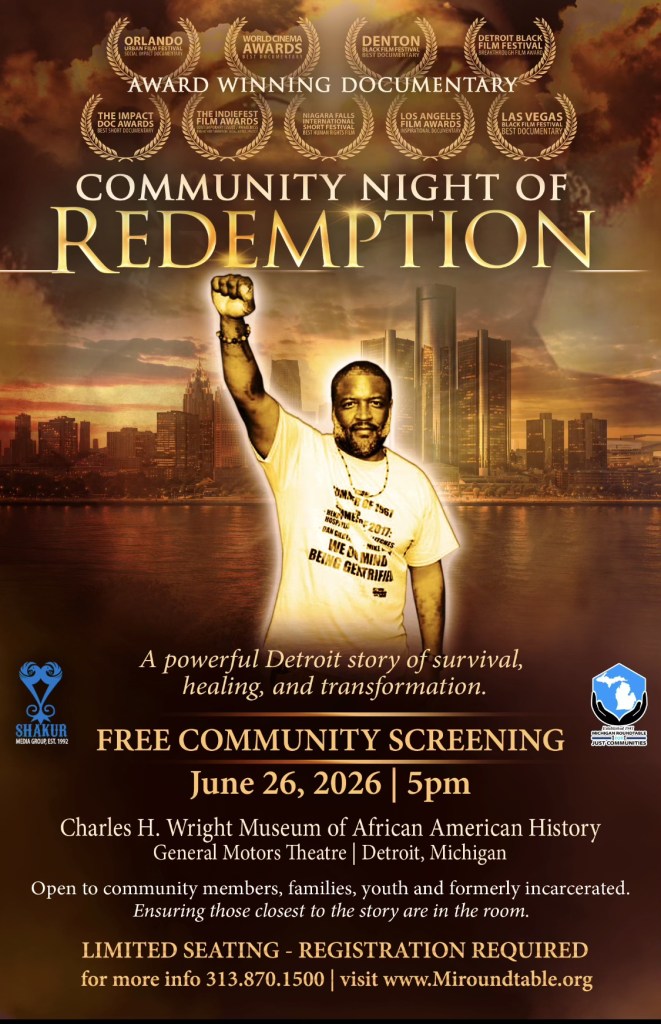
Today, I want to encourage you to attend a free community screening of Yusef’s documentary, Redemption, on Friday, June 26, at 5:00 p.m. at the Charles H. Wright Museum in Detroit.

Redemption tells the remarkable true story of a Detroit man who, by every sociological measure, seemed destined for a life of hopelessness and destruction. Raised amid poverty, violence, negative influences, and the absence of many of the supports young people need, Yusef’s future appeared predictable to many observers. Yet God had another plan.

Through the unwavering love of his mother and the grace of God, Yusef began a journey that transformed him from a troubled young man into a respected community leader, educator, scholar, and advocate for justice. Today, he dedicates his life to reaching young people who find themselves trapped in cycles of violence, despair, and cultural confusion, helping them discover a different path.

For me, Redemption is more than a documentary. It is a modern-day testimony of hope. It serves as a powerful reminder to educators, youth workers, mentors, pastors, and community leaders that transformation is possible. It confirms what many of us who work with young people have believed for years: no one is beyond redemption.

If God can transform the life of Yusef Bunchy Shakur, He can transform the lives of countless other young people in Detroit and cities across America. His story is proof that grace is greater than circumstance and that purpose can emerge from even the most difficult beginnings.

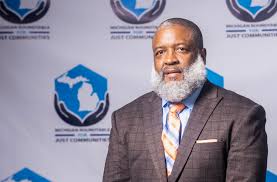
Since 2012, I have had a front-row seat to Yusef’s journey. I have watched him pursue higher education through community college, undergraduate studies, a master’s degree, and ultimately a Ph.D. Today, Dr. Shakur serves as Executive Director of the Michigan Roundtable for Just Communities, one of Michigan’s oldest community-based organizations, with more than 70 years of promoting peace, justice, reconciliation, and community transformation.

I have said enough. Now it is your turn to experience this remarkable story.

Join us on Friday, June 26, at 5:00 p.m. at the Charles H. Wright Museum for this free screening of Redemption. Registration is required. Please call 313-870-1500 or visit www.miroundtable.org, the Michigan Roundtable for Just Communities, to reserve your seat. If you are able, please also consider donating to support the organization’s important work.

In full disclosure, I proudly serve on the Board of Directors of the Michigan Roundtable for Just Communities. My involvement reflects my personal mission: to empower and invest in the next generation of African and African American leaders—and to have fun doing it.

Watching Dr. Yusef Bunchy Shakur grow, lead, and impact lives has been one of the great joys of my journey. His story reminds us all that redemption is real, transformation is possible, and hope is always worth investing in.

I hope to see you there.

Understanding the Anointing: A Practical Reflection from A Black Christian Perspective

By Dennis Talbert

There’s been a lot of talk in my circles lately about the anointing. For some, it’s become synonymous with a euphoric experience—a moment of intense feeling during worship or preaching. But I want to suggest a deeper, more biblical, and practical view. I don’t claim to be a scholar or an expert in all things Christian, but I do come with lived experience and a desire to see transformation in our churches and in the global Black community. So, I offer this brief, working definition of the anointing:

The anointing is God’s empowerment through the Holy Spirit for a divine purpose.

In the Old Testament, it was symbolized by the pouring of oil. In the New Testament, it is internal and spiritual, given freely to all in Christ. It equips us for service, for proclaiming truth, and for participating in transformation.

Imagine what our communities could look like if we lived in tune with our divine assignments—our North Star. Imagine a society shaped by community values that not only uplift our neighborhoods locally and nationally, but also globally. I write primarily to Black Christians, not just churchgoers. Men and women of faith who are sincerely striving to walk in their anointing and use it to bring healing, justice, and restoration to Black lives everywhere.

We can still do better, be more, and champion a Christ-centered value system rooted in our identity and relevant to the broader world. Our anointing should not isolate us, but instead inspire us to integrate and influence.

Personally, I anchor my understanding of my anointing in two scriptures:

  • Acts 1:8 – “But you will receive power when the Holy Spirit comes on you; and you will be my witnesses… to the ends of the earth.”
  • Luke 4:18 – “The Spirit of the Lord is upon me, because He has anointed me to proclaim good news to the poor…”

My Resume, My Anointing

  • Secured permanent housing for 41 homeless or housing-insecure families, many of whom went on to obtain college degrees and stable careers.
  • Participated in global missions to Kenya, Ethiopia, Jamaica, Brazil, South Africa, Mexico, Zimbabwe, the Bahamas, Mississippi, and Detroit.
  • Served as U.S. Coordinator for Operation Sunrise, sharing the Gospel with 68 million Africans in 23 countries over 50 days.
  • Facilitated Michigan’s first faith-based school adoption program.
  • Honored by three U.S. Presidents—George W. Bush, Bill Clinton, and Barack Obama.
  • Established the first data-based reading tracking system in Detroit Public Schools.
  • Operated a daily abstinence and health education program at Redford High School.
  • Co-created a unique Sunday School curriculum for Rosedale youth, written by parents and members.
  • Partnered with Detroit World Outreach for citywide prayer at public schools, including Vetal and Redford.
  • The Harambee Movement and Conference was founded, engaging hundreds of Black boys and men across the U.S.
  • Launched the SISTAS Conference and school-based clubs for middle school girls.
  • Created an annual Hip-Hop Worship Service, one of Rosedale’s most significant gatherings.
  • Shared the Gospel with thousands in nontraditional spaces: schools, clinics, concerts, rallies, and the streets of Detroit.
  • Led weekly street-by-street prayer walks.
  • Hosted citywide Five-Day Backyard Bible Clubs, empowering Rosedale members to reach their neighborhoods.
  • Conducted annual best-practice tours to study innovative urban ministry models across the country.
  • Served as Executive Producer of the redemptive movie Heart of Stone, starring Clifton Davis, and directed by Richard J. Polite;
  • Oversaw what became the world’s most extensive urban church-based youth outreach, employing 12 whole- and part-time staff.
  • Created the Senior Reads program with Rosedale senior citizens mentoring young readers.
  • Developed a mentoring program for adjudicated youth in Brightmoor.
  • From 1994 to 2007, 85 percent or more of the students we served in Brightmoor graduated from high school and either entered college or a professional trade school; Public, Private Ventures, and the U.S. Department of Justice
  • Helped establish Detroit as the official site of the National 10 Point Coalition.
  • Secured Ford Foundation funding for a church-based mentoring program for high-risk youth—R.I.S.E. (Reintegrating, Integrity, Success through Empowerment).
  • Supported the rise of Christian Hip-Hop, working with artists like The Yuinon, The Cross Movement, Corey Red, and The Mad Prophets.
  • Created nationally recognized mentoring programs, praised by the U.S. Department of Justice and Education.
  • Developed Super KIDS, a tutoring program for students with GPAs below 1.0, many of whom are now college graduates.
  • Advocated against juvenile life sentences in the Roper v. Simmons case.
  • Built a replicable abstinence-based health outreach in partnership with Henry Ford Health System.
  • Designed a six-week summer program for social service-dependent mothers, helping many find employment or launch businesses.
  • Co-founded the Brightmoor Alliance and Brightmoor Pastors Alliance.
  • Helped lead a two-year drop in violent crime in the Brightmoor community.
  • Co-developed L.U.C.Y. (Learning Under City Youth) with the University of Michigan—a precursor to an urban teacher college.
  • Represented the University of Michigan nationally as chairman of L.U.C.Y. and as a board member of the American College and Universities.
  • Launched a global pricing campaign that led Nike to reduce the retail price of Jordan sneakers internationally in 2002.
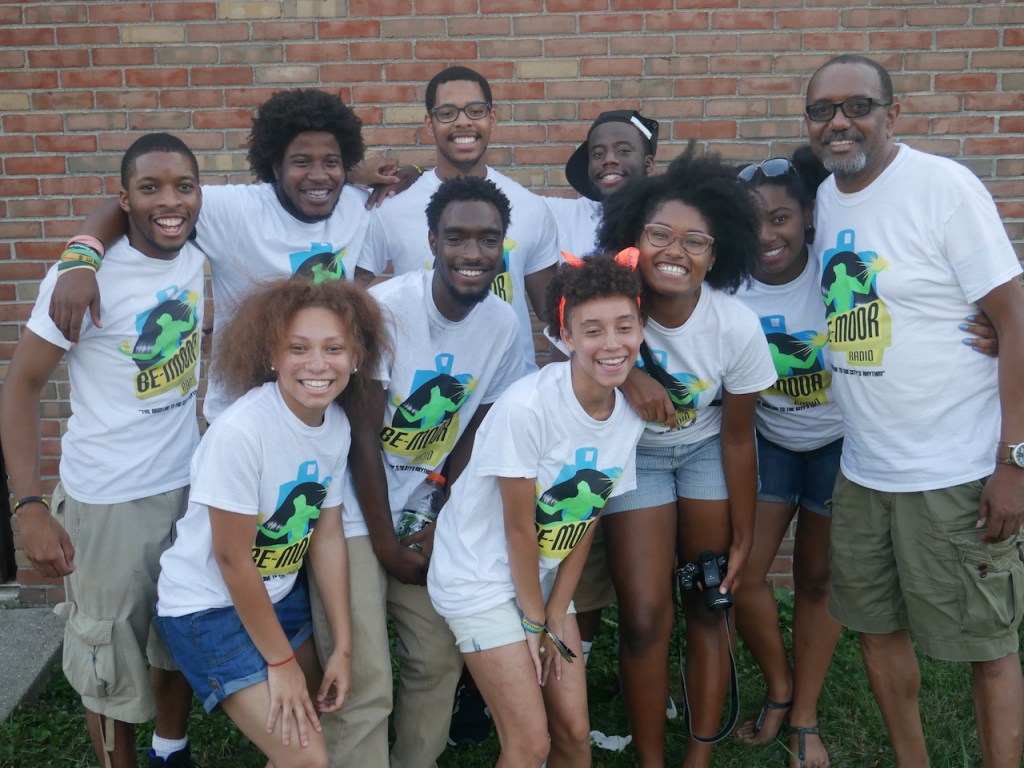
  • Founded Be-Moor Radio and Institute in 2016, which is now heard in 100+ countries, and is training over 300 emerging influencers and broadcasters.

The following is not a boast. It is simply evidence of what God can do through an ordinary servant who has made himself available. My journey is not about acclaim—it’s about calling. This is how I’ve lived out my anointing:

  • Finally, the thousands of young men and women that I have mentored, encouraged in Detroit, nationally, or within the African diaspora;
  • Finally, participated as a leader in many national organizational projects and Christian outreaches; 

In Closing

My life is a testimony to the truth of John 14:12:

“Very truly I tell you, whoever believes in me will do the works I have been doing, and they will do even greater things than these, because I am going to the Father.”

The anointing isn’t a feeling—it’s a calling. And when we respond to that calling with humility, faith, and action, we can indeed do greater things.

Let’s walk in our anointing. I’m Just Saying….

Dear Detroit’s Candidates for Mayor: Don’t Forget the Children and Youth

Detroit is at a crossroads.

As the city prepares to elect its next mayor, much of the political conversation revolves around affordable housing, job creation, and economic development. Important? Absolutely. But if Detroit is genuinely going to rise—not just in buildings, but in spirit—it must begin with its children and youth.

This blog is a direct message to every candidate running for mayor in 2025:
We expect a bold, comprehensive youth development strategy to be a prominent part of your platform.

For far too long, young people in Detroit have been treated as the “future” when, in reality, they are the now. Too many urban policies are adult-centered, leaving children and teens to navigate broken schools, unsafe neighborhoods, and a digital world with little guidance and fewer opportunities.

Jobs Matter—But Our Youth Need More Than Employment. They Need Empowerment.

We acknowledge and appreciate the work of the former Youth Development Commission and the Skillman Foundation, whose early investments in youth employment were ultimately expanded under Mayor Duggan. That foundation matters.

But our young people need more than jobs—they need joy.

Empowerment means reducing childhood poverty and food insecurity, improving access to safe recreational spaces, investing in robust, year-round youth employment and entrepreneurship programs, and funding arts, sports, and cultural experiences in every neighborhood—not just downtown.

Reimagine Public Safety—Start With Public Healing

Perhaps it’s time to rename the Detroit Police Department to the Detroit Public Safety Department, with a central mission of protecting and healing our communities—starting with children and youth.

Let’s be honest: The word “police” is not neutral. For many Black children, it is traumatic—intertwined with a long history of systemic harm. As noted in The New Yorker, the roots of modern policing in the South trace back to slave patrols: organized forces designed to capture and control enslaved people. That legacy matters. It shapes how our youth see law enforcement today.

The new Public Safety Department must include:

  • Comprehensive trauma counseling
  • Violence intervention and prevention
  • Restorative justice programs
  • Community-based mentoring
  • Let’s stop saying just “public safety.” Say public healing.

Urban Youth Deserve Policy, Not Pity

Detroit’s children are not problems to manage—they’re people to invest in.

They deserve a mayor who will:

  • Build a Detroit Children’s and Youth Cabinet that includes actual young people and grassroots leaders
  • Establish a Citywide Youth Development Fund to support the real work being done in the neighborhoods

The next mayor must be bold enough to declare:

🗣 “We will not rebuild Detroit on the backs of abandoned youth.”

What We Need: A Real Urban Youth Strategy

Detroit doesn’t need more seasonal after-school programs or summer job fairs. We need a strategy—rooted in equity, creativity, and long-term investment. Here’s where to start:

1. Create a Department of Youth Wellbeing and Leadership

Not just a youth liaison or a few programs under Parks & Rec. We need a cabinet-level department solely focused on the mental health, education, safety, and leadership development of young people—especially in historically under-resourced neighborhoods.

2. Fund Neighborhood-Based Youth Hubs

Reimagine vacant buildings and underused city properties. Let’s turn them into youth centers equipped with mentorship programs, digital media labs, tutoring spaces, and safe recreation zones.
Think libraries-meet-startup-labs-meet-counseling-havens.

3. Prioritize Early Childhood Development

Affordable childcare and quality early education should not be luxuries. The next mayor must champion:

  • Early learning centers across every district
  • Trauma-informed training for everyone who works with children—from bus drivers to daycare providers

4. Invest in a Youth-Led Civic Agenda

Listen to our young people. Build a citywide Youth Council with real decision-making power—one that works alongside city departments and Detroit Public Schools to shape budgets, policies, and community design.

Nothing about them without them.

The city’s budget is a moral document. Show us where your heart is.

Detroit Can’t Wait.

If we don’t center kids in Detroit’s transformation, we will repeat the same cycles:
Development for the few. Displacement for the many. Disillusionment for the next generation.

Detroit’s children are not collateral damage—they are co-builders of our city’s future.

Let’s build a Detroit where kids don’t just survive—they thrive. Just some thoughts from who a brother who has devoted his life to Urban Youth Development, I’m Just Saying… What say you?